
Elections

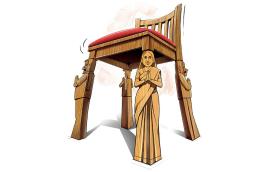
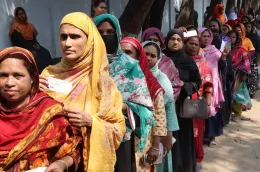
Thiruvananthapuram, Mar 26 (PTI) The promise of greater political space for women, amplified after the passing of the Nari Shakti Vandan Adhiniyam, appears distant in Kerala’s April 9 Assembly elections, where candidate lists reflect a familiar pattern of underrepresentation.

Despite women accounting for more than half of the electorate in the state, their presence in the electoral fray remains limited, highlighting a persistent imbalance between participation and representation.

The enthusiasm that followed the passage of the Nari Shakti Vandan Adhiniyam in Parliament in 2023 had raised expectations among women leaders across party lines.

Article.

THRISSUR: Rani Gouri Lakshmi Bai, Dr Mary Punnen Lukose, Ammu Swaminathan, Kuttimalu Amma, Accamma Cherian, Dakshayani Velayudhan, O Aisha Beevi, K R Gouri Amma…. These are some women luminaries who shaped Kerala’s socio-political trajectory.

Kerala has long been celebrated as a land of strong women, particularly in social reform and education. Yet, when it comes to politics and power, women remain underrepresented. Even within intra-party hierarchies.

Notably, the Women’s Reservation Bill, mandating 33% representation for women in Parliament and state assemblies, is expected to come into force by 2029. This makes the upcoming election in Kerala noteworthy. The scene, however, is dismal.

Women make up only 10.5 % of the candidates — 54 women and one transgender person of 457 across 140 constituencies.

In the 2021–2026 assembly, only 12 of the 140 MLAs were women. In 2016–2021, the number was eight. A social collective for equal representation, Thulya Prathinidhya Prasthanam (TPP), has for years been vocal about the need to address this imbalance.

“We have been boasting about Kerala as a progressive state. But it is nowhere near when it comes to women’s representation,” said TPP convener K M Rema. “This time, the CPI has shown improvement with four women candidates in the 25 constituencies where it is contesting. The IUML has also made some progress by fielding two women, one up from last time. That’s it.”

Article.

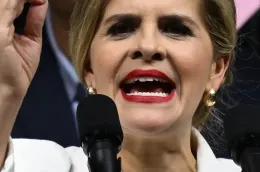
aura Fernandez, a conservative, populist politician with strong links to outgoing President Rodrigo Chaves, has won nearly half of the votes in Costa Rica's general election with 94% of votes counted, meaning she will become the country's new leader.

Her victory confirms a strong rightward trend in Latin America, where voter anger at corruption and crime has driven recent conservative wins in Chile, Bolivia, Argentina and Honduras.

What were the election results in Costa Rica?

Fernandez had won 48.3% of the vote, the preliminary results from the Supreme Electoral Tribunal (TSE) showed, far in excess of the 40% needed to avoid a run-off.  

Fernandez's party, the Sovereign People's Party, is also projected to win a majority of 30 seats in the 57-seat Congress, up from its current eight seats.  

The other main candidates in the election lagged far behind Fernandez, with economist Alvaro Ramos receiving about one third of the vote, and architect and former first lady Claudia Dobles taking under 5%. 

Costa Rica, a country of some 5 million inhabitants, has so far had only one female president in its history, Laura Chinchilla, who served from 2010 to 2014.

Article.

When out campaigning, especially in the run up to elections I often encounter women who say they do not vote. This is one area of life where socio-economic status does not seem to be a factor, with mums on council estates and women living in detached mansions all saying the same thing. I frequently hear phrases such as, “I let my husband/partner make the decisions”, “I don’t understand politics”, “they (politicians) are all the same”, and “my vote doesn’t make any difference”.

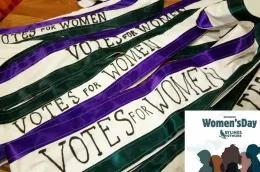
More than 100 years since women won the vote it’s sad to note that a significant number of women still do not use their hard-won franchise to help shape the decision-making bodies that affect our everyday lives. After all, women are in many cases juggling multiple responsibilities, managing household budgets, trying to make ends meet often in difficult circumstances. Our experience matters and when our voice is not heard the whole of society is worse off.

Beyond the obvious solutions such as quotas and ‘Women Only’ short-lists what else could we do to improve the situation? Changing our electoral system is one option which might contribute to reducing the democratic deficit along with improving the representation of women in politics.

Full article.

As India moves towards the key state elections of 2026, women leaders across regions such as West Bengal, Tamil Nadu, Kerala, Assam, and Puducherry are shaping both electoral narratives and representation debates. 

While the overall legislative presence of women in India remains uneven, there are several influential and emerging female politicians whose political participation, leadership visibility, and voter mobilisation are back in focus.

West Bengal leadership

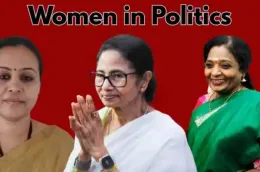
While talking of influential women leaders in India, TMC supremo and West Bengal Chief Minister Mamata Banerjee's name may often come up first. 

CM Banerjee continues to dominate the political landscape of the state and remains one of India’s most powerful regional leaders. Her electoral performance and influence in West Bengal is a rare example of long-term female leadership in Indian politics. 

Alongside her, other Trinamool Congress figures such as Mahua Moitra and Sayani Ghosh represent a group of leaders combining grassroots organisation with national visibility. 

Full article.

Bangladesh's new government led by center-right Bangladesh Nationalist Party (BNP) chief Tarique Rahman was sworn in last week after his party's landslide victory in the February 12 general elections.

The 60-year-old Rahman takes over leadership from the interim government headed by Nobel laureate Muhammad Yunus. This transition concludes an 18-month interim period following a bloody student-led uprising in August 2024, which ousted former Prime Minister Sheikh Hasina and ended her 15-year rule.

Rahman plans to lead a 50-member Cabinet over the next five years, promising reforms that the BNP agreed to during the interim period. These were approved by a referendum alongside the election.

Among those reforms are initiatives to empower women, who comprise around half of Bangladesh's 130 million voters.

Full article.

Gender was an important factor in the 2022 election: it shaped the ways the major parties packaged their policies and their leaders. Three years later, as Australians grapple with an uncertain world and a cost-of-living crisis, how might gender shape the 2025 election result?

Ideas about gender have always shaped Australian politics, although male and female political alignments have shifted over time. For example, when Sir Robert Menzies established the Liberal Party in 1944, he crafted messages to appeal to women, in contrast with the Labor Party’s blue-collar masculinity.

By the 1970s and 1980s, as more women entered the workforce and pursued further education, they became more progressive in their voting habits. This trend is evident beyond Australia (for example in the US, and in Europe and Canada).

How gender influenced the 2022 election

Women’s issues were decisive in the last federal election. The gendered impact of the COVID-19 pandemic, the emergence of Grace Tame as a fiery advocate for survivors of sexual abuse, and the Morrison government’s poor response to Brittany Higgins’ allegation of sexual assault enraged many women, who took the streets in the March for Justice in 2021.

Read here the full article published by The Conversation on 3 April 2025.

Image by The Conversation


Last year, an aura of possibility hovered in anticipation of around 60 elections that were held across the world. Today, we face the outcomes of ballot choices that continue to cap women’s political leadership at a global level, as the UN Women's latest report highlights a slowdown of equality between women and men in politics.

Moving the needle on political empowerment

Approximately half of the head of state elections held in 2024 had women running for the top job. Out of virtual parity however, there were three times as many men re-elected than women elected overall. In terms of gender, the balance is slightly more positive. While two economies saw female incumbents replaced by newly elected male candidates, in four economies, electorates chose women to succeed men as head of state. However, when it comes to volume, out of the Global Gender Gap Report’s most populous economies, three elected men, and only one elected a woman as head of state.

For the legislative sphere, results are mixed. Among economies with parliamentary elections in 2024, Mexico and Rwanda continue to lead in female representation, with 50% and 64% of seats won by women in their lower houses, respectively. Belgium, Iceland, Senegal, South Africa, and the UK, achieved just over 40% of female representation. However, 80% of legislatures elected in 2024 selected men to the role of speaker, keeping legislative leadership overwhelmingly male.

Most countries have tackled the lack of female representation in their political decision-making by implementing legal candidate quotas. While this approach increased the proportion of female candidates, no major impacts have been observed on the proportional representation among elected officials. Notably, only two economies achieved higher percentages of elected women compared to female candidates.

Click here to read the full article published by the World Economic Forum on 17 March 2025.

Image by WEF


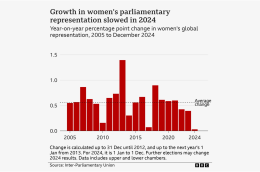
Nearly half the world's population - 3.6 billion people - had major elections in 2024, but it was also a year that saw the slowest rate of growth in female representation for 20 years.

Twenty-seven new parliaments now have fewer women than they did before the elections - countries such as the US, Portugal, Pakistan, India, Indonesia and South Africa. And, for the first time in its history, fewer women were also elected to the European Parliament.

The BBC has crunched numbers from 46 countries where election results have been confirmed and found that in nearly two-thirds of them the number of women elected fell.

The data is from the Inter-Parliamentary Union (IPU) - a global organisation of national parliaments that collects and analyses election data.

There were gains for women in the UK, Mongolia, Jordan and the Dominican Republic, while Mexico and Namibia both elected their first female presidents.

However, losses in other places mean that the growth this year has been negligible (0.03%) - after having doubled worldwide between 1995 and 2020.

Read here the full article published by the BBC on 29 December 2024.

Image by BBC


Ahead of 2024, political experts and commentators were calling this “the year of democracy”. It was deemed a “make or break year”, as around 1.5 billion people went to the polls in more than 50 countries, which held significant elections.

For women, who are already underrepresented in global politics, there were some critical victories and losses. 

Based on statistics from UN Women alongside current election updates, Women’s Agenda has calculated there are 30 countries where 31 women serve as Heads of State and/or Government. Just 20 countries have a woman Head of State, and 17 countries have a woman Head of Government.

At the current rate, gender equality in the highest positions of power will not be reached for another 130 years.

As authoritarianism is on the rise worldwide as well, national elections grappled with challenges involving voter participation, free speech, and electoral independence. 

Here’s a look back at some of this year’s most influential election results for women.

Read here the full article published by the Women’s Agenda on 16 December 2024.

Image by Women’s Agenda


On Election Day, Donald Trump beat the second woman to ever win a major-party nomination for the presidency — just eight years after he beat the first. Did Kamala Harris’ loss this year, and Hillary Clinton’s loss in 2016, have anything to do with their gender? Or was it something else? We asked a group of leading women in journalism, politics and academia to explain why a woman has still not been elected president in the United States.

There is plenty of evidence that voters could have gendered biases that factored into their votes in 2016 and 2024, and our contributors know it well. One pointed to studies in which participants judged a personnel file with a woman’s name as less competent than that with a man’s name — and then, when more information was included to show her superior competence, the same participants found her more competent but less likeable.

There were others, though, who thought that gender might be at play, but not necessarily in a way that would make voters less likely to vote for a woman. “Harris didn’t lose the election because she’s a woman, but she was put into the position to lose this election because she was a woman,” one former Trump official wrote.

Many of the women blamed a mix — gender, yes, but gender combined with the Democratic Party’s failure to win working-class men and how voters see the party in general. “No woman in the United States has yet been able to clear that bar,” one contributor wrote. “The first to do so may well come from the right.”

Read here the full article published by Politico on 15 November 2024.

Image by Politico
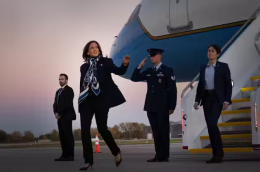
 

In the final week of the US presidential election campaign, there is a real possibility a woman will make it into the top job. But why has it taken so long – and has Kamala Harris got what it takes to make history?

My research examines celebrated women in history and how, collectively, they represent women’s changing status in society. In particular, I have looked for the historical themes and patterns that explain the rise of the first elected women leaders.

Women in politics are generally assumed to be a minority, emerging from a position of disadvantage. When successful, they are considered exceptions in a masculine system that was previously out of bounds.

But due to the complex workings of gender, race, class and culture, it’s not quite that straightforward, as discussion of Harris’s biracial identity shows.

I have identified three broad groups of women who have succeeded in becoming elected leaders of their countries since Sirimavo Bandaranaike of Ceylon (now Sri Lanka) became the world’s first female prime minister in 1960.

Does Kamala Harris fit within any of these groups? And, if so, based on the pattern so far, does she have what it takes to become president? Or does being a global superpower mean the US demands a new form of female leadership?

Read here the full article published by The Conversation on 28 October 2024.

Image by The Conversation