Elections
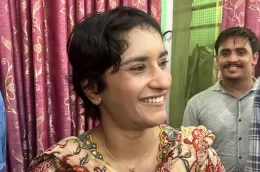
Indian wrestling star Vinesh Phogat believes that to bring about real change, she must engage in politics with the same energy and determination as she displayed on the wrestling mat.
"Politics is in every sphere of life," the 30-year-old athlete told DW, adding that it was important for her to enter the political arena.
Fighting for women's safety
Phogat, a triple Commonwealth Games gold medalist, has been a leading figure in protests demanding action against Brij Bhushan Sharan Singh, a powerful politician and former head of the Wrestling Federation of India (WFI).
Phogat and other top wrestlers, including Olympic bronze medalist Sakshi Malik, staged monthslong demonstrations in the Indian capital New Delhi, accusing Singh of sexual harassment and intimidation of female athletes.
"I see this opportunity as a time to give back to society, especially for those who continue to suffer exploitation and abuse," Phogat said.
"Women and athletes who agonize and continue to do so because of harassment, see me as one who can give them a voice. They have expectations and it is this desire which keeps me going. It was a necessity," the Indian Olympic wrestling star said.
In May, a Delhi court charged Singh, a member of Indian Prime Minister Narendra Modi's ruling Bharatiya Janata Party (BJP), with sexual harassment and criminal intimidation. Singh denied the allegations and pleaded not guilty.
Read here the full article published by DW News on 7 October 2024.
Imabe by DW News
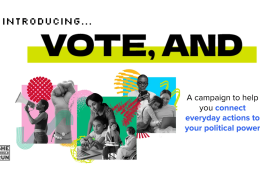
As we gear up for one of the most pivotal elections in history, it’s clear that women are more politically inspired than ever. Following the announcement of Vice President Kamala Harris' candidacy, the percentage of women feeling politically inspired soared from 12 percent to 59 percent, according to a recent survey.
Yet, despite this surge in inspiration, the survey — conducted in June and September by She Should Run and CREDO Mobile — found that an astonishing 78 percent of women are still not considering running for office. This gap between inspiration and action is exactly what She Should Run’s latest initiative aims to address.
The “Vote, And” campaign responds to the recent decline in women candidates and aims to boost women’s political engagement beyond the ballot box. While women are tuning out of toxic political news, we know they continue to show up for their communities and themselves. She Should Run’s goal is to bridge the gap between the two and bring the political to the everyday. The campaign aims to inspire 10,000 women to take the first steps toward political leadership and connect the dots between their everyday actions and political ambitions in the future.
Read here the full article published by The Fulcrum on 9 October 2024.
Image by The Fulcrum

In a historic turn of events for Jammu and Kashmir's political landscape, three women, including former minister Sakeena Masood, have emerged victorious in the latest Assembly elections, reaffirming the growing influence of female leaders in a traditionally male-dominated arena.
Sakeena Masood secured a decisive win in the D H Pora Assembly seat, Kulgam district, outpacing her opponent Gulzar Ahmed Dar by 17,449 votes. Meanwhile, the BJP's Shagun Parihar claimed a tight victory in the Kishtwar Assembly seat, unseating experienced National Conference leader Sajad Ahmed Kitchloo by a mere 521 votes.
National Conference's Shamim Firdous continued her success from previous elections, defeating BJP rival Ashok Kumar Bhat in the Habbakadal seat of Srinagar district. Although some female candidates such as Iltija Mufti faced defeats, the elections symbolize an encouraging shift towards increased female participation in regional politics.
Read here the full article published by DevDiscourse on 8 October 2024.
Image by DevDiscourse
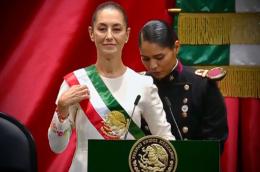
In a country marked by deeply rooted patriarchal structures, Claudia Sheinbaum has risen as one of Mexico’s most relevant political figures, breaking barriers and challenging stereotypes that for generations have limited women in power. A scientist by training and the first woman elected to govern Mexico City, Sheinbaum represents a leadership that combines technical pragmatism, social sensitivity and an unwavering resilience that has defined every step of her public career.
Claudia Sheinbaum took office as Mexico City’s Chief of Government in 2018, following her tenure as a delegate in Tlalpan, where she stood out for her commitment to transparency and support for the most vulnerable. During the COVID-19 pandemic, her proactive leadership and strong scientific background came to the fore, implementing data-driven public health measures and clear and empathetic communication with citizens, always seeking to protect the most vulnerable.
Throughout her administration, Claudia Sheinbaum has promoted inclusive social policies, always with an eye on improving the quality of life of the most disadvantaged sectors and reducing inequality. Her closeness with today’s former President Andrés Manuel López Obrador has consolidated her as an essential figure of the so-called Fourth Transformation, being a leader who has promoted sorority and the collective advancement of women in politics.
What truly defines Claudia Sheinbaum’s leadership is her ability to challenge stereotypes without losing her authenticity. In a context where women’s assertiveness is often judged harshly – labeling them as “aggressive” or “authoritarian” – Sheinbaum has demonstrated that this quality is not a defect, but an essential virtue for those who assume responsibilities of power. Understanding that being strong, assertive and even “tough” is, on many occasions, necessary to face the challenges of political leadership, has been key in her trajectory.
Read here the full article published by Pressenza on 2 October 2024.
Image credits: Pressenza

On a sunny September morning, Joyce Trindade works her way around the stalls of a secondhand clothing market here, distributing hugs and political pamphlets in equal measure. A candidate in this weekend’s Rio de Janeiro city council elections, she’s in the bustling commercial neighborhood to show that a woman’s place is in politics, she tells the vendors, all of whom are women.
This is the first time that Ms. Trindade, in her late 20s, is running for a seat on Rio’s city council. She’s one of 158,000 female candidates participating in nationwide local elections, and seeking to break into the overwhelmingly male world of electoral politics.
Despite electing a woman president in 2010, Brazil has one of the lowest levels of female political representation in Latin America, ranking almost dead last. Women hold just 17.5% of seats in the lower house of Congress, and are similarly absent from state and municipal bodies, even after more than two decades of legislative and grassroots efforts to increase their presence. As many Latin American countries have reached political parity – a benchmark associated with policies that often better serve women and children – Brazilian political parties have found ways to work around the law, and cultural stereotypes about women are widespread, experts say.
Read here the full article published by The Christian Science Monitor on 3 October 2024.
Image credits: The Christian Science Monitor
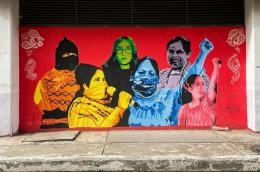
For decades, a key goal of activists and policymakers has been involving women in politics. Achieving gender parity in the political realm – that is, seeing more women running for and winning political office – is not merely a rhetorical goal. In fact, research has shown that women bring unique perspectives and focuses to lawmaking. A seminal study by Raghabendra Chattopadhyay and Esther Duflo showed that when women are given a seat at the table, they implement policies more relevant to the needs of women generally.
Many countries have implemented targeted electoral laws, known as “gender quotas,” as part of an effort to increase women’s political participation. These laws vary in the size of the quota, whether the quotas are legally enforced, at what stage of the election process they are enforced, which branch of government they are applied to (legislative, executive, judicial) and what level of government they are applied to (local, regional, federal). India reserves a minority of districts for women to lead, while in France, it is mandated in municipal elections that half of the candidates each party nominates must be women. Designing each system requires trade-offs: while a reserved seat system like India’s guarantees that at least some women will be elected, such strict systems could face legal opposition in their implementation.
Read here the full article published by Boston University Global Development Policy Center on 1 October 2024.
Image by Boston University Global Development Policy Center