Elections
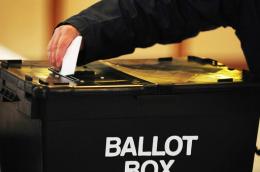
The recent local elections are a real-time example of why we need gender quotas.
Despite a record number of women running for office, only 26% of newly elected councillors are women, the same percentage as the outgoing cohort.
Women make up more than half of the population, but they are just a quarter of our elected leaders in local government.
And not only has progress stalled, in many areas, it’s going backwards. There are 13 councils with less than a fifth of female representatives.
In Donegal, only 8% of local politicians are women, with Mayo, Longford and Carlow only barely getting above 10%.
Areas that had previously come close to gender parity, such as Dublin City Council and Dun Laoghaire Rathdown have dropped to 40% and 33% respectively, showing a decline in the progression of gender balance at local government level.
Our democracy is strongest when diversity and equality are embedded in our political representation.
Women have had to overcome significant historical disadvantages in securing representation and great success has been achieved. But in 2024, women continue to be grossly under-represented in local politics, especially women from minority and marginalised backgrounds.
Read here the full article published by the Irish Examiner on 23 June 2024.
Image by Irish Examiner
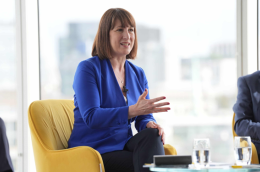
Only 30% of candidates are female, writes Hannah Stevens. The issues lie in selection processes and procedures that create enormous barriers to entry for women, disabled people and ethnic minorities.
While the possibility of the first female chancellor is absolutely to be celebrated, the authors of the letter backing Rachel Reeves are wrong to say we’ve “seen incredible progress” in politics for women (Top businesswomen back Rachel Reeves as first female chancellor, 11 June). At this snap general election, only 30% of the candidates are women. That is a derisory figure. It’s also 4% below the last snap election. So while a few have made it through, it’s not many. Business is actively doing better than politics in the diversity statistics.
The issues lie in processes and procedures. Candidate selection itself is at best opaque and at worst deeply unfair and alienating. It creates enormous barriers to entry, particularly affecting women, disabled people, Black people and other ethnic minorities.
Read here the full article published by The Guardian on 17 June 2024.
Image by The Guardian
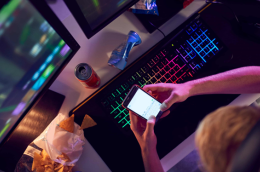
Abuse of female election candidates is becoming worse, say candidates, activists and charities.
One female Labour candidate in the north of England said “the harassment continues apace” in the build-up to the election, with online harassment being a particular problem.
As well as being subjected to hate speech and targeted comments online, she said she had also experienced disinformation being spread about her, and malicious complaints being made against her to public bodies.
“Some days you can put a good face on and go out and face it,” she said. “And other days you just think: ‘Why do I do this? Why do I bother?’
“Your family are saying: ‘It’s not worth it, step down’. And these conversations are happening up and down the country with candidates and their families, and people who are thinking about putting themselves forward think, ‘Well, do I want to open myself up to this?’ It’s corrosive to our democracy.”
Christine Wallace, the Conservative candidate for Lewisham West and East Dulwich, also ran in last month’s Greater London Authority elections.
Read here the full article published by The Guardian on 14 June 2024.
Image by The Guardian
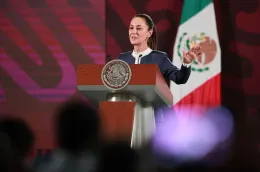
On June 2, over 60 percent of registered Mexican voters went to the polls for a monumental election, with over 20,000 public offices up for grabs at the federal and local levels. This election was historic, as a woman was elected to hold the highest office in Mexico for the first time. This comes more than 70 years after women gained the right to vote and stand for election. Over the past few years, women in Mexico have gone from being fringe operatives in the political arena to taking center stage. Still, this transformation took time and deliberate action to achieve.
While gender quotas have been used in Mexico since the early 2000s, they were not enough to achieve equality. In 2014, Mexico transitioned from relying on its gender quota system to a “gender parity system,” which mandates equal opportunity based on gender in candidate lists for local and national offices. This transition did not occur naturally; it resulted from consistent, permanent debate at all levels by activists, institutions, academics and women in politics who worked together across party lines to close the political gender gap.
The Impact of Gender Quotas in Mexico
Mexico’s 2002 first legislative quota passed by Congress required that 30 percent of candidates be women, with specific penalties for parties in cases of non-compliance. In 2008, the gender quota was raised to 40 percent, but parties were exempt from complying in cases where candidates were selected in democratic primaries. Six years later, in 2014, gender parity mandates were enshrined in Mexico’s constitution, marking the highest protection standard for women’s political rights. The impact of these hard-fought efforts has been undeniable; women’s participation in Congress has steadily increased with every reform.
Read here the full article published by Ms. Magazine on 11 June 2024.
Image by Ms. Magazine
Today’s Guardian report that online harassment against women politicians is intensifying is unsurprising, but it indicates a serious problem in UK democracy. There are two important factors to consider here. Firstly, online abuse needs to be addressed not as a case of individualised behaviour but as something structural. Online abuse is often facilitated by powerful actors, for example, our research shows how online abuse towards academics during Brexit was staged by right-wing newspapers on their social media pages. The digital media economy means that news organisations and social media companies have an incentive to promote articles that whip up anger or outrage that encourages engagement, and therefore advertising revenue.
Secondly, online abuse of women and other marginalised people needs to be understood not solely as ‘slurs’ or individualised insults but as a denial of a legitimate presence in political life. Our research found that online abuse of women academics and professionals, criticised not only their knowledge and expertise but their very status as academics, or, through threats of violence of death, even their right to exist at all.
Read here the full article published by the University of Birmingham on 11 June 2024.
Image by University of Birmingham
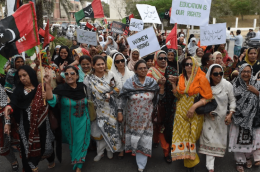
PAKISTAN ranks low on the Gender Gap Index in the World Economic Forum’s Global Gender Gap Report, 2023. On women’s political empowerment, it ranked 95th out of 146 countries, with only a handful of women occupying senior, managerial, policy- and decision-making posts. The main factors preventing women from achieving gender parity in politics are a patriarchal system, systemic gender discrimination, socioeconomic disparity, and hidebound cultural norms.
The Constitution is clear that “there shall be no discrimination on the basis of sex alone” and that “steps shall be taken to ensure full participation of women in all spheres of national life”. Besides, Pakistan is a signatory to the UN Convention on the Elimination of All Forms of Discrimination against Women, which obligates governments to “take all appropriate measures to eliminate discrimination against women in political and public life”, including in elections.
Pakistan’s women constitute almost half of the population, but their share in parliament is just 20 per cent. The gender gap also exists among voters.
Women’s participation and representation in the political process is a fundamental principle of democracy, and it is a prerequisite for gender-sensitive and gender-responsive governance. Ensuring the latter is only possible by increasing the number of women in policy- and decision-making positions and providing them with a conducive and women-friendly environment. According to UN Women, “in the last 25 years, women’s political representation has doubled globally. Even then, more than three-quarters of seats in parliament are still held by men”.
Read the full article here.
Image by Dawn