Elections
Human Rights Watch (HRW) has raised alarms over an increase in violence targeting women, children, and religious minorities in Bangladesh as the country prepares for the 13th National Parliamentary Elections scheduled for February 12.
In a report published on its website on January 14, the rights watchdog stated that these attacks highlight the interim government’s failure to uphold human rights following the 2024 "Monsoon Revolution."
Surge in Gender-Based Violence
Citing police data, the report noted that gender-based violence from January to June 2025 has surpassed figures from the same period in 2024. Dr. Fauzia Moslem, President of Bangladesh Mahila Parishad, attributed the decline in safety to the rising influence of religious groups and their provocative rhetoric.
According to Dr. Moslem, these groups are actively working to restrict women's freedom of movement and social participation. The report highlighted that since May 2025—when hardline groups labeled government gender equality efforts as "un-Islamic"—women have increasingly faced verbal, physical, and digital harassment, leading to a "silencing effect."
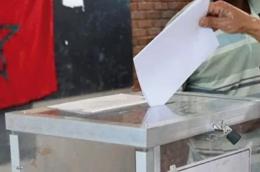
This week, the Minister of Solidarity, Social Integration and Family, Naïma Ben Yahya, announced the launch of a national campaign to raise awareness about women’s political participation. The initiative aims to strengthen the fight against discrimination and stereotypes in politics and is being rolled out under the Moucharaka program, ahead of the 2026 and 2027 elections.
Answering oral questions in the House of Representatives, the minister said the campaign includes training programs for women members of political parties, carried out in coordination with women’s sections within those parties. It also involves academic research conducted in partnership with universities, with findings to be published in order to identify avenues for improvement.
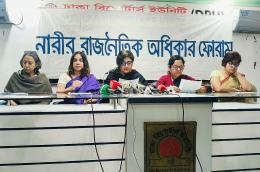
A total of 2,568 candidates have submitted nomination papers to contest the upcoming 13th Jatiya Sangsad elections. Of them, only 109 are women accounting for slightly over 4 per cent. Women’s rights activists have demanded that political parties give explanation before the public and be held accountable for nominating so few female candidates.
The demand was raised yesterday, Monday at a press conference organised by the Forum for Women’s Political Rights. The speakers also called for accountability from both the Election Commission and the political parties.
A written statement titled ‘The crisis of women’s nominations: The gap between political parties’ commitments and implementation, and the accountability of the Election Commission’ was read out at the press conference, held at the Sagar-Runi Auditorium of the Dhaka Reporters Unity (DRU) in Segunbagicha of Dhaka.
Speakers at a press conference on Monday said women’s participation in the upcoming election is extremely disappointing, despite some independent female candidates joining the race at the last moment.
Forum leaders made the remarks at a press conference titled “Nomination Crisis of Women Candidates: Gap between Parties’ Commitments and Implementation and the Accountability of the Election Commission”, held at the Sagar-Runi Auditorium of the Dhaka Reporters’ Unity.
Representatives from Gonoshasthaya Abhijan, Durbaar Network Foundation, Nagorik Coalition, Nari Udyog Kendra (NUK), Narigrantha Probortona, Nari Sanghati, Nari Pokkho, Narir Dake Rajniti, Feminist Alliance of Bangladesh (FAB), Bangladesh Nari Mukti Kendra, and Voice for Reform were present at the event.
They alleged that although the Election Commission frequently talks about a “gender-inclusive election,” there is little reflection of that commitment in reality.
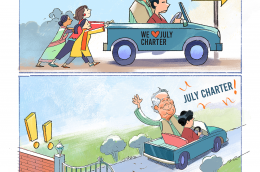
The upcoming national election in Bangladesh is significant for a number of reasons, one of the more significant of which is the issue of higher female representation and inclusiveness in Bangladeshi politics.
As the signatories to the July Charter have pledged to uphold clauses related to female empowerment from this election, the nomination lists of political parties have become the first real measure of whether the Charter represents a political turning point or merely a reformist document with limited practical consequence.
Regrettably, most parties have already fallen short.
The July Charter set a clear benchmark: political parties would begin with at least 5% women candidates in parliamentary nominations and gradually increase this figure by five percentage points in each election cycle until reaching 33% direct representation. All major parties signed it.
The transition process in Haiti, underway since July 2021, is progressing toward the elections scheduled for 2026 under a new electoral calendar (https://www.haitilibre.com/en/news-46492-haiti-flash-the-cep-has-just-published-the-revised-electoral-calendar-in-the-moniteur.html).
Despite some progress, Women's participation in governance in Haiti remains limited. Female representation in key bodies, such as the Presidential Transitional Council (CPT) and the Government, remains below the minimum constitutional quota of 30%. Women hold 22.22% of government positions and 11.11% within the CPT, where they do not have voting rights (observer status). They represent 27% of electoral staff at the departmental (BED) and municipal (BEC) levels. This underrepresentation highlights the persistent challenges to achieving gender equality in leadership roles.
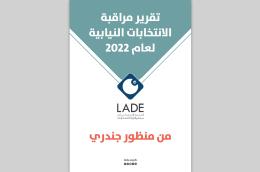
In in the context of promoting democracy, equality and equal opportunities, UNDP partnered with the Lebanese Association for Democratic Elections (LADE) to develop a report on observing parliamentary elections from a gender perspective in order to promote women’s rights and political participation.
The report highlights the obstacles and gaps women face and provides details the social, cultural, political and economic obstacles and challenges that restrict their access to Parliament. The report assesses the participation of female voters, women candidates and political parties in the electoral process.
This activity is funded by the European Union, United States Agency for International Development, and German Cooperation.
Source: UNDP
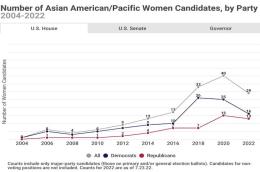
The 2022 midterms have led to some new records for women candidates for the U.S. House, U.S. Senate, and governor in various race and ethnicity groups, according to an analysis of candidate filings from CAWP. Asian American/Pacific Islander, Black, Latina/Hispanic, and white women have all set new candidacy records this year, though not at all levels of office.
CAWP began collecting data on candidate race in 2004 using a system of self-identification for candidate race and ethnicity determination. Because this data relies primarily on candidate response to CAWP’s self-ID query and our queries occasionally go unanswered, there remain a small number of candidates for whom we were unable to determine racial identification. This is alluded to when we say “at least” preceding a reported figure below. Additionally, because candidates may, for various reasons, exit political races and no longer appear on ballots, these numbers can change slightly moving forward.
Beginning this year, CAWP no longer reports an aggregate number of “women of color” in our data collections on candidates and officeholders and instead provides disaggregated data for all women by race and ethnicity. This change was guided by our desire to move away from treatment of women as monolithic and challenge the centering of whiteness as a default racial/ethnic category. Of particular note here, because multiracial women are included in counts for each group with which they identify, adding the numbers below will not yield the total number of women of color running for various offices in this year’s midterms.
Click here to access the data.
On 26 September 2021, Germans elected the 20th Bundestag. This election was special in many ways. The article analyses the electoral campaign, voting behaviour, turnout, and the formation of a new coalition government by using a gender and intersectional lens. Against the conceptual background of descriptive, substantive, and symbolic representation, we outline the implications of the election for gender and intersectional politics in the new German Bundestag and the government. In descriptive and symbolic terms, we find higher numbers of women (and of minorities) in the Bundestag and its leadership as well as in government; in substantive terms, we observe the presence of ‘critical actors’ and the commitment to progressive politics in the new ‘Ampel’ coalition. Hence, we see at least a chance for change in several key policy areas and social progress in the next 4 years.
Click here to read the full article published by Sage Journals on 7 July 2022.
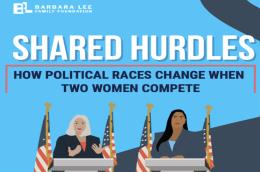
With more and more women running for office, races between women candidates will become the norm — not a novelty. Shared Hurdles reveals how candidates’ race, political party, and gender interact to influence voter opinion when more than one woman is on the ballot.
Research on gender dynamics in politics has seldom studied races between two women candidates. This research helps to fill that gap — and give women the tools they need to resonate with voters in races against other women. Shared Hurdles shows that in an election between two women candidates, gender biases are still prevalent, and voters hold both women to a higher standard than they hold male candidates. Shared Hurdles is a timely update on how gender shapes politics, and it provides a framework for women candidates who are campaigning against other women.
Click here to access the report.

Despite repeated warnings, Australia’s two major political parties continue to make one big mistake – and one MP has issued a scathing rebuke.
The women chosen by Australia’s two major political parties to run in the upcoming federal election are predominantly chosen for seats they are unlikely to win.
Shocking statistics gathered by news.com.au reveal a huge disparity in the chances of women entering parliament compared to their male counterparts, with men more likely to be chosen to run for a seat already held by their party.
Click here to read the full article published by News.com.au on 23 March 2022.

In December 2020, a leading Kenyan political party official, Edwin Sifuna, made vulgar remarks against a woman member of parliament. While campaigning for their political allies in a by-election, Sifuna said the woman is “not attractive enough to rape”.
In January this year, controversial bishop David Gakuyo, who is seeking election as a member of parliament, made demeaning remarks about two women politicians. He accused them of seeking votes while “swinging bare behinds”.
Sifuna and Gakuyo later made half-hearted apologies through the police after complaints were lodged about the language they used. The National Cohesion and Integration Commission, a government agency tasked with taming the excesses of politicians, was largely silent.
Click here to read the full article published by Daily Maverick on 17 March 2022.