The upcoming national election in Bangladesh is significant for a number of reasons, one of the more significant of which is the issue of higher female representation and inclusiveness in Bangladeshi politics.
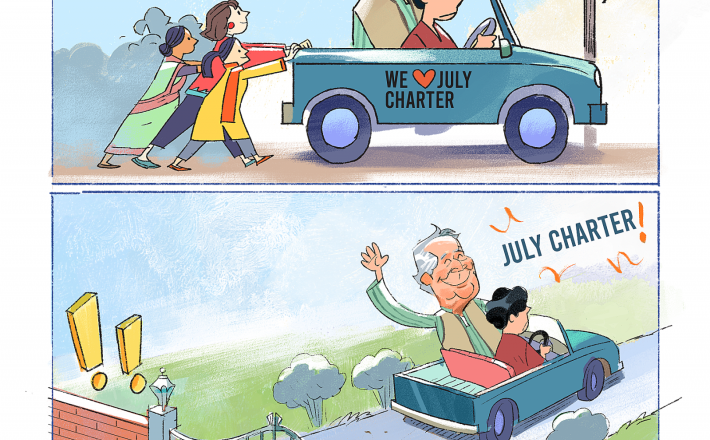
As the signatories to the July Charter have pledged to uphold clauses related to female empowerment from this election, the nomination lists of political parties have become the first real measure of whether the Charter represents a political turning point or merely a reformist document with limited practical consequence.
Regrettably, most parties have already fallen short.
The July Charter set a clear benchmark: political parties would begin with at least 5% women candidates in parliamentary nominations and gradually increase this figure by five percentage points in each election cycle until reaching 33% direct representation. All major parties signed it.

Hear from women leading change in the political space share their experiences and insights.

Explore a wide-range of audio-visual resources on key topics of gender equality.

Hear from a diverse list of panelists and guests as they reflect on critical issues pertaining Women in Politics.