Elections
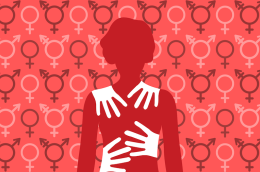
Parliamentarians draw attention to messages with insults and death threats.
With the first round of the presidential elections on Oct. 2 approaching, cisgender, transgender, and travestis in women involved in Brazilian politics have been denouncing on their social media episodes of gender political violence, considered now an electoral crime in Brazil.
Messages of sexist, racist, and even Nazi-inspired references are among the threats that have reached councilwomen and congresswomen. The women have common affiliations to leftist or center-left parties and the shared defense of agendas linked to diversity and the fight against inequalities.
Click here to read the full article published by Global Voices on 3 October 2022.
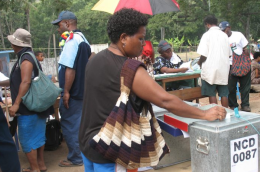
The results of the 2022 Papua New Guinea elections confirm that women will once again sit in PNG’s Parliament — after a hiatus of five years.
The 2022 elections were therefore not exactly a repeat of the 2017 elections for women candidates, but much more work is needed if significant numbers of women are to be elected.
The two new women MPs are Rufina Peter, who won the governorship of Central Province as an endorsed candidate of the People’s National Congress, and Kessy Sawang, who won the Rai Coast Open seat as an endorsed candidate of the People First Party.
Click here to read the full article published by Asia Pacific Report on 23 August 2022.
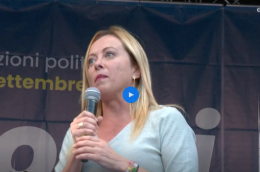
The leader of the Italian extreme right, Giorgia Meloni, is the great favorite to win the legislative elections in September, according to the latest polls. If the trend continues, Meloni could become the first woman in charge of the head of government.
“I am not afraid, but is this nation prepared to ask itself about the reasons why the Brothers of Italy party is spoken of every day as if it were monstrous in the newspapers, while it is estimated that it has the consensus of 25% of the Italians?” he said during a nearly hour-long speech in which he lambasted the European Union, globalization, covid restrictions and migration.
Click here to read the full article published by Paudal on 24 August 2022.

Stakeholders in the electoral process in Nigeria, including the United States-based National Democratic Institute have expressed concern over the exclusion of women as running mates in the presidential primaries for the 2023 elections.
They, therefore, emphasised the need for the media to beam attention on the marginalisation of women in the last presidential primaries by political parties.
These recommendations were among the highlights of a communique issued at the end of a two-day media training which held early August in Calabar for 25 journalists on gender reporting, with the theme: ‘Preparing journalists to promote women political participation: Training on gender-sensitive reporting in Nigeria.’
Click here to read the full article published by Punch on 7 August 2022.
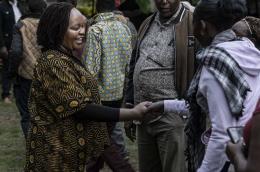
Nairobi (AFP) – Kenyans have elected a record number of women to positions of power in this month's polls, with the list including seven governors, three senators and 26 MPs, in a step towards gender equality.
The East African nation has long struggled to get women into politics, with men accounting for the overwhelming majority of elected officials and female politicians largely consigned to serving as one of Kenya's 47 women representatives.
But the August 9 elections marked a breakthrough for female politicians.
Click here to read the full article published by France 24 on 16 August 2022.
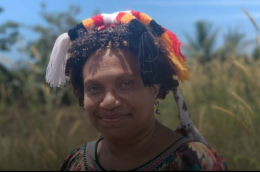
Kessy Sawang has been elected as MP for Madang Rai Coast and joins Rufina Peter as the second woman admitted to PNG's parliament this election.
Ms Peter and Ms Sawang are just the eighth and ninth women in the history of PNG politics to be elected to Parliament.
Ms Sawang said educating her constituents on how government works was critical to gaining support.
"When people have new knowledge about things they feel empowered," she said.
Click here to access the content.