Elections
As Bangladesh moves towards its 13th national parliamentary election, the issue of women's political representation has once again come into sharp focus. Despite repeating promises by political parties to increase women's participation in direct electoral contests, the nomination lists released ahead of the election reveal that women continue to be vastly underrepresented among candidates for general seats. This pattern raises fundamental questions about the role political parties play in shaping democratic inclusion and whether the symbolic rhetoric surrounding gender equality is being matched by substantive action. The composition of nomination lists from major political parties such as the Bangladesh Nationalist Party (BNP), Jatiya Party, National Citizen Party (NCP) and others provides an illuminating snapshot of the current state of women's electoral inclusion and the deeper challenges that persist.
The most striking feature of the data on nominations for the 13th national election is the persistently low number of women candidates. According to official figures from the Election Commission, women make up a tiny fraction of those contesting general seats: only 65 women out of 1,842 validly nominated candidates, amounting to just 3.53 per cent of the total list. This percentage is far below even modest thresholds proposed in some political discussions, which suggested that parties should nominate at least 5 per cent women candidates across constituencies. In many ways, the lack of women nominees underscores the structural barriers that women face within party nomination processes in Bangladesh.
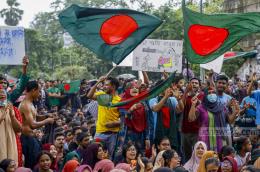
Despite women being at the forefront of the August 2024 uprising that toppled the Awami League government, political parties have largely failed to honour their pledge to nominate at least 5 percent women candidates in the parliamentary election.
Muhammad Yunus-led interim government had introduced reforms aimed at restoring democracy, including a commitment under the July National Charter that parties would nominate women in no fewer than 5 percent of the 300 directly elected seats.
Election Commission data show that while more than a hundred women submitted nomination papers, only around 65 survived scrutiny.
The final number of women contesting will be confirmed on Jan 20 after appeals.
Among the parties that signed the July Charter, the BNP nominated the highest number of women in absolute terms but still fell short of the five percent benchmark.
Women remain largely absent from the electoral race, with 30 of the 51 political parties contesting the upcoming national election fielding no female aspirants at all, Election Commission data shows.
The figures lay bare a stark imbalance -- despite women making up half the population, their presence among candidates remains marginal.
Of the 2,568 aspirants for the February 12 polls, only 109, just 4.24 percent, are women. Seventy-two of them were nominated by parties, while the rest are independents.
The exclusion is most pronounced among Jamaat-e-Islami, which submitted 276 nominations without a single woman, followed by Islami Andolan Bangladesh with 268.
On March 1, 2024, Iran held the first round of its parliamentary elections, marking the 12th time since the 1979 revolution that Iranians elected members of the national parliament. Meanwhile, on March 31, 2024, Turkey held its local elections throughout the country’s 81 provinces, electing metropolitan and municipal mayors alongside councilors and other neighborhood representatives.
When it comes to women and electoral politics, Iran and Turkey diverge from one another in fundamental ways, while they also share important similarities. A comparative study of the two countries reveals that, despite the notable backlash against women’s rights and the absence of free and fair elections (though to different degrees) in both countries, large sections of the feminist movement in Iran and Turkey assessed the elections differently in their respective countries.
Considering the institutional structures of their respective contexts, feminists in Iran actively campaigned for a boycott of the elections, declaring them illegitimate, while feminists in Turkey considered the elections as an opportunity to help reverse Turkey’s authoritarian and anti-woman turn.
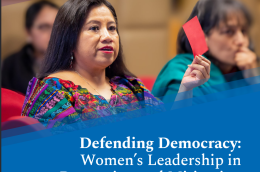
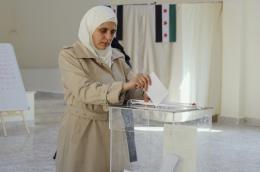
On Sunday, 5 October, Syria held its first parliamentary elections since the fall of the Assad regime last year.
Despite concerns over inclusivity and repeated delays, the elections were seen by many as a step forward after decades of dictatorship — particularly for women — with Syria's interim president, Ahmed al-Sharaa, calling the parliamentary election "historic."
But despite women playing key roles in education, healthcare, relief work, and civil society — especially during the war when they took on significantly greater economic and social responsibilities — Syrian women’s political presence remains limited. This is mainly because politics is still viewed as a male domain.
Ahead of the vote, for example, a government decree allocating only 20 per cent of parliamentary seats to female representatives triggered widespread debate across both political and social circles.
While some described the move as a “token measure” that failed to reflect the scale of sacrifices made by Syrian women during the war — and those still being made as the country continues to face multiple crises — others viewed it as a necessary, temporary step towards addressing decades of marginalisation and exclusion.
Full article here.

In this In brief, the authors consider lessons learned in the aftermath of women candidates’ defeat in the 18 November 2021 general election. They identify five intractable barriers to women’s election in Tonga: voters’ expectations of reciprocity in exchange for electoral support; deeply entrenched perceptions of men’s legitimacy as political leaders; untimely support for women candidates; an inhospitable political environment for electoral gender quotas; and a lack of accountability on gender equality commitments.
Click here to read the full article.

Electoral management bodies (EMBs) are responsible for ensuring a level playing field for political representation and meaningful participation across the entire electoral cycle. Yet, International IDEA data shows that only 22% of EMBs themselves are chaired by women.
When disaggregated by regions (Figure 1.), data from 242 EMBs in 208 countries and territories shows that the percentages indicating the number of women chairing EMBs are below the global average on three continents, with Asia recording the lowest numbers (10%), followed by Oceania (11%) and Africa (19%).
Click here to read the full article published by International IDEA on 7 November 2021.

Although the landscape for female candidates in U.S. politics has improved, research continues to find that many voters possess sexist attitudes. We rely on a standard political communication framework to help reconcile sexism in the electorate with increasingly favorable outcomes for women in primary elections. Based on two national survey experiments, we first demonstrate that in the absence of gendered campaign rhetoric, sexism is a weak predictor of support for female candidates on both sides of the political aisle. We then show, however, that when a male candidate attempts to activate sexism among voters by attacking a female opponent, gender attitudes become more salient—but not to the woman’s disadvantage. In a Democratic primary, gendered attacks backfire and lead to a significant boost in support for the female candidate. On the Republican side, a male candidate does not face the same backlash, but the attacks do very little to depress his female opponent’s support. While the persistence of hostile attitudes toward women has slowed the march toward gender equality in society, our experimental results suggest that sexism exerts only contingent effects in primary elections and not systematically to female candidates’ detriment.
Click here to download the paper published by Sage Journals on 23 September 2021.

By Roudabeh Kishi
Attacks on women in politics are on the rise around the world. New data and research from the Armed Conflict Location & Event Data Project (ACLED) reveal how physical violence targeting women in politics is creating dangerous – and at times lethal – obstacles to women’s participation in political processes. Even as women are engaging in elections in record numbers around the world – both by seeking office and by voting – they are being met with an increasingly violent backlash.
Over the course of 2020 and 2021, Mexico, Colombia, China, India, Brazil, Burundi, Myanmar, Afghanistan, the Philippines, and Cuba top the list of the most violent countries in the world for women in politics. With rapidly evolving political situations as well as upcoming elections in many of these countries, the threat of violence targeting women in politics may only grow in the new year. Examining key trends from the latest political violence data for these countries will provide a glimpse of what to watch for in 2022 when it comes to the risks facing women in politics.
Click here to read the full article published by GIWPS on 28 January 2022.

According to Palestinian Central Elections Commission data, the first phase of the 2021 local council elections showed the extent of women candidates in competing lists. Results indicated that the percentage of women who won through voting in lists was 20.5% and the overall percentage in all local councils (voting and acclamation) was 21.8%, which reflects a slight increase in the percentage of the women’s quota. This points to the importance of the quota, which maintained the presence of women in local councils, especially since there are many councils in Bethlehem for example, which refused to present a list on the premise of their rejection of women’s participation.
As for youth participation, according to CEC data, the percentage of youth between the ages of 25-35 was 21.7%; between 36-45 the percentage was 27.4%, between 46-55 it was 28.6% and those above 55 was 22.3%. It should be noted that the age of youth, according to the UN, is between 18-29 while the candidacy age in Palestine is still at 25 for local councils. The closest percentage to this was 21.7% up to 35 years of age, which drops to 19.4% in councils where elections were held, followed by 24.5% for the 36-45 age bracket.
Click here to read the full report published by Miftah on 5 January 2022.

Abstract
Although female political representation in the Arab world has nearly doubled in the last decade, little is known about how voters in the region view female politicians and their political platforms, particularly in a new democracy like Tunisia. We conduct original conjoint and vignette survey experiments to examine the effects of candidate gender and gender- and leadership-congruent political platforms on voter support. Building on role congruity theory, we find evidence of bias against female candidates among voters, particularly among respondents who hold patriarchal gender norms. Additionally, we find that all respondents are more likely to prefer candidates who emphasize security issues rather than women’s rights. Overall, our study suggests that female candidates who emphasize issues congruent with stereotypes of political leadership, such as security, can increase voter support, though respondents also reward male candidates who appeal to leadership congruent issues.
Click here to access the paper published by Springer.