Parliaments & Representatives
In recent years, India has witnessed a significant rise in women’s empowerment, reflected in greater participation in education, politics, entrepreneurship, and social activism. However, this progress has also sparked debates over culture, morality, and autonomy. Incidents like the disruption of the Miss Rishikesh pageant rehearsal in Uttarakhand reveal persistent moral policing and patriarchal control, challenging women’s right to self-expression. Addressing these tensions is essential to promote gender equality, individual freedom, and a society that genuinely respects women’s choices and aspirations.
What are the Key Factors Driving the Growth of Women’s Empowerment in India?
-
Increasing Female Literacy: India's female literacy rate was projected at around 70.3% in 2025, showing a steady upward trend thanks to government schemes like Beti Bachao Beti Padhao.
-
Female youth literacy is even higher at 96% for ages 15-24, reflecting growing educational access.
-
However, rural-urban and state-wise disparities persist, with states like Kerala and Mizoram having close to universal female literacy, while Bihar and Rajasthan lag behind considerably.
-
-
Rising Workforce Participation: Female labour force participation rate has shown encouraging growth, reaching 41.7% in 2023-24, up from under 30% a decade ago.
-
Women's participation is increasing, particularly in the formal sectors, the gig economy, and skilled jobs such as IT and healthcare.
-
Self-employment among women rose from 51.9% in 2017 to 67.4% in 2024, indicating growing economic independence and entrepreneurship opportunities.
-
-
Entrepreneurship and Economic Independence: Women-led Micro, Small, and Medium Enterprises (MSMEs) have nearly doubled over the last decade to about 1.92 crore enterprises in 2023-24.
-
The share of women-owned proprietary establishments in India has risen significantly from 17.4% in 2010–11 to 26.2% in 2023–24, reflecting growing female entrepreneurship and economic participation, driven by initiatives like PM Mudra Yojana, Stand-Up India, and Mahila E-Haat.
-
-
Political Representation: As of 2025, women constitute approximately 13.6% of the Lok Sabha, with 74 women elected to the 18th Lok Sabha, reflecting a slight dip from 14.4% in the 17th Lok Sabha (78 women).
-
Despite this, women’s representation in local governance remains robust, with nearly 46% of elected representatives at the Panchayati Raj Institutions being women, supported by several state-level provisions for up to 50% reservation.
-
The landmark Nari Shakti Vandan Adhiniyam (2023) mandates a 33% reservation for women in Parliament and State Assemblies, currently awaiting implementation post-delimitation.
-
Increasingly, women politicians are influencing policies on gender equality and social welfare.
-
-
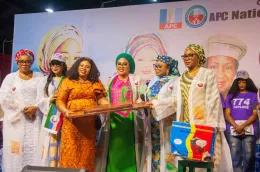
The First Lady of the Federal Republic of Nigeria, Sen. Oluremi Tinubu, has emphasized the importance of inclusive political participation, calling for increased women’s representation in nation-building efforts.
Sen. Tinubu made the call during the 774 Explode Programme; an empowerment initiative organized by the Office of the All Progressives Congress (APC) National Women Leader, themed, “Enhancing Gender Space in Politics”, which took place at the Victor Uwaifo Creative Hub in Benin City.
Represented by the Minister of Women Affairs, Hon. Imaan Sulaiman Ibrahim, Sen. Tinubu celebrated women’s invaluable contributions in nation building and growth. She noted Nigeria’s low representation of women in elected positions and called for change. She further emphasized women’s success in various sectors and advocated for economic empowerment, political participation and reserved seats for women with the goal of creating more opportunities for them to address social challenges and build a stronger society.
The APC National Women Leader, Dr. Mary Alile highlighted the stigma and cultural barriers that have discouraged women from participating in politics in Nigeria to include the notion that politics is a “Dirty game” and that women should focus on domestic roles. She noted that the current generation of women is more determined and educated, and deserves a chance to contribute to decision-making.
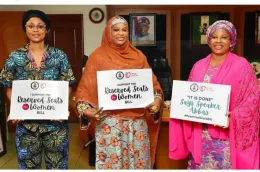
The clamour for increased representation of women in Nigeria’s political space has once again come to the fore, as stakeholders await the outcome of the Reserved Seats Bill currently before the National Assembly.
The bill, also referred to as “Additional or Reserved Seats Bill’’ seeks to alter the 1999 Constitution of the Federal Republic of Nigeria to provide reservation for women in the National and State Houses of Assembly to address the low number of women in the legislature.
If passed into law, the bill will address the long-standing concerns of women underrepresentation in governance and decision-making by ensuring that these special seats are to be contested and filled by women only as a temporary measure to boost their representation.
The bill proposes the creation of one Special Seat for women per Senatorial District and one per Federal Constituency to be contested by women in general elections of which they will have the same privileges and responsibilities as existing members.
This political solution is expected to exist alongside the current constituency seats and will be in place for a limited number of election cycles, after which they will be reviewed to strengthen women’s political inclusion.
Nigeria ranks among the lowest in Africa for women’s political representation, while countries like Rwanda, Namibia, and South Africa lead with robust gender-inclusive policies and high female participation in governance.
Nigeria, Africa’s most populous country, remains near the bottom of the continental rankings, with only 4.1% of seats in its National Assembly held by women as of 2025. This figure pales in comparison to countries like Rwanda (61.3%), Namibia (44.2%), and South Africa (42.7%), which have institutionalised gender parity through legal reforms and party-level quotas.
Rwanda stands as the global leader in women’s parliamentary representation. Following the 1994 genocide, the country rebuilt its political system with gender equity at its core. The Rwandan constitution mandates a minimum 30 per cent representation for women in decision-making bodies, and political parties actively promote female candidates. As a result, women occupy over 60 per cent of seats in the lower house, and hold key ministerial positions in health, education, and gender affairs.
Full article here.
Global and regional commitments over the last thirty years provide solid support for promoting gender equality in politics. In recent years, the growth of women’s representation has stagnated, and the OSCE region is now witnessing escalating narratives against gender equality, which are having a detrimental effect on women’s political participation. Temporary special measures are being abolished, and no new ones are being introduced. Political polarization is steadily increasing, while sexism and violence against women in politics is pervasive, impacting female politicians’ decisions on whether to run for office, advocate certain policy solutions or leave their elected posts.
In this publication, ODIHR presents a seven-step roadmap for OSCE participating States — their parliaments, governments, political parties and other state agencies — to work towards achieving gender parity. It complements the results of the Inter-Parliamentary Union’s 2025 Global Conference of Women Parliamentarians with its visionary approach to parity as parity in numbers, influence and culture. These steps aim to inspire participating States to draft their own, national roadmaps to gender parity, tailored to their specific circumstances and needs.
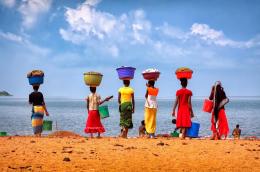
Researchers at the King Center on Global Development are addressing challenges such as gender-based violence and low labor participation, with the aim to inform supportive policy interventions.
When it comes to managing the administrative tasks that are required to run a home and raise a family, women bear the brunt of the responsibility. According to one study of women in the United States, mothers take on 7 out of 10 so-called mental load tasks, which range from planning meals to scheduling activities for children.
All that extra work takes a toll, including on society: Women who carry more mental load are less interested in national politics (men who carry more mental load also report less political interest, but fewer men are in that position).
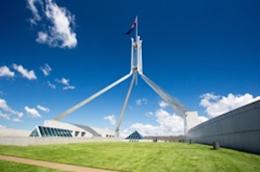
How does the gender composition of the Australian parliament compare with parliaments around the world, and how has it changed over the past two decades
International comparisons
The Inter-Parliamentary Union (IPU) has published international rankings of women in national parliaments since 1997. The IPU’s rankings are based on the representation of women in the lower (or single) houses of national parliaments only. The representation of women in the Australian Senate is therefore not factored into Australia’s ranking.
As illustrated in Figure 1 below, Australia’s IPU ranking for women in national parliaments was 27th in 1997, rising to 15th in 1999. In 2022 Australia’s ranking has fallen to 57th.
Click here to read the full article published by Parliament of Australia on 20 April 2022.
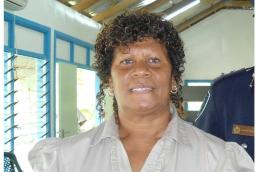
In late March 2022, 16 years after she was first elected to the Isabel Provincial Assembly in Solomon Islands, Rhoda Sikilabu became the country’s first female premier. The four-time MPA and former Deputy Premier replaced Leslie Kikolo who resigned a day before he faced a motion of no confidence.
The local coverage of Solomon Islands’ first female premier – in the Solomon Times, the Island Sun, Twitter, as well as the Australian and New Zealand Pacific outlets – was pleasantly surprising and suggests that women’s political leadership is finally becoming newsworthy.
Click here to read the full article published by DevPolicy Blog on 27 April 2022.
The Study "Violence Against Women in Politics" is commissioned by the UNDP Albania, in partnership with the People's Advocate and the Commissioner for Protection from Discrimination and it is conducted in the context of the UN Joint Programme "Ending Violence Against Women" in Albania"funded by the Government of Sweden.
The study shows the known trend: women politicians, compared to men, are more likely to experience violence that is not visible.
Click here to access the report.
This document presents the result of a series of surveys conducted by Abacus Data in January 2022, about women in politics and the future of women in politics.
Click here to access the report.
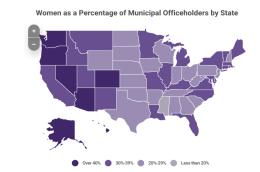
Data provided by the Center for American Women and Politics and KnowWho Data Services. Numbers include members and officers of the municipal legislative branch of incorporated cities and towns with populations over 10,000 as per the U.S. Census. These bodies vary by municipality, but include city councils, boards of alderman, city commissions, among others. Mayors and other officials who perform mayoral functions are included in these counts. Data is as of March 2022 and will be updated annually.
Click here to access the data.
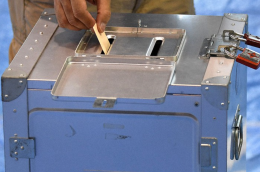
A survey on politicians in Japan has shown that many former and current female national legislators and local assembly members have been subject to sexual harassment.
"I was threatened that if I did not kiss them, they would not vote for me," and "I was told that young women win elections even if they are not qualified," are examples of some of the responses.
Released in February, the results were a part of a "politician harassment white paper" containing the results of a survey carried out by Tokyo-based Woman Shift, a network of young female lawmakers and assembly members, as well as Polilion, a Gifu Prefecture-based organization that conducts harassment training for legislatures and assemblies. The survey was carried out between August and October 2021, and 200 people (100 men, 98 women and 2 others) responded.
Click here to read the full article published by The Mainichi on 29 March 2022.