

Parliaments & Representatives

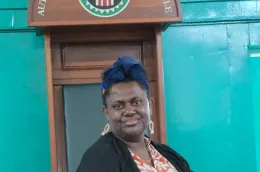
Theonila Roka Matbob, one of the most prominent female candidates in the Bougainville election, has lost her seat.

Matbob, the member for Ioro in Central Bougainville - a region encompassing Panguna - was "very confident" of holding the seat despite being up against ten male candidates.

She was one of 34 women out of a field of more than 400 candiates contesting seats in the Bougainville House of Representatives.

In 2020, she was one of only two women to win an open seat.

Matbob was a vocal advocate who led a successful campaign to have Rio Tinto, a mining multi-national, to consider the damage caused by the mine it used to own.

She was at the forefront of the push for an assessment into the damage caused by the troubled Panguna gold mine - one of the world's largest copper and gold mines - in the autonomous Papua New Guinea region.

Full article here.


Women face an uphill battle to political election, and they continue to confront barriers to success afterward. But the type of legislature in their states can make a difference.

A new study from Virginia Commonwealth University researcher Jatia Wrighten, Ph.D., and colleagues finds that women are more effective lawmakers than men when serving in professional state legislatures, which are generally in session full-time, than when serving in part-time legislatures that have lower barriers to entry, lower salaries and fewer staff.

Once elected, women in professional legislatures are often more effective even when given less notable committee assignments, Wrighten finds. She said that means that voters in general are better served by professional legislatures, where more diverse voices, including those of women, are represented. Wrighten, an assistant professor in VCU’s Department of Political Science in the College of Humanities and Sciences, recently spoke about her findings, which were published in The Journal of Politics.

What does it mean for a state legislator to be effective?

Legislative effectiveness can be measured in several ways. In our article, we measure legislative effectiveness by the lawmaker’s ability to “act for” their constituents in policymaking. In other words, are women able to have their voices heard in legislatures, does their committee work matter, and do resources constrain them due to the level of professionalism in the legislature?

What roadblocks do women face before and after election?

As one can imagine, living in a patriarchy, women who run for office face sexism, which manifests in many ways. Many voters hold women to a higher standard than men who run for office and do not see them as leaders. Women running for office have been critiqued on their physical appearance, criticized for their voices being “too high” or “annoying,” questioned for their ability to both run for office and manage their families, and questioned when they do not have families. Once women are elected, they face much of the same from their male peers. They are also placed on lower-ranked committees, which have fewer resources than other committees, and are relegated to those labeled as focusing on “women’s issues,” such as education, criminal justice or health.

Full article here.


An apparent bottleneck exists in women’s participation in politics: the number of female party members exceeds the number of female candidates, which in turn is almost double the number of women elected, who, on average, account for less than one-fifth of all winners at the polls. This is shown by a survey conducted by Valor based on data from the Superior Electoral Court (TSE). 

This pattern, repeated in every election, is not restricted to a particular ideology. It occurs in parties on both the right and the left and is unrelated to party size; from the largest to the smallest, the funnel phenomenon remains.

To become a candidate, a woman must first be a party member. Gender inequality in politics begins there. Women account for an average of 46.4% of party members—a figure that may seem high but does not reflect the reality of Brazil’s population. According to the 2022 Demographic Census, 51.5% of the population is female.

Full article here.


Introduction

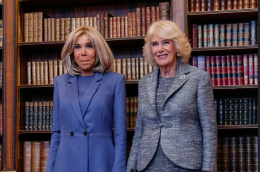
Brigitte Macron, the wife of French President Emmanuel Macron, has emerged as a significant figure in French politics and society. Her active involvement in various social initiatives and her unique position as the spouse of the president have made her a central figure in discussions about contemporary leadership and gender roles in politics. As France navigates uncertain times, Brigitte’s influence and advocacy on critical issues have become increasingly relevant.

Brigitte’s Background

Brigitte Macron, born on April 13, 1953, in Amiens, France, was a high school drama teacher before her marriage to Emmanuel Macron. The two met when Macron was just 15 years old, and their relationship began much later, defying conventional societal norms. Her educational background and experience in teaching have fueled her commitment to education reform and children’s welfare.

Advocacy and Contributions

As the First Lady of France, Brigitte has taken an active role in advocating for education, health, and women’s rights. She has particularly focused on issues surrounding youth education, launching several initiatives aimed at improving literacy and emotional support for children. Brigitte has also been a vocal advocate for anti-bullying campaigns, emphasizing the need for a supportive school environment.

Full article here.


The role of women in politics is vital for any nation’s progress. A country cannot move forward if half its population is excluded from decision-making. In Pakistan, however, women face serious obstacles in entering politics.

A major problem is the lack of political awareness. Many women, especially in rural areas, have little access to education. Even when they are interested, family pressures hold them back. Fathers, brothers, and husbands discourage their involvement, while economic barriers make contesting elections difficult. Reserved seats for women exist, but they are largely controlled by influential families, leaving little space for ordinary women to rise.

Full article here.


OTTAWA, Ontario, Sept. 22, 2025 (GLOBE NEWSWIRE) -- Informed Perspectives reveals that Canada’s status as a global champion of gender equality is under serious threat. In just 25 years, the country has plummeted from 28th to 71st place in world rankings for women’s representation. This significant decline highlights the inadequacy of our current approach to achieving parity in Canadian politics. 

This backslide has occurred despite overwhelming support for change. New polling from Abacus Data reveals that gender parity is a core belief for most Canadians, with 86% saying it’s important to have equal representation of men and women in politics at all levels of government.

Democracy Deficit

“Equal representation is fundamentally about democracy and trust,” said Shari Graydon, Catalyst at Informed Perspectives. “Canadians overwhelmingly expect that women should hold the balance of power in politics at all levels, and Canada cannot claim to be a global leader on equality while men dominate at 70% in our highest decision-making body.”

The consequences extend far beyond representation numbers. A significant majority of Canadians understand that gender parity delivers tangible benefits to Canadian democracy, with roughly four in five people saying that ensuring a balance of power among elected representatives leads to: 

  • Improved policy outcomes that accurately reflect the diverse realities of the entire population
  • Stronger political discourse reflecting increased civility and respect
  • More effective governance through increased productivity 
  • Stronger democratic legitimacy through greater cross-partisan collaboration

Full article here.


By Anoa Changa

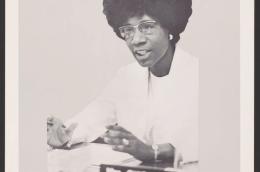
For Rep. Barbara Lee, part of Chisholm's legacy is how she inspired and empowered other Black women to reach higher.

Fifty years since Congresswoman Shirley Chisholm announced her run for president, she remains a shining example for Black women in politics and beyond. More than simply a campaign slogan, “unbought and unbossed” has become a mantra for Black women in politics and their daily lives.

Click here to read the full article.

The 13th Summit of Women Speakers of Parliament (13SWSP) was held on 6 September 2021 in Vienna (Austria) on the theme Women at the centre: From confronting the pandemic to preserving achievements in gender-responsive recovery. Over 26 of the world’s leading women legislators took part in the Summit which was organized by the Inter-Parliamentary Union (IPU) in partnership with the Parliament of Austria and the United Nations.

Click here to read the report.


The addition of identity types to ACLED data on political violence targeting women sheds new light on the threats to women’s participation in political processes, such as running for or holding office, supporting or voting for political candidates, leading human rights campaigns or civil society initiatives, and more. This report analyzes the expanded data to unpack key trends in violence targeting women in politics.

Click here to read the full report.


The present regional study, the second in the series, focuses on parliaments in Africa and was carried out in partnership with the African Parliamentary Union (APU). It is based on confidential interviews conducted with 224 women parliamentarians and members of parliamentary staff from 50 countries and one subregional parliamentary assembly (see methodology of the study on page X). The aim of the study is to enrich the documentation and knowledge available on violence against women in parliaments in Africa, taking into account their voices and realities in the local context of the continent. New data thus obtained can be compared with data from the two previous studies, helping to further fine-tune how we view and understand the problem. It is by improving our knowledge and recognizing these acts of violence that we can prevent and fight against them, while also combating the impunity enjoyed by perpetrators. Listening to women affected by violence and gathering their perspectives are also ways to ensure that the help and services available are appropriate and anchored in reality.

Click here to read the report.

This Handbook aims to serve as a resource for lawmakers from around the world for designing gender-responsive laws. Such law-making should address the strategic needs of women and girls and must encompass the enactment of new laws, amending or repealing laws which are outdated, are inconsistent with constitutions, or discriminate against them. The Handbook was prepared in close  consultation with parliamentarians from across different legal systems of the world, combined with a desk review of relevant literature.

Click here to access the report.

Recently, the issue of harassment and intimidation of women in politics in long-established democracies has become a source of concern. Current research emphasizes that while women may be more frequently attacked, not all incidents of abuse against women in politics are of a gendered nature. This finding prompts further questions such as are women more frequently targeted because they are women and does such targeting inhibit women from fully participating in political campaigning? Using data from the Representative Audit of Britain’s survey of candidates contesting the 2019 General Election, this study shows that harassment has a negative electoral effect for women, even while controlling for the visibility of the candidate. This article argues that the harassment of women candidates in the UK is gendered, both in its motives and outcomes as it forces women to modify their campaign activities in ways that diminish their chances of gaining office. Our findings contribute to the theoretical and empirical understanding of violence towards women in politics and gendered political violence.

Click here to read the full article published by Taylor and Francis Online on 23 August 2022.