Parliaments & Representatives

During a motion of no confidence in March 2025, opposition member of parliament Fuiono Tenina Crichton heckled Samoan Prime Minister Fiame Naomi Mata’afa, saying that her ‘leadership would have been remarkable’ if only she ‘had gotten married’ and had someone to ‘advise’ her.
Fiame defeated the motion comfortably by 32 votes to 19. The episode did not directly result in a prime ministerial resignation, but within three months, Samoa’s Head of State, His Highness Tuimaleali’ifano Vaaletoa Sualauvi II, dissolved Fiame’s minority-held parliament.
Though not new anywhere in the world, it remains important to consider the manifestations of, and motivations behind, these kinds of deliberately provocative, sexist statements in politics. Is there something peculiar to the expression of sexism in Pacific politics?
To unpack this, we must understand Samoan voter sentiment, the legacy advantage Fiame has always had and the purpose of sexist discourse in politics.
In a 2021 survey of over 1300 Samoans, 88 per cent expressed support for women’s involvement in politics. Even before Fiame was promoted to the highest office, 85 per cent of survey respondents agreed that a woman should become prime minister. At the local level, while 37 per cent agreed with the sentiment that women should not speak in village councils, 63 per cent disagreed.
These figures show that the Samoan community purports to be extremely welcoming of female political leadership. In 2021, Fiame became Samoa’s seventh prime minister, leading the newly established Faʻatuatua i le Atua Samoa ua Tasi party to a historic democratic victory. She was the first female Head of Government in the Pacific, following Hilda Heine’s lead as the region’s first female Head of State.
Plus, Samoa is the only sovereign country in the Pacific to institute a gender quota at the national level, ensuring that women hold a minimum of 10 per cent of parliamentary seats. Public contestation — both in parliament and in the courts, including public calls for clearer wording of the reform — over this quota following the 2021 election demonstrates local support.
Full article available here.
Extract
The 2024 elections made US history in numerous ways. Vice President Kamala Harris became the first Black and South Asian woman to be nominated by a major party for the presidency. Former president Donald Trump made history by becoming the oldest person and the first convicted felon to become president. 2024 marked the first presidential election following the historic Dobbs v. Jackson Women’s Health Organization decision in 2022.
The 2024 elections made US history in numerous ways. Vice President Kamala Harris became the first Black and South Asian woman to be nominated by a major party for the presidency. Former president Donald Trump made history by becoming the oldest person and the first convicted felon to become president. 2024 marked the first presidential election following the historic Dobbs v. Jackson Women’s Health Organization decision in 2022.
We asked leading experts in the field to reflect on the gender and racial dynamics of the 2024 election cycle and consider which aspects of the election are illuminated by gender scholarship. We asked what theories help explain the dynamics of the campaigns, voting behavior, and the outcome, as well as which election aspects were unanticipated. We asked about the larger lessons and challenges for the study of gender, LGBTQ+ identities, race/ethnicity, elections, and politics. As Politics & Gender celebrates its 20th anniversary, we wanted to know what new questions should be addressed and whether new theories about gender and US elections are needed.
Full article available here.

OpenAI has banned a network of ChatGPT accounts originating from the Philippines that used its platform to generate social media comments praising President Ferdinand Marcos Jnr as the crackdown highlights how artificial intelligence (AI) could be misused to conduct influence operations.
The US-based AI pioneer said it had identified the accounts using ChatGPT to generate short comments in English and Filipino, which were later posted on Facebook and TikTok. It dubbed the operation “High Five” because many of the comments included emojis, according to a report released on June 5.
“The comments this operation generated and posted online were brief but partisan. Typically, they praised President Marcos and his initiatives, or criticised [Vice-President Sara Duterte-Carpio],” OpenAI wrote in its report.
Full article available here.
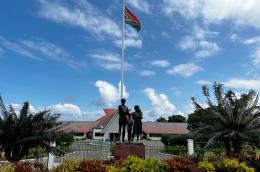
On this International Day of Parliamentarism, observed on 30 June under the 2025 theme ‘Achieving Gender Equality, Action by Action’, Pacific nations stand at a critical juncture. Parliaments across our region average just 8.2 percent women's representation, the lowest globally. In some Pacific Island countries, not a single woman sits in the chamber.
This is not just a crisis of numbers. It is a crisis of representation, policy inclusion, and missed potential.
In Vanuatu, only one woman sits among 52 Members of Parliament, the Hon. Marie Louise Milne. That’s less than two percent. Yet, despite this, her voice has been powerful. She has championed rural women’s concerns, pushed for stronger protections against gender-based violence, and called for equitable access to essential services in remote islands.
Systemic barriers remain: entrenched cultural expectations, campaign financing hurdles, and the lack of childcare support for MPs are just a few of the challenges. These barriers limit not only women’s entry into politics but also their full participation and leadership.
The Speaker of the Parliament of Vanuatu has previously emphasised that symbolic representation alone is not enough. We must pursue systemic inclusion.
Efforts are underway. Vanuatu’s Department of Women’s Affairs, civil society actors, and the Parliament’s own Civic Education Unit, with support from partners like UNDP, are working to advance legal reforms, conduct outreach, and train aspiring women candidates. Cross-party discussions on reserved seats and targeted financial support are also being initiated.
There is also much to learn from within the Pacific.
Read here the full article here.
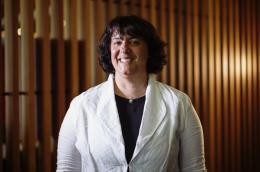
Sonia Palmieri is Associate Professor and Head of the Department of Pacific Affairs in the College of Asia and the Pacific, The Australian National University. Her research examines the social and cultural factors influencing women’s leadership in political institutions, including gender-sensitive parliaments. Sonia Palmieri joined a two-day Expert Group Meeting organized by UN Women to address one of the most persistent barriers to gender equality in political and public life: discriminatory social norms. The event held on 4-5 February 2025 brought together feminist scholars, policymakers, activists, and practitioners to chart a path forward for transforming social norms and ensuring women’s full and effective political participation. This experts’ meeting was organized under the WYDE | Women’s Leadership, funded by the European Union, which is a collaborative global effort aimed at advancing women’s full and effective political participation and decision-making at all levels, especially those most often left furthest behind.
Can you explain what gender sensitive parliaments are and how they contribute to the political empowerment of women?
Gender-sensitive parliaments have become a new norm, a standard for what a good parliament should be. At its heart, it is a parliament that recognizes its responsibility to advance gender equality. In theory, this might sound simple. In practice, however, a gender-sensitive parliament must actively reorient and transform how it functions – legislates, represents, conducts oversight - and communicates, in a way that consistently prioritizes gender equality. This is challenging because politicians come from diverse backgrounds with varying perspectives, and not everyone enters Parliament with the goal of advancing gender equality.
How can parliaments make gender equality a concrete and central aspect of their institution?
First, parliaments seeking to become gender-sensitive make a public commitment to gender equality.
They can do this by developing strategic or corporate plan, or even a national strategy to embed gender sensitivity in their work.
However, becoming gender sensitive also requires practical transformation in parliamentary operations. For example, oversight bodies are necessary to ensure that parliament follows through on its gender equality commitments. A good example comes from Sweden, where a Speaker’s Reference Group [LP1] was established to continuously assess and evaluate Parliament’s strategic plans on gender equality. They explore how the parliament operates, review its outputs, and identify areas for improvement.
In summary, for a parliament to become gender-sensitive, it needs a clear commitment to gender equality, and transformation of working methods, including an accountability mechanism with monitoring and evaluation.
Pervading gender norms are one of the most enduring and difficult constraints women face in politics, including in parliaments. Could you tell us how these work?
Sadly, even after being elected, women still face social norms that cast them as different or less ideal representatives. They are often perceived as lacking the right skills or connections, which fuels critiques of their presence in political spaces. This belief translates into marginalization from decision-making—they may struggle to secure executive roles, chair committees, or serve as presiding officers.
Women are also delegitimized when they speak in the Chamber. It’s not uncommon for them to be interrupted, overpowered by noise in the chamber, or met with verbal objections and hostility, all tactics to undermine their authority. Even when elected, they are repeatedly made to feel that they are not the "ideal" political actor.
How can we challenge this?
We must resist in multiple ways and having allies is essential. Women need a support network of like-minded politicians to help navigate these challenges. Facing delegitimization alone can be disheartening and may even push women to leave politics altogether.
Of course, finding allies across political parties isn’t always easy, as party competition can sometimes prevent solidarity. However, women in parliament can unite against sexist or misogynistic behavior, creating a sense of collective resistance. It is also crucial for men to recognize and reject these behaviors. Parliaments need clear Codes of Conduct and enforceable rules to ensure a respectful environment for all. Unfortunately, enforcement is where politics often overrides the basic level of decency that should underpin any legislative body.
What advice would you give to women parliamentarians?
When entering public institutions, no matter in which part of the world you sit, find your friends and allies both inside and outside the parliament, because you are going to need a support network! Make sure to identify your own personal coping mechanisms that will keep you and your mental health in check while identifying reliable sources of gender-sensitive advice and information to help you do your job effectively.
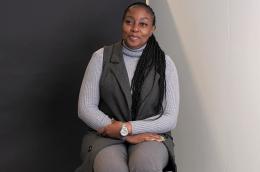
Emma Muteka is currently the youngest Regional Councillor in Namibia and a member of Parliament. She serves as the Vice Chairperson of the Parliamentary standing committee on Health, Social welfare and Labour affairs. She joined a two-day Expert Group Meeting organized by UN Women to address one of the most persistent barriers to gender equality in political and public life: discriminatory social norms. The event held on 4-5 February 2025 brought together feminist scholars, policymakers, activists, and practitioners to chart a path forward for transforming social norms and ensuring women’s full and effective political participation. This experts’ meeting was organized under the WYDE | Women’s Leadership, funded by the European Union, which is a collaborative global effort aimed at advancing women’s full and effective political participation and decision-making at all levels, especially those most often left furthest behind.
“I am a Member of Parliament from Namibia and have been engaged in politics since the age of 13. My early involvement in advocacy helped me realize how politics shapes daily life, from the price of bread to basic survival. What truly drove me was the desire to be the voice of the voiceless, as I felt that my generation lacked the space to be heard. In 2020, I made the decision to fully commit to politics and ran for office. It was not an easy journey. One major challenge was bridging the gap between young and older generations. I took time to humble myself, study the situation, and realized I needed to embrace intergenerational leadership, as senior politicians carried memories and trust from society. Senior politicians also needed assurance that young leaders were prepared to lead, so I engaged to ensure they were also mentoring us and creating an environment for this transition.
Another challenge was personal identity - my age, gender, and marital status were scrutinized. People doubted whether I could lead simply because I was unmarried and without children. To navigate these biases, I focused on building trust while staying true to myself. I studied my environment and engaged in one-on-one conversations with senior politicians, recognizing that personal discussions were more effective in earning their trust. I also consulted extensively with young people, who sometimes questioned my capabilities based on personal perceptions rather than competence. My goal now is to inspire youth, especially young women, to step into politics.
In terms of advice to young politicians, especially young women: first and foremost, believe in yourself. Have confidence and self-esteem but remain humble. Make sure you know your constituency and the cause you wish to champion, while remembering that it is all about serving others.
I especially encourage young women to empower themselves through education. Learning never goes out of style. Take every opportunity to educate yourself, whether through formal studies or short courses. Don’t limit yourself to political knowledge; understand economics, global affairs, and other areas that impact governance.
We have long debated women’s participation in politics, it is time for implementation. Policies and laws must be enforced to support women in leadership. Talking is not enough; now, we must walk the talk.”
The International Congress of Parliamentary Women's Caucuses took place on 9-10 September 2018 in Dublin Castle, Ireland.
The conference brought together parliamentarians from across the globe to discuss issues facing women and how parliamentarians can work to address them. Parliamentarians came from more than 40 countries, including Argentina, Malawi, Mongolia, New Zealand, Pakistan and the United States. The keynote speaker was the Right Honourable Harriet Harman QC MP, of the UK Labour Party, and the congress also heard from Professor Mary Beard. A panel chaired by author Martina Devlin discussed their vision for women in 2118.
The attendees at the Congress adopted the Dublin Declaration, a proposal for action on women in politics. The declaration includes a commitment to working across party and ideological lines in pursuit of gender equality.
Click here to read the Dublin Declaration.
This paper in the Journal of Economic Behavior & Organization - Volume 151 examines in what roles women have an impact on corruption by focusing on female labor force participation and their presence in the parliament. Since much of the corruption literature is plagued either by the lack of instruments or weak instruments, this paper makes a methodological contribution by drawing inferences based on Moreira’s (2003) conditional likelihood ratio approach. We provide robust evidence that women’s presence in parliament has a causal and negative impact on corruption while other measures of female participation in economic activities are shown to have no effect. Further, this negative relationship between women’s presence in government and corruption is also found to hold in a regional analysis of 17 European countries alleviating concerns that the relationship is driven by unobservable country-fixed characteristics. Finally, we show that this relationship does not disappear when women gain similarity in social status.
For further information, please click here.

The second Global Parliamentary Report is jointly produced by United Nations Development Programme (UNDP) and the Inter-Parliamentary Union (IPU). It focuses on parliament’s role in oversight of government, and parliament’s power to hold government to account for its actions and decisions.
Oversight is a core function of parliament. It is essential for building effective, accountable, and inclusive institutions as envisioned by Agenda 2030 and Sustainable Development Goal 16 (Peace, Justice and Strong Institutions). Parliaments’ oversight of government is critical for ensuring that people receive essential services, and is thus critical for building accountability. Parliament, through its representative mandate, is the appropriate entity through which oversight should be led.
The analysis, conclusions and recommendations in the report are grounded in parliamentary practice and experience: 150 national parliaments contributed to the preparation of the report. The report includes numerous examples of how parliaments and Members of Parliament (MPs) carry out oversight in their countries, as well as tips for MPs on ways to approach oversight.
The report is intended to stimulate action to strengthen parliament’s oversight role. The future positive development of parliaments and their ability to contribute to achievement of the SDGs depends, in large part, on what oversight can deliver for the populations they serve. UNDP works to strengthen parliaments to help them become fit for purpose for the delivery of Agenda 2030 in some 70 partner countries, and will implement the lessons learned from the report in this work.
Click here to see the report.
The Sex and Power series was first published by the Equal Opportunities Commission fifteen years ago, then taken over by the Equality and Human Rights Commission for several years, and then for 5 years up to 2015 the ‘Counting Women in Coalition’ collected and collated data on women’s representation across different areas of public life.
In 2018, the centenary year of (some) women first getting the vote in parliamentary elections, and to coincide with the first statue of a woman in Parliament Square, the Fawcett Society has now brought together a new edition of that Sex and Power dataset.
One hundred years on from when the first women gained a say in how the country is run, it is an assessment of where the UK has made progress on representation – and where we have not.
In the report you will find:
- A breakdown of percentages of women in power across politics, business and public life
- Analysis of women's representation in politics, businesses, the arts and more
- Conclusions and recommendations, including a time-limited use of quotas across public bodies and the boards of large corporate organisations.
For further information, please click here.
Download report here.

The annual report on women in parliament by IPU provides an update and analysis of progress made and setbacks encountered by women in parliament further to elections and renewals held over a year. Produced every year on the occasion of International Women's Day (8 March), it presents data on women in national parliaments, regional and world trends, information on women presiding officers and women candidates. It also analyses mechanisms aimed at supporting women's access to parliament. The report is short and easy to read, providing a snapshot on the situation of women in parliaments worldwide.
Click here to access the report.
Caribbean countries face complex development challenges shaped by socio-political, economic and environmental factors. These are experienced differently by women and men due to gender inequalities that intersect with variables like class, age, race and disability. Parliaments are responsible for ensuring that citizen interests are widely represented and for developing and monitoring policies. This includes policies to meet commitments like the 2030 Agenda for Sustainable Development. To fulfill their roles of oversight, representation and lawmaking, parliamentarians require analytical tools that account for gender and other inequalities.
This portal features toolkits that unpack the gender dimensions of development challenges related to climate change, economic and political inequality, and violence. It includes videos, checklists, policy briefings, infographs and campaign ideas to assist you in scrutinizing laws and budgets, promoting women's leadership, and engaging your constituents to achieve development outcomes that are equitable and sustainable.
This portal is a joint initiative of ParlAmericas and the UN Women Multi-Country Office - Caribbean. It is designed for self-guided online learning and additionally includes resources that can be used for in-person trainings. It features toolkits on gender equality issues developed for parliamentarians in the Caribbean.
Click here to visit the portal.