Parliaments & Representatives
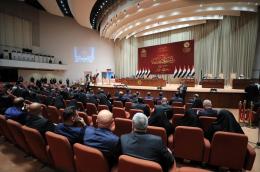
Iraq’s Council of Representatives published a list of 81 candidates for the country’s presidency on Monday after nominations closed, including four women, as Kurdish parties put forward nominees for the largely ceremonial post.
Under Iraq’s power-sharing system, in place since the first multiparty elections in 2005, two years after the U.S.-led invasion that toppled Saddam Hussein’s rule, the premiership, the most powerful executive post, is held by a Shiite politician, while the speakership of parliament goes to a Sunni and the presidency is occupied by a Kurdish politician.
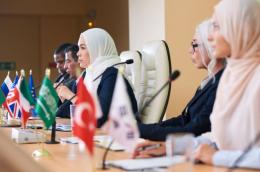
New research from the University of St Andrews has found that increases in women’s parliamentary representation within a country are related to enhanced public trust in the national parliament.
Published in the Routledge Handbook of Gender and Corruption, researchers from the University of St Andrews Business School analysed data on trust in parliament from the Integrated Values Surveys, a uniquely comprehensive dataset covering 107 countries from 1990 to 2022 and more than 492,000 individual responses.
The results show a link between greater women’s representation and trust in parliament within countries. This relationship is statistically significant and takes account of variation in corruption levels, democratic quality, electoral systems, economic development, and key individual characteristics such as sex, age, education, and employment status.
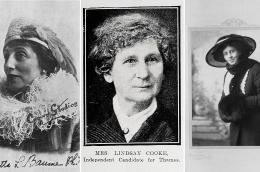
The Women’s Parliamentary Rights Act became law on 29 October 1919, allowing women to stand for election to the House of Representatives. This was just in time for the general election on 16 - 17 December 1919.
Three women stood for election – Rosetta Baume in Parnell, Aileen Cooke in Thames, and Ellen Melville in Grey Lynn. None were successful, though Ellen Melville came second in Grey Lynn.
Melville stood in a total of seven elections – polling well, but never winning a seat. She often faced discrimination because of her gender, even from her own party. She firmly believed that ‘women would get nothing done for them in legislation unless they had women in parliament.’
Melville did have success in becoming the first women in NZ elected to a city council however – sitting on the Auckland City Council from 1913 to 1946.
Ten more women candidates were also unsuccessful before Elizabeth McCombs finally became New Zealand’s first female MP in a by-election in 1933.
Appointment to the Legislative Council was not open to women until 1941, and the first two were admitted in 1946. The Legislative Council was abolished in 1950.
By 1980 only 16 women had succeeded in parliamentary elections, but from then onwards women began to have more success. At the first MMP election in 1996, 19 of the new MPs were women. Today we have 49 women MPs, making up 40.8% of the New Zealand Parliament.
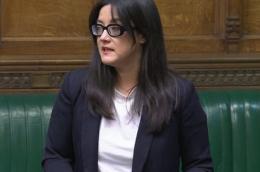
The Commons women and equalities committee has decided to stop using X after the social media site’s AI tool began generating thousands of digitally altered images of women and children with their clothes removed.
The move by the cross-party committee places renewed pressure on ministers to take decisive action after the site was flooded with images including sexualised and unclothed pictures of children generated by its AI tool, Grok.
Sarah Owen, the Labour MP who chairs the committee, said that given preventing violence against women and girls was among its key policy areas, “it has become increasingly clear that X is not an appropriate platform to be using for our communications”.

In January, three women new to local politics will take leadership positions on Whatcom County Council and at the Port of Bellingham. Each has their own ideas for what they bring to the table. All agree stepping into leadership has been like standing in front of a firehose of information, but said they’re excited to learn.
“It’s pretty humbling,” said Whatcom County Council member-elect Jessica Rienstra.
Cascadia Daily News spoke with Elizabeth Boyle, Carly James and Rienstra about their hopes for their first year in office, the challenges they may face and how they view women in leadership.
These interviews have been edited and condensed for clarity.
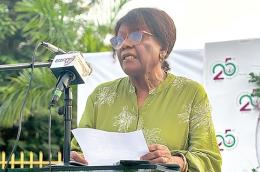
Women in Ghana remain significantly underrepresented in political leadership and public decision-making, despite the passage of the Affirmative Action Gender Equity Act in 2024, the 2025 Status of Women Report has said.
The Affirmative Action Gender Equity Act, passed by Parliament in July 2024 and assented to in September 2024, required a minimum of 30 per cent representation of women in public appointments between 2024 and 2026, with a gradual increase to 50 per cent by 2034.
However, the report found that Ghana is already falling behind on these early targets and that as of the end of 2025, women make up 41 of the 276 Members of Parliament, representing 14.9 per cent.
“This is an increase of just one seat from the previous Parliament. Women’s representation in local assemblies stands at about 4.1 per cent, while women appointed to substantive ministerial positions account for less than 20 per cent,” the report added.
These figures, the report said, fall far below both international benchmarks and the requirements set out in the new law.
The Convenor of the Women’s Manifesto Coalition, Hamida Harrison, presented the report during Network for Women’s Rights in Ghana (NETRIGHT)’s End of Year review of the ‘Status of Women in Ghana’ at an event held in Accra last Friday.

In August 2013, RepresentWomen launched the Gender Parity Index (GPI) to help researchers and advocates track progress toward gender-balanced governance and identify opportunities for increasing women’s political representation in the U.S. Each year, we assign all 50 states a Gender Parity Score, letter grade, and ranking according to their proximity to parity. One of the key takeaways from this exercise is that progress toward gender balance is slower and less stable than it first appears.
Click here to read the full report published by RepresentWomen on 7 August 2023.

In this report, UNDP explores a long standing and important focus area - strengthening women’s political participation and gender equality in governance. This report aims to highlight the ways in which UNDP supports women's political participation across the globe. To understand the scale, scope, and range of UNDP's support to women's political participation, the mapping considered 73 current and recently closed projects and programmes.
The mapping and analysis cover key action areas like electoral assistance; parliamentary strengthening; civic engagement and women’s participation in the public administration. It also covers strategic priority areas in UNDP’s Gender Equality Strategy and global programme on governance, projects that address violence against women in politics including online violence; promoting gender quotas to advance women’s public participation; and projects that focus on transforming gender norms.
Click here to read the full report published by UNDP on 19 June 2023.

Women MPs are exposed to daily online harassment, and social media platforms provide unlimited scope for anonymous, hostile and aggressive behaviour to be targeted at them. As the unprecedented cyber abuse of female MPs is known to be detrimental to their personal and professional lives, today’s toxic virtual environment poses a real risk to the future of women in politics, argues Christina Julios.
Online abuse of Members of Parliament is nothing new. An occupational hazard for any public figure, elected representatives have long been targets of attacks and derision from the public. With the advent of mainstream social media, however, there has been an exponential growth of cyber abuse, which has also become more extreme and normalised.
Click here to read the full article published by The London School of Economics on 17 May 2023.

Representation of women in the field of legislative politics is remarkably small and the absence of women has wide-ranging ramifications. In Fall 2019, we surveyed 361 women that we identified as studying legislative politics within political science to understand why women’s representation in legislative studies is so low and what we can do about it. We found that many women study legislatures, but they do not always identify as scholars of legislative studies, often do not join the Legislative Studies Section, and tend to prioritize other journals over Legislative Studies Quarterly, the official journal of the section. In this article, we discuss several solutions to the problem of women’s underrepresentation in legislative studies, including the new Women in Legislative Studies initiative.
Click here read the article by Cambridge University Press on 15 May 2023.
In both politics and public life in the UK, women have historically been underrepresented. In recent years women’s representation has increased, although in most cases men remain overrepresented, especially in more senior positions.
This briefing presents statistics on a range of positions in UK politics and public life held by women. Data on the demographic characteristics of different workforces tends to be limited, so it is not always possible to include intersectional analysis, for example, on disabled women or women from minority ethnic groups.
Click here to access the report.