Parliaments & Representatives
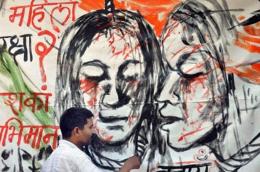
Indian politics often behaves less like a modern constitutional system and more like a network of fiercely loyal clans. When a serious allegation of sexual violence or exploitation surfaces, the instinct of many is not to ask, ‘What happened to the woman?’ but to ask, ‘Which side is she on, and what does this do to us?’ That clan instinct is what keeps turning women’s complaints into political weapons rather than legal issues.
The recent allegations against opposition MLA Rahul Mamkootathil illustrate this clearly. A young woman first took her complaint not to a police station, but to the chief minister and CPI(M) leadership, seeking action on her allegations of rape, forced pregnancy and coerced abortion.
Only after this political route was exhausted was an FIR registered, and the criminal process formally set in motion. Another woman complained against K T Kunhumuhammad, a two-time CPI(M) MLA, to the chief minister, but an FIR was registered 12 days later, after the media broke the news.
Within the Congress, several women leaders and party functionaries have raised concerns about Mamkootathil’s conduct well before and alongside the current FIRs. Youth Congress leader Sajana B Sajan wrote to the party high command and Priyanka Gandhi, demanding his expulsion and seeking a committee of women leaders to record the survivor’s statement.
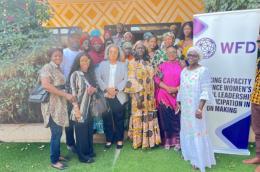
Fear, harassment, and institutional silence continue to shape the political experience of women in The Gambia, a new study has revealed, exposing how violence, intimidation, and systemic neglect are undermining women’s participation and leadership in public life.
The findings, validated on Monday at a stakeholder workshop convened by the Westminster Foundation for Democracy (WFD), highlighted violence against women in politics as a deeply entrenched barrier that silences voices, deters participation, and weakens democratic governance.
The validation exercise, held at the Bakadaji Hotel, brought together policymakers, National Assembly members, political party representatives, civil society organisations, and development partners to review and validate the findings of the study, which is expected to be officially launched in January 2026.
WFD opened its country office in The Gambia in 2018 with the aim of supporting the consolidation of democracy, with the National Assembly serving as its main partner and host institution. Globally, WFD works to promote political systems that are inclusive and accountable, ensuring that all citizens regardless of gender, origin, disability, ethnicity, or religion are able to participate meaningfully in political processes and hold leaders to account.
The Violence Against Women in Politics study is being implemented under WFD’s Women in Political Leadership (WPL) project, supported by the Foreign, Commonwealth and Development Office (FCDO) through the Gambia Inclusive and Accountable (GIA) Programme for 2025–2026.
Opening the workshop, the Country Director of WFD in The Gambia, Ms. Tobaski Njie Sarr, described the validation as a critical milestone in advancing democratic inclusion. She explained that independent consultants were contracted to carry out the research in order to ensure credibility and objectivity, drawing comparisons with WFD’s earlier study on the cost of politics in The Gambia.
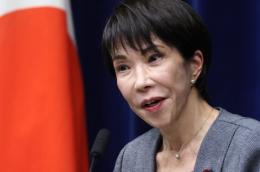
Nearly 60 female lawmakers in Japan, including the prime minister, Sanae Takaichi, have submitted a petition calling for more toilets in the parliament building for women to match their improved representation.
Japanese politics remains hugely male-dominated, although the number of women in the parliament rose at the last election – and Takaichi became the first female prime minister in October. This is reflected by there being only one lavatory containing two cubicles for the lower house’s 73 women to use near the Diet’s main plenary session hall in central Tokyo.
“Before plenary sessions start, truly so many women lawmakers have to form long queues in front of the restroom,” said Yasuko Komiyama, from the opposition Constitutional Democratic party.
She was speaking after submitting the cross-party petition signed by 58 women to Yasukazu Hamada, the chair of the lower house committee on rules and administration, earlier this month.
The Diet building was finished in 1936, nearly a decade before women got the vote in December 1945 after Japan’s defeat in the second world war. The entire lower house building has 12 men’s toilets with 67 stalls and nine women’s facilities with a total of 22 cubicles, according to the Yomiuri Shimbun newspaper.
Japan ranked 118 out of 148 this year in the World Economic Forum’s global gender gap report. Women are also grossly under-represented in business and the media.
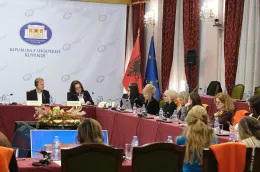
Tirana, 15 December 2025 – Media monitoring of Albania’s 2025 parliamentary elections found persistent gender imbalances and violence against women in politics, particularly in media coverage and online discourse.
The monitoring, conducted by Equality in Decision Making and BIRN Albania with the support of UN Women and the Government of Sweden, analysed online media, television and social media platforms during the campaign and post-election period. The report shows that women candidates, Members of Parliament and ministers were more frequently targeted with sexist language, personal attacks and discriminatory narratives, especially in digital spaces.
“Gender equality in politics is not only a women’s issue; it is a matter of democracy, representation, and citizens’ trust in institutions. A democracy in which half of society remains on the margins of decision-making cannot be considered a full democracy,” said the Deputy Speaker of Parliament, Ms. Klodiana Spahiu. She added that the monitoring report should not be seen as a critique, but rather as a tool for reflection and action aimed at improving the current situation.
Women accounted for 38.9 per cent of all candidates and secured 35 per cent of parliamentary mandates, yet they won only 25 per cent of mandates through preferential voting. Their media visibility also remained significantly limited. Across 41 national and local television stations monitored by the Audiovisual Media Authority during the campaign, male candidates accounted for 89.8 per cent of airtime, compared to just 10.2 per cent for female candidates. This stark imbalance was consistent across all broadcasters and program types, leaving women candidates with far less visibility to explain their campaign platforms.”
“Albania continues to benefit from positive women representation both in parliament and central government. Yet, their ability to substantively share leadership and decision making around key national priorities is profoundly compounded by negative gender stereotypes, little to no access to the media, as well as online violence. When a woman runs for office, she faces the irony of being a lot less visible, and a lot more exposed”, said Michele Ribotta, UN Women Representative in Albania.
“The report presents a fact-based analysis that contributes to a deeper understanding of how the electoral process, within the media and digital environment, shapes women’s political participation in Albania. While positive regulatory developments have been recorded, women politicians continue to face both long-standing and emerging challenges that undermine their opportunities for meaningful and equal engagement”, said Erik Illes – Head of Development Cooperation at the Swedish International Development Cooperation Agency (Sida).
The pre and post campaign period was characterized by recurring gender bias and online violent attacks against women candidates, including sexist language, personal insults and discrediting narratives, often focusing on physical appearance, private life or preconceived moral judgments, rather than on their political positions. Such practices contribute to a hostile environment that discourages women’s engagement and participation, narrowing the scope of the democratic debate.
Following the elections, women were assigned 47.1 per cent of ministerial spots in the new Government, confirming Albania’s strong record of equal gender participation in central cabinet positions.

Marigona Shabiu, executive director at YIHR
In Kosovo, women’s participation in politics is often presented as a success story. The 30 percent gender quota, the increase in the number of women in the Assembly, and their presence in municipal assemblies are regularly cited as evidence of democratic progress. In the last legislature, women made up over a third of the members of the Assembly, a figure that on paper positions Kosovo better than many countries in the region. However, beyond the statistics and official statements, the political reality remains much more complex, especially when this participation is viewed from the perspective of youth and other marginalized groups.
From our many years of experience at Youth Initiative for Human Rights - Kosovo (YIHR KS), it is clear that women’s political representation does not automatically translate into a policy that speaks for and with young people. Young women and men in Kosovo continue to perceive politics as a closed, hierarchical and often hostile space to critical thinking. This sense of distance is particularly pronounced among young people from non-majority communities, LGBTIQ+ young people, people with disabilities and those living in poverty or marginalized areas. For many young people, women’s representation in institutions is not necessarily seen as representing their interests, especially when policies continue to be produced without an inclusive approach.
In the discussions we have with young people in cities and rural areas, a silent question often arises: are women in politics truly allies of youth, or simply part of the same system that reproduces exclusion? This dilemma is not an accusation, but a critical reflection on the way our political culture works and on the limits of a representation that remains largely formal.
Full article here.
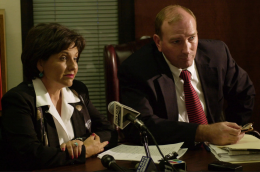
1912: New Mexico becomes the 47th state admitted to the Union.
1917: Suffragist Nina Otero-Warren is appointed superintendent of Santa Fe County schools. She would win a race to retain the position in 1918.
1919: Congress passes the 19th Amendment to the U.S. Constitution, granting women the right to vote. It guarantees “the right of citizens of the United States to vote shall not be denied or abridged by the United States or by any state on account of sex.”
1920: After years of advocacy by local suffragists like Otero Warren, the New Mexico Legislature votes to ratify the 19th Amendment. By August 1920, at least two-thirds of states adopted the constitutional amendment, making it the law of the land.
Full article here.

Despite progress towards gender equality, women’s representation in Canadian politics continues to fall short. With only 30 per cent of seats in the House of Commons held by women, there is still a long way to go for Parliament to capture the diversity of the population it represents.
There are several factors that contribute to the persistent gender disparities in the political process. Research on women in politics has identified multiple obstacles that hinder women’s representation, with three factors emerging as the most prominent explanations.
Three obstacles to women in politics
The first is that voters might have gender bias. This is the idea that, for various reasons, voters might prefer a man over a woman candidate.
The second is that women may not be interested to run as candidates. This is the idea that women might be more risk-averse when it comes to campaigns and elections, or that women may lack self-confidence and have lower levels of political ambition compared to men.
Click here to read the full article published by the Conversation on 10 March 2023.
This paper provides an overview of Lebanese women’s participation in political decision- making through a case study of women’s participation in the parliamentary elections of 2022 from a gender perspective. The paper asks, why are the vital voices of Lebanese women still missing in politics? What progress has been made? Who are the gatekeepers? How can we accelerate equality and improve women’s political participation?
Source: Lebanese American University
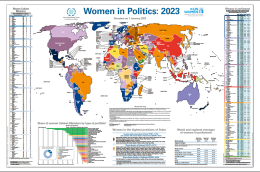
The “Women in politics: 2023” map, created by the Inter-Parliamentary Union (IPU) and UN Women, presents new data for women in executive positions and national parliaments as of 1 January 2023. Data show that women are underrepresented at all levels of decision-making worldwide and that achieving gender parity in political life is far off.
Women serve as Heads of State and/or Government in only 31 countries. Women make up 26.5 per cent of Members of Parliament. Globally, less than one in four Cabinet Ministers is a woman (22.8 per cent). New data show that women lead important human rights, gender equality, and social protection policy portfolios, while men dominate policy areas like defence and economy.
Source: UN Women

In 2022, women’s leadership in the world’s parliaments continued with a slow pace of incremental growth as the world re-emerged after two years of COVID-19 pandemic lockdowns and losses. Women reached new milestones in parliamentary representation around the globe and the context for women’s political leadership continued to expand.
Click here to see the report.

Women’s representation in India’s Parliament is an important metric to evaluate progress in bridging gender inequities in the country. India has a female population of 662.9 million and is the largest and one of the most resilient parliamentary democracies in the world. As the country completes 75 years of independence, this paper gives a historical account of the progress in women’s representation in Parliament over the past decades. It compares women’s parliamentary representation with their share in legislative positions at the lower levels. It notes that despite impressive increase in turnout of women voters in elections, opening up spaces for participation of women in electoral politics has been a slow process as a result of deep-rooted structural constraints. It argues that institutional transformation, coupled with socio-economic emancipation holds the key to increased participation by women in electoral politics.
Click here to read the full article published by Observer Research Foundation on 16 November 2022.
Ensuring GSP principles are embedded in political institutions is vital for a healthy democracy. It highlights that women’s inclusion and equality does not just stop at the ballot box. All groups must be able to fully participate within our elected institutions for our democracies to work effectively and to the good of all in our societies. This interim report comes at a timely moment for the GSP agenda.
More recently, the CPA and CWP updated its gender sensitive guidelines providing a ‘checklist’ for parliamentary change. Not only this, but COVID-19 has offered a moment of significant reform (albeit temporary in many cases) to parliamentary practices and procedures across the Commonwealth and many political institutions around the world are reflecting on the experience and the lessons learnt.
The 2020 CPA Gender Sensitising Parliaments Guidelines set out four dimensions of Gender Sensitive Parliaments (Figure 1). This interim report focuses on the first two dimensions: ‘Equality of participation within Parliament’ and ‘Parliamentary infrastructure’. It documents the current state of play regarding GSP practices in institutions across the British Islands and Mediterranean region (BIMR), particularly in light of institutional responses to COVID-19 and recommends ‘best practice’ reforms for the short and medium term.
Click here to access the report.