Parliaments & Representatives

Would you take a job where abuse and violence were almost guaranteed? This is the reality of modern political life, making it less appealing to women - especially younger women - leading to even less representative democracies. But it doesn’t have to be this way. Parliaments around the world are taking practical steps to prevent violence, protect women, and prosecute offenders.
Read the full article here.

-
Why Women’s Political Participation and Representation Matters
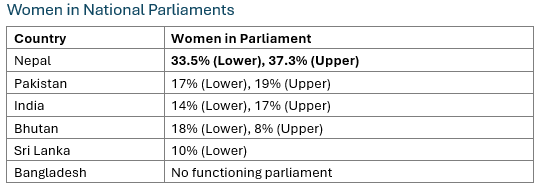
Women’s equal participation and representation in political life is fundamental to inclusive democracy, responsive governance, and sustainable development. Despite global commitments and some progress, women across South Asia remain significantly underrepresented in decision-making roles particularly in legislative leadership, executive office, and youth political spaces.
At the current pace, gender parity in national legislatures will not be achieved before 2063, and parity among Heads of Government may take until 21501.
-
Key Facts & Regional Snapshot
Global & South Asia Overview
-
Women in national parliaments (global): 27.2%
-
South Asia average:
-
Lower/Unicameral Houses: 14.7%
-
Upper Houses: 19.9%
-
-
South Asian countries with women in top government leadership: India, Sri Lanka
Key Takeaway
Advancing women’s political participation and representation in South Asia requires more than quotas. Sustainable change depends on transforming social norms that fundamentally define the role of women in the politics. Only through transformative gender social norms can we address critical issues like violence against women in politics, and create an inclusive political space for all, contributing to a strong democratic system.
Full snapshot available here.
-
UN Commission on the Status of Women 65th Session on Women’s full and effective participation and decision-making in public life, as well as the elimination of violence, for achieving gender equality and the empowerment of all women and girls: agreed conclusions E/CN.6/2021/3
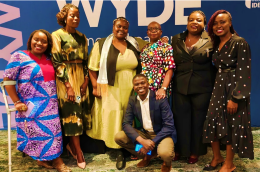
Globally, an estimated one in five women have a disability. While there are no concrete statistics on the proportion of women in political leadership positions, an analysis of many parliaments and local authorities does not indicate their proportionate representation in leadership positions.
Equal participation of women with disabilities in politics is often ‘othered’ to adhere to normative frameworks or policies. Their inclusion in political participation is mostly superficial with little or no genuine meaningful approaches to create platforms for their voice, choice and control. Systemic marginalisation and structural barriers to meaningfully include women with disabilities in political participation and representation are driven by social norms. These then translate to the low representation of women with disabilities in political decision-making positions.
The milestone adoption of the Convention on the Rights of Persons with Disabilities in 2006 and its domestication thereof in many countries is commendable. Yet, burgeoning experiences from women in politics with disabilities has revealed a multitude of obstacles for them to be in elected office. The glaring barrier for women in politics with disability is the intersection with violence. This is often pronounced during election campaigns where in some instances the campaign terrain infrastructure is set up to deliberately frustrate women in politics with disabilities. Their limitation to access some facilities, including polling stations as well as materials is turned into a tool for abuse by some of the male politicians. The media reporting on women in politics with disabilities is sometimes a form of secondary victimisation to the women politicians with disabilities. Training of media practitioners on inclusive reporting for political participation and representation is a remedy.
Full article available here.
Introduction
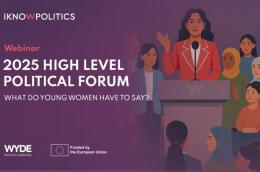
In the lead-up to the 2025 High-Level Political Forum (HLPF) on Sustainable Development, Sustainable Development Goal 5 (SDG 5) – Achieve gender equality and empower all women and girls took center stage as a critical priority. The review of SDG 5 provided a timely opportunity to accelerate efforts to address deeply entrenched structural inequalities and to highlight the urgency of ensuring inclusive leadership worldwide.
With particular attention to target 5.5, which calls for women’s full and effective participation and equal opportunities for leadership at all levels of decision-making, the webinars underscored both progress and persistent gaps.
Despite notable advances, women remained underrepresented in political leadership, executive positions, and decision-making bodies globally. Discussions emphasized that achieving gender parity required integrated, evidence-based policies to dismantle legal, institutional, and cultural barriers, supported by governance and accountability mechanisms that move commitments from symbolic gestures to structural realities.
To engage diverse audiences and broaden perspectives, a series of three webinars were organized. One in Arabic, one in English and one in Spanish. Each session explored the following key questions:
-
What is the High-Level Political Forum, and what was on the agenda for 2025?
-
How might the outcomes impact the future of the global gender equality agenda?
-
What are the trends in SDG 5, particularly with reference to target 5.5 on leadership and decision-making?
-
What lessons have been learned since the adoption of the SDGs?
-
How can more diverse voices be brought into global forums?
-
How can reporting on indicators be improved at the national level?
-
How can policy reflect a holistic and grounded approach to addressing the SDG 5 agenda?
The webinar in English was held on 11/07/2025
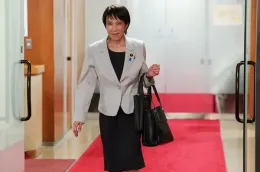
In Japan, women have long been severely underrepresented at the highest levels of business, government and society, the product of a culture that expects them to bear a disproportionate share of child care and housework.
But on Tuesday, the country is poised for a milestone: Sanae Takaichi, a hard-line conservative lawmaker who idolizes Margaret Thatcher, is expected to be named Japan’s next prime minister during an extraordinary session of Parliament. She would be the first woman to serve in that role and the first woman at the top of Japanese government in centuries.
Ms. Takaichi, 64, is a divisive figure in Japan, and her breaking of the glass ceiling has drawn a range of reactions. Her supporters have hailed her as a pioneer who knows firsthand the challenges of Japan’s male-dominated culture. Activists and scholars have expressed concern that she will continue to support policies that have held Japanese women back. Political rivals have accused her of serving as a puppet to men in her party; one male lawmaker recently described her as a bride who had married into a powerful political faction.
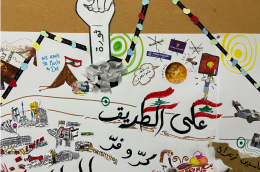
Feminist scholars and advocates have long asserted that women’s rights and gender equality are fundamental prerequisites for democratic governance. The close correlation between women’s rights and democracy is becoming increasingly evident, as the erosion of women’s rights often signals early and unmistakable signs of democratic backsliding and the rise of authoritarianism worldwide (Allam 2019; Arat 2022; Chenoweth and Marks 2022). A gendered analysis of state institutions, policymaking, and elections provides crucial insights into the historical fluctuations in women’s rights and, by extension, the overall quality of democracy (Tajali 2022).
An overview of sexist repression in Iran highlights the depth of autocratic entrenchment, as evidenced by increasing gender-based repression and violence. These assaults on women’s fundamental rights are not new but are deeply rooted in the ideologies of Islamic fundamentalism, which have institutionalized patriarchal dominance and systemic gender discrimination (Hoodfar and Sadr 2010; Paidar 1995; Tajali 2024b). This analysis also exposes the contentious relationship between authoritarian elites and feminist advocates, who refuse to remain passive in the face of such attacks.
Feminist movements resisting systemic gender discrimination pose a significant threat to the Iranian regime, resulting in violent crackdowns on women’s rights advocates. A recent example is the regime’s harsh response to the nonviolent “Woman, Life, Freedom” protests, triggered by the killing of 22-year-old Kurdish-Iranian Mahsa Jina Amini in September 2022 while in police custody for allegedly violating Iran’s conservative hijab laws. To reassert control, the conservative-dominated Iranian parliament passed a controversial Hijab and Chastity bill in September 2023. This bill introduces harsher penalties for improper veiling, utilizing enhanced surveillance and artificial intelligence to identify those who defy mandatory hijab laws.
While the bill awaits approval from the unelected Guardian Council, Iranian authorities launched the “Noor (Light) Operation” in April 2024, enforcing the bill’s provisions through violent crackdowns on improperly veiled women and girls.

Gender and politics scholars are increasingly making appeals to ethnographic methodology to bring important contributions to understand the reproduction of gender, gender hierarchies, gendered relations, and their redress in parliamentary settings. This article draws upon fieldwork conducted in the U.K. House of Commons and the European Parliament and finds distinctive gendered cultures and norms in debating and working parliaments. Focusing on one dimension of this distinction—the parliamentary debating chamber—the article argues that parliamentary ethnography provides novel empirical insights into this conceptual distinction and into empirical understandings of gendered debating and working parliaments. While parliamentary ethnography is a fruitful innovation, the article discusses the drawbacks of this methodology and provides feminist reflection on ways to make it more accessible.
Click here to read the full article published by Cambridge University Press on 3 August 2022.
This report highlights the key findings from research conducted by Equal Voice on sexual harassment in Canada’s legislative Assemblies.
Click here to access the report.
The performance of women legislators is analysed by looking at the nature of questions posed by them over a span of 20 years (1999–2019) in the lower house of the Indian Parliament. The analysis, however, is a contestation of claims that suggest women act as silent members, and if at all they speak, they do on “softer issues” like women and child development, food processing, health, and sanitation, thus trying to escape the discussions on national security, finance, agriculture, railways, etc. These are otherwise considered as male bastions. This paper is a quantitative analysis of women’s political performance during the Question Hour session, which is considered as an important plenary space where legislators act on their own, free from the party regulation.
Independent India claims to be the world’s largest democracy, turbulent and vigorous but ever so evolving. Elections form the animating spirit of Indian democracy. It is held religiously every five years with enough pomp and show. Indian democracy flourishes with exceptional rates of citizen participation. The Lok Sabha elections of 2019 manifested 67% voter turnout with decreasing rates of gender gap (ECI 2019). These figures indicate the undying credence citizens have in Indian politics and its democracy, despite the limitations of electoral democracy. The Indian Parliament acts as a theatre of democracy regardless of the people’s sneering disbelief and despondency in political institutions of the country to which Parliament is no exception (Rai and Spray 2019: 2). Electoral democracies all over the world are faced with criticism about their substantive representation1 to which they retort by translating democracy into electoral representation. How can the democratic institutions in India include all its citizens? In other words, how can these institutions be representative of its entire population? (Jayal 2013: 25). Here, what concerns this paper is the study of the impact of systematic exclusion of women from the political life on their political representation and in turn on their political performance.
Click here to read the full article published by Economic and Political Weekly on 1 August 2022.

In this study, we report results of a survey of U.S. state senators about their experiences of psychological abuse, physical violence, and sexualized abuse and violence on the job, as well as gender differences among senators. Overall, our results indicate that more than 80% of state senators reported having faced abuse and violence, and women senators reported more physical violence than men. Moreover, we found differences in the factors that contributed to abuse and violence among women and men state senators. Most notably, women with higher levels of power (party or committee leaders) were more likely than other women to experience psychological abuse and sexualized abuse and violence, and Democratic women senators faced more sexualized abuse and violence than Republican women. The implications for continued service by state senators in the face of these experiences, the likelihood of attracting future candidates, and the implications for gender diversity in office are explored.
Click here to read the full article.

The third Global Parliamentary Report examines public engagement in the work of parliament. This report takes a detailed look at why engagement matters and how parliaments globally are engaging with the people they represent. It outlines trends and priorities for public engagement and considers key principles for ensuring better and deeper engagement into the future, in support of the 2030 Agenda.
Click here to access the report.
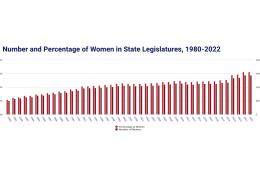
Number and Percentage of Women in State Legislatures, 1980-2022
[[{"fid":"20338","view_mode":"media_original","fields":{"format":"media_original","field_file_image_alt_text[und][0][value]":"Number and Percentage of Women in State Legislatures, 1980-2022","field_file_image_title_text[und][0][value]":"Number and Percentage of Women in State Legislatures, 1980-2022"},"link_text":null,"type":"media","field_deltas":{"2":{"format":"media_original","field_file_image_alt_text[und][0][value]":"Number and Percentage of Women in State Legislatures, 1980-2022","field_file_image_title_text[und][0][value]":"Number and Percentage of Women in State Legislatures, 1980-2022"}},"attributes":{"alt":"Number and Percentage of Women in State Legislatures, 1980-2022","title":"Number and Percentage of Women in State Legislatures, 1980-2022","class":"media-element file-media-original","data-delta":"2"}}]]
Current State Legislature
2,300
(1,516D, 764R, 13NP, 5Ind, 2Prg)
31.2% of 7,383 seats
Since 1971, the number of women serving in state legislatures has more than quintupled.
NP = non-partisan, Ind = Independent, Prg = Progressive
State-by-State Summary Data on Current Women State Legislators
Click here to access the data.