Women's Leadership
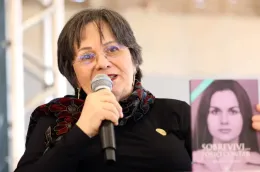
In 1983, Maria da Penha Maia Fernandes, a Brazilian biopharmacist, survived two homicide attempts at home. The first one left her paralyzed from the waist down after she was shot while she was asleep. In the second attempt, she was almost electrocuted in the shower.
In 1991, Penha saw the trial, which convicted her ex-husband of the attacks, being annulled. Five years later, a new trial found him guilty again, but he walked free. It took 19 years and six months, risking the statute of limitations to have him arrested. In 2006, her name became one of the best-known in Brazil when it became associated with a federal law that aims to protect women from domestic and family violence.
The path between the violent episodes that changed her life and the law that tries to avoid this type of crime was possible mainly due to international pressure, Penha acknowledges in a video conversation with Global Voices. In 2001, the Inter-American Commission on Human Rights (IACHR) convicted Brazil of negligence and omission in her case, and this led to the law’s creation.
Penha’s name is now also linked to police patrols and other public policies regarding gender violence in the country. A poll by the Brazilian Senate, from 2023, however, pointed out that three out of four Brazilian women know little or nothing at all about the law itself. It also showed that around 30 percent of women in Brazil have suffered domestic violence at the hands of a man.
Full article published here.
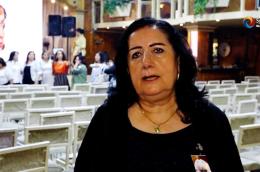
GIESSEN, Germany / BETH NAHRIN — On the sidelines of the Syriac Women’s Conference held last Saturday simultaneously in Beth Zalin (Qamishli), North and East Syria; Ankawa, Kurdistan Region of Iraq (KRI); and Giessen, Germany, under the slogan No Equality Without Justice, No Justice Without Women, our newsdesk conducted interviews with several women to discuss the conference’s significance for Syriac (Aramean–Assyrian–Chaldean) women.
Siham Quryo, Co-Chair of the People’s Democratic Council within the Democratic Autonomous Administration of the Region of North and East Syria (DAARNES), stated that the Syriac Women’s Conference was held across all regions where the Syriac (Aramean–Assyrian–Chaldean) people reside, with the goal of establishing a Syriac Women’s Council to represent Syriac (Aramean–Assyrian–Chaldean) women globally and to ensure their active role in shaping the future.
She emphasized the urgent need for Syriac (Aramean–Assyrian–Chaldean) women’s participation in building a new Syria that reflects justice, equality, and inclusion.
Full article published here.
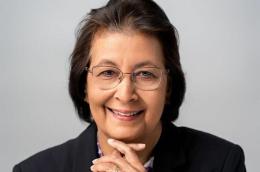
“You will work hard.” That was the promise former medical doctor Jennifer Geerlings-Simons made during her presidential election campaign. It was a phrase equal parts warning and invitation, and now, Suriname, the Dutch-speaking Caribbean nation situated on the shoulder of South America, is set to have her as its first-ever woman president.
In the context of media freedom, identity, and political legacy in Suriname, the weight of this moment is being felt across the nation, to the diaspora beyond, but as any woman in public life knows, “firsts” come with double binds. Geerlings-Simons’ presidency has the potential to be scrutinised not solely through a political lens, but also a gendered one. However, her election is historic not simply because of her gender, but because of what she represents: a country at a crossroads, reckoning with its past and daring to imagine a different future.
A coalition and a chance
Following the general election on May 25, Suriname’s political landscape underwent significant changes. To begin with, no single party secured a majority. However, on May 27, Geerlings-Simons’ National Democratic Party (NDP) — once led by the controversial former president Desi Bouterse — announced a six-party coalition totalling 34 of 51 parliamentary seats, enough for a supermajority and to install her as president.
Geerlings-Simons brings decades of political experience to the role. She has been a parliamentarian since 1996, was a former chair of the National Assembly, and has been the NDP’s party leader since July 2024. Now, at 72, she becomes a symbol of both continuity and rupture — a seasoned insider with an outsider’s promise of dismantling corruption, slimming government excess, and modernising the state.
Full article published here.
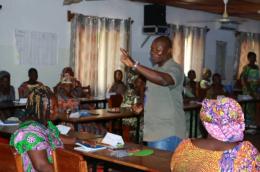
In Togo’s rural communities, women bear much of the family responsibilities. However, they remain committed to their communities’ development despite the socio-cultural pressures.
Several rural areas in the Kara region of northern Togo have poor infrastructure, affecting the communities in Bassar and the Kabye, Lamba, and Konkomba people. The roads are often impassable, and waterways hamper hospital access, posing significant healthcare challenges. The women working as community health workers must combine their professional and family responsibilities to provide essential care for their communities.
In Togo, women account for more than 51.3 percent of the population of over 9 million. The illiteracy rate is 33 percent for men and almost double that for women.
Women-specific challenges in rural communities
In traditional Togolese culture, gender stereotypes are still prevalent, often preventing women from standing up for themselves and making independent decisions.
Agriculture is the primary industry in rural areas. It employs 80 percent of the female working population in subsistence farming, helping them provide for their families and meet their everyday needs. However, only 15 percent hold land titles. This limited access to land ownership and agricultural credits makes them dependent on men for resources and decision-making. Many women often suffer discrimination and economic violence, which, according to a demographic study, is sometimes compounded by physical violence. Reports indicate that as many as 32 percent of Togolese women have been victims of physical or sexual abuse from the age of 15.
Full article available here.
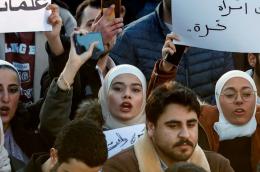
The end of the oppressive Assad regime in Syria in late 2024 has been broadly welcomed on the global stage – underscored by the fact the United States and European Union have now lifted sanctions against the country.
However, women have been marginalised by Syria’s new leadership. That’s a problem for Syrian women, of course, but it also puts at risk prospects for sustainable peace in Syria.
A growing body of research, including our own, shows a direct correlation between gender equality and peace.
Syria now stands at a crossroads. Will it ensure women’s meaningful participation and follow a path to peace? Or will things head in the other direction?
This is more urgent than ever. Failure to grapple with women’s rights in Syria risks plunging the nation further into extremist violence.
Full article published here.
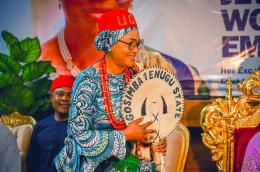
The First Lady, Oluremi Tinubu, has said that allocating special seats to women in state and federal parliaments is not an act of charity but a way of strengthening the country’s democracy.
Tinubu made this statement on Wednesday at an interactive session on the special seat bill for women during the 2025 Open National Assembly Week, organised by the House of Representatives in Abuja.
Represented by the Chairman of the House Committee on Women Affairs, Kafilat Ogbara, the First Lady commended the 10th House of Representatives for pushing the reservation of special seats for women in both the states and the National Assembly.
She pledged to continue supporting interventions that promote women’s political empowerment, education, and economic inclusion, urging legislators to demonstrate official eagerness to ease the passage of the bill.
She said, “This event comes at a very important time in our nation’s history, as the National Assembly is currently conducting public hearings across the country on key constitutional and legislative reforms.
Full article available here.
Abstract
Throughout history, most positions of political power have been held by men, and despite numerous laws and regulations aimed at increasing gender equality in society and politics, the majority of democratic assemblies remain predominantly composed of men. What makes this gender composition persistent over time? Using data from Swedish population registers from 1982 to 2014 and demographic statistics from 1749 to 1859, I study how historical social norms shape the present-day gender balance in local politics. The results show that where family formation was more traditional in the past, there are fewer women in local politics today. The analysis also shows that family formation is a likely mechanism for the transmission of social norms across generations. The findings contribute to our understanding of the historical persistence of social structures and the reasons why gender balance in politics is not easily achieved.
Click here to access the article.
Abstract
What explains the gender gap in political engagement and economic policy preferences? Many scholars point to material resources, while others credit cultural determinants. We identify and test an important link between these factors: cultural lineage norms that structure entitlements to resources. Studying the relationship between culture and resources is challenging in societies where both disadvantage women. We analyze a unique setting: northeast India, where matrilineal tribes live alongside patrilineal communities. Patriarchal cultures and political institutions are shared, but lineage norms are distinct: patrilineal groups distribute inherited wealth through men, while matrilineal tribes do so via women. We conduct survey and behavioral experiments with representative samples of both communities, alongside extensive qualitative research, and find that the gender gap reverses across patrilineal and matrilineal groups. Our results indicate that lineage norms—which determine who gets to make decisions about wealth and how—are key determinants of the political economy gender gap.
Click here to read the paper.

Abstract
Does the representation of women in cabinet and party leadership positions affect whether governments are more or less likely to fulfill the policy promises they make during election campaigns? This research note studies the effects of women's descriptive representation in cabinet and party leadership on policymaking by analyzing the pledge fulfillment of parties in 10 European countries, the United States, and Canada. The empirical analysis suggests that governing parties are more likely to fulfill their election promises when levels of women's representation are higher. The results have implications for our understanding of the descriptive and substantive representation of women, as well as for party competition and policymaking more broadly.
Click here to read the full article published by the Wiley Online Library on 18 February 2021.

This report contains an examination of global trends, persistent barriers and opportunities with regard to women’s full and effective participation and decision-making in public life, as well as the elimination of violence, for achieving gender equality and the empowerment of all women and girls. Progress made in women’s representation at different levels, mainly through legislated gender quotas, and the impact of women’s participation in decision-making and civil society, are acknowledged in the report.
Systemic challenges, especially the increasing levels of violence perpetrated against women in public life and certain enduring harmful norms, require urgent attention, as do specific challenges encountered by marginalized women who face multiple and intersecting forms of discrimination. States can facilitate a more inclusive and enabling environment in which all women could participate in public life through more ambitious targets, increased political will, sustainable financing and gender-responsive institutional arrangements.
The coronavirus disease (COVID-19) pandemic has compounded challenges to decision-making, and, while women have rarely been included in decision-making on COVID-19 response efforts in equal numbers to men, in several countries where they have been in leadership positions, the response to the pandemic has been particularly effective. The report concludes with recommendations for consideration by the Commission on the Status of Women.
Click here to access the report.
Women’s full and equal participation in all decision-making processes is necessary to achieve gender equality and drive progress towards sustainable development. In 2017, the United Nations Entity for Gender Equality and the Empowerment of Women (UN Women) and the International Gender Champions–Geneva published Shaping the international agenda: Raising women’s voices in intergovernmental forums to empower a wide range of gender champions and stakeholders in advancing gender equality and parity in intergovernmental processes.
This second edition updates the findings and recommendations based on survey responses received from members of the United Nations Governing Bodies Secretariat (UNGBS) in 2020. Il also concludes with recommendations to further enhance gender parity goals directed at three important groups of actors: the UNGBS; Member States of the United Nations; and ministers, ambassadors, heads of organizations and other senior officials. A knowledge product and an advocacy tool, this report is intended to raise awareness, share lessons and inspire others to commit to action that improves and strengthens women’s participation, which is critical to shaping an inclusive international agenda.
Click here to access the report.
Politics & Gender is an agenda-setting journal that publishes quality scholarship on gender and politics and on women and politics. It aims to represent the full range of questions, issues, and approaches on gender and women across the major subfields of political science, including comparative politics, international relations, political theory, and U.S. politics.
Politics & Gender short paper series on Gender, Politics, and the Global Pandemic
The Gender, Politics, and the Global Pandemic series features 24 articles. The topics fall into three broad categories: Gender, leadership, and policymaking on Covid-19; gender, health, and public opinion during the Covid-19 pandemic; and Covid-19, caring, and inequality. The papers address such questions as: Were women leaders more successful in managing Covid-19 response? Why are men less likely to report wearing face coverings? How did the pandemic impact elections?
Click here to learn more and access the articles.