Women's Leadership
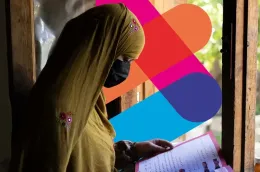
Just four years ago, a woman in Afghanistan could technically decide to run for President, attend university, or play sports.
Today, none of that is possible. Even before the Taliban took power in August 2021, Afghanistan ranked among the lowest countries in the world for gender equality. But there had been hard-won gains. Now, under the Taliban’s de facto rule, those gains have been erased and Afghanistan has become the world’s most severe women’s rights crisis.
Yet the fierce determination and resistance of Afghan women continues to burn – and inspire. Despite near-total restrictions on their lives, they still find ways to run businesses and work on the front lines as humanitarian workers, journalists and community leaders.
“Sometimes, I wonder how to remain hopeful in these dark circumstances,” says Fariba (name changed), who had just started a degree when universities were closed to women. “Nonetheless, I remain hopeful for the future and reassure myself that darkness will end soon, and women and girls in our society will once again access opportunities for work, education and their basic rights.”
Full article published here.
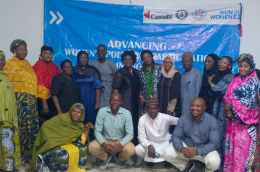
Women in Borno state have called on the state government to mandate the reservation of special portfolios both at the state and federal levels.
The women, under the aegis of Women Political Participation Working Group, made the demand in the late hours of Thursday during a Consultative meeting of Women Advocacy Groups in preparation for the Zonal Public Hearing on Review of the 1999 Constitution in Maiduguri, Borno state
The Chairperson of the Women Political Participation Working Group, Aisha Abubakar, while speaking, said the bill for seat reservation, which has been prepared, is set to be presented at the Zonal public hearing on constitutional review.
She said, “The bill is all about having a reserved seat for women so that women can contest favourably and confidently for seats.
“Initially, contesting with men is not easy because of reasons like political, social, economic and other factors. Now, if we have this reserve seat, it means they will be basically reserved for us to contest”.
While citing an instance, she said, “We have 27 LGAs in Borno state, and 28 members House of Assembly, so going forward there will be additional members.
“Those additions will be reserved for women. This will also include senatorial district, where we have three, so it is now going to be four, which means the additional one is for women.”
Read here the full article.
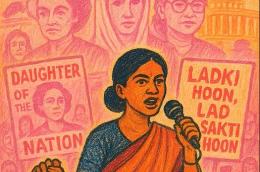
In the grand theatre of South Asian politics, where symbolism often overshadows substance, women’s political participation remains wrapped in layers of emotional performance and aesthetic design. Women’s representation in politics is packaged within strategic aesthetics; emotional narratives of motherhood, sacrifice, and campaign posters all contribute to a branded women’s representation in politics that distributes aesthetic meaning. This is more than branding; it is what is often casually termed in political and feminist discourse, increasingly “Pink Politics,” a curated image of progress appears progressive to an extent but ultimately reproduces the very limitations of traditional gender roles.
Read the full article here.

MI6 will be led by a woman for the first time in the foreign intelligence service's 116-year history.
Blaise Metreweli, who joined the Secret Intelligence Service in 1999, will become the 18th chief of the organisation and take over from Sir Richard Moore later this year.
She is currently responsible for technology and innovation at the service and said she was "proud and honoured" to have been asked to lead.
Prime Minister Sir Keir Starmer called the appointment "historic" at a time "when the work of our intelligence services has never been more vital".
MI6 is tasked with gathering intelligence overseas to improve the UK's security, with its core aims being to stop terrorism, disrupt the activities of hostile states and bolster cyber-security.
Its chief, commonly referred to as "C", is the only publicly named member of the service.
Ms Metreweli, 47, is currently Director General "Q" - head of the crucial technology and innovation division that aims to keep the identities of secret agents secret, and come up with new ways to evade adversaries like China's biometric surveillance.
"MI6 plays a vital role - with MI5 and GCHQ - in keeping the British people safe and promoting UK interests overseas," she said.
"I look forward to continuing that work alongside the brave officers and agents of MI6 and our many international partners."
Full article published by the BBC.
Image by BBC
Overview
In 2025, the global community is commemorating the thirtieth anniversary of the Fourth World Conference on Women and adoption of the Beijing Declaration and Platform for Action (1995). In this vein the sixty-ninth session of the Commission on the Status of Women took place at United Nations Headquarters in New York from 10 to 21 March 2025. The main focus of the session was on the review and appraisal of the implementation of the Beijing Declaration and Platform for Action and the outcomes of the 23rd special session of the General Assembly. The review assessed ongoing challenges hindering the realization of gender equality and women's empowerment and examined how these efforts contribute to achieving the 2030 Agenda for Sustainable Development. At CSW69 countries adopted the Political Declaration recommitting to the global agenda of gender equality and empowerment. In addition, various side events organized by CSOs and partners addressed some of the most critical issues on gender inclusion,empowerment and representation.
In this vein iKNOW Politics held three webinars in Arabic (09/05/2025), English (29/04/2025) and Spanish (25/04/2025) on the topic of ‘From Words to Action – Reviewing the CSW69’. These webinars explored the following key questions stemming from the discussions and outcomes of CSW69.
-
What were the salient themes discussed during the CSW69 that address some of the most pressing issues for Women in Politics?
-
What are the salient features of the Political Declaration that has been adopted?
-
Reflections/Impressions on the sessions by speakers of the webinar.
-
There is a significant global backlash against democracy and gender equity. Do you think the perspectives/commitments you heard at CSW69 meet the challenges of our time?
-
Strategically speaking, what were your key lessons learnt, and how can they be implemented in your context.
-
What was missing in the discussions, what direction can future agendas of CSW take?
-
What lies ahead for Women’s Political Participation based on the commitments at the CSW69?
Key Takeaways
-
Declarations Must Lead to Action: High-level declarations alone are not enough. There must be concrete national and multilateral frameworks, budgets, and accountability mechanisms to drive real change that are cross-cutting to drive grass-root change. The difficult negotiation process at CSW69, particularly considering emerging anti-gender rhetoric and its impact on previously agreed language within the UN frameworks was also highlighted.
-
Effective Youth Inclusion is Essential: For sustainable change, the lived experiences and voices of youth must take center stage at events like CSW. Moreover, the intergenerational aspect of the CSW must be expanded to ensure dialogue in all spaces is representative of experience and representation of different generations of stakeholders.
-
Funding Challenges: The current wave of political regression concerning gender equality is creating unprecedented funding challenges for women’s rights CSOs and forcing many to rethink their future strategies and operational models.
-
Realigning Power & Responsibility: The movement must shift from organization-driven mandates to people-centered responsibility. Activism should reflect the realities of those most impacted.
-
Engaging Men and Boys: Fostering a supportive environment for women’s political participation demands a shift in cultural attitudes by engaging men and boys in discussions on gender equality, leadership, and respectful public discourse.
Click here to view the full Arabic session.
Click here to view the full English session.
Click here to view the full Spanish Session.

We are happy to share that Wanja Maina, participant of the Eastern Africa Young Women's Empowerment Academy organised in the framework of the WYDE Women's Leadership project, has been nominated among the 50 most influential women in Kenya in 2025 by Africapitol Ventures!
Wanja’s work in media, gender equality, disability rights, and community engagement is truly inspiring — and this recognition is a testament to her dedication to creating meaningful change.
It also shows how initiatives like the Young Women's Empowerment Academies can be a positive step in young women’s leadership journeys, supporting them to reflect and work on their development plans and elevate their voices and impact.
Wanja is committed and looks forward to work regionally and globally on issues of public finance, gender equality, disability rights and political participation of special interest groups.
Wanja Maina "Honoured to Be Named Among Kenya's 50 Most Influential Women 2025 🏆✨"
I was pleasantly surprised to receive information from Africapitol Ventures that I am among the 50 most influential women in Kenya for 2025.
This recognition has truly uplifted my spirits and fills me with gratitude. 🙏💖
I believe in a better Kenya, and I have extensively engaged on Kenyan media on issues affecting ordinary Kenyans, which gives me great joy.
Through my media work, I've been able to amplify the voices of everyday people and bring attention to the challenges they face.
Beyond media engagement, I have been involved in many activities that have improved the welfare of women and girls, including program designing, community engagements, and other gender equality projects in partnerships with different entities. 👩👧👦💪
This work has been incredibly fulfilling as I've seen firsthand how collaborative efforts can create meaningful change in communities.
This recognition has encouraged me to do my best, reminding me that "there is someone who is always watching." 👀 It motivates me to continue pushing forward, knowing that dedication and genuine commitment to improving lives doesn't go unnoticed.
Looking ahead, I would love to partner and work with all like-minded people in the coming days on areas of public finance, gender equality, feminisms, disability rights, political participation of special interest groups, and other critical issues affecting our society. 🤝⚖️.
I would also love to work regionally and globally on these important issues. 🌍
I believe that by working together, we can create the lasting change that Kenya needs. 💫
I'm excited to share this news and connect with others who share this vision for a better future. 🌟
"We should always be like a hummingbird. I may be insignificant, but I certainly don’t want to be like the animals watching the planet goes down the drain. I will be a hummingbird, I will do the best I can"- Wangari Maathai
Summary: There has been a lot said about how women have done a better job leading during the Covid-19 crisis than men. According to an analysis of 360-degree assessments conducted between March and June of this year, women were rated by those who work with them as more effective. The gap between men and women in the pandemic is even larger than previously measured, possibly indicating that women tend to perform better in a crisis. In fact, women were rated more positively on 13 of the 19 competencies that comprise overall leadership effectiveness in the authors’ assessment.
When discussing the careers of women leaders, there’s a phenomenon referred to as the “glass cliff.” It’s an obvious relative to the term glass ceiling, which describes the invisible barrier to advancement that women often face when they are up for promotion to the highest levels of an organization. The “glass cliff” describes the idea that when a company is in trouble, a female leader is put in charge to save it. When women are finally given a chance to prove themselves in a senior position, they are handed something that is already broken and where the chances of failure are high.
We see this happen frequently enough that it made us wonder, are women in fact more qualified to lead during a crisis? Could that be why they are handed the reins when times are tough?
Click here to read the full article published by the Harvard Business Review on 30 December 2020.
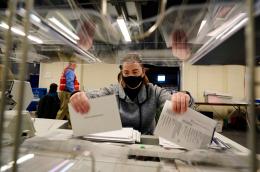
Tool by Make Every Woman Count that monitors elections in Africa.
See it here.

MPs can sometimes be subject to human rights violations, ranging from arbitrary detention and exclusion from public life to even kidnapping and murder in the worst cases. The IPU has been defending MPs in danger for the past 40 years through its Committee on the Human Rights of Parliamentarians.
The map below shows the latest alleged violations of MPs' human rights currently monitored by the IPU. Clicking on a country leads to the page of the parliament, from where you can access the latest information about the case.
See it here.
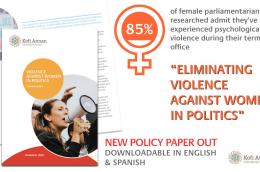
Violence against women in politics is an intolerable violation of women’s rights which poses fundamental challenges to democratic values and electoral processes. To tackle this issue, the Kofi Annan Foundation commissioned Carmen Alanis, the first female Chief Justice at the Superior Chamber of the Electoral Court of Mexico, and member of the Kofi Annan Foundation’s Electoral Integrity Initiative, to produce a policy paper which highlights the barriers women face in their attempts to access political spaces, as well as the challenges they encounter if elected to public office.
- In attempts to shed light on the extent of the problem, the paper addresses three vital questions:
- Why do women face barriers in exercising their political and electoral rights?
- If violence against women in politics is a global phenomenon with a negative impact on democracies, why is the problem still not being adequately addressed by states?
- Do current models of access to justice engage with the issue effectively?
The paper demonstrates that violence against women in politics undermines electoral integrity by disregarding the principles of universal suffrage and political equality. These principles are not being fulfilled in both newer and older democracies across the world, with various barriers to equal and universal political participation.
Click here to see the report.
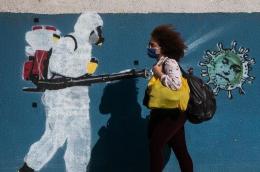
Women participating in politics have navigated unique challenges and opportunities from the coronavirus pandemic. Governments around the world should take these steps to safeguard women’s political inclusion during the pandemic and beyond.
The coronavirus pandemic continues to disrupt political processes around the world. Seventy-three elections have been postponed. Many parliaments have suspended or limited their activities, and over a hundred countries have restricted citizens’ freedom of assembly and expression in the name of public health. Authoritarian and authoritarian-leaning leaders have further taken advantage of the emergency to concentrate power in the executive branch.
Few analyses have probed the gendered consequences of these trends. In the media, the main narrative about gender and pandemic politics has centered on the perceived effectiveness of female politicians in responding to the crisis—including Chancellor Angela Merkel in Germany and Prime Minister Jacinda Ardern in New Zealand. Yet these positive headlines conceal a more worrisome global picture: the pandemic’s profound political and socioeconomic effects could halt or reverse advances in women’s political inclusion.
Click here to read the full article published by Carnegie Endowment on 17 November 2020.

Women Political Leaders and Kantar came together in 2018 to create the Reykjavík Index for Leadership– the first measure of perceptions of women and men in terms of their suitability for leadership. The initial findings revealed significant, complex, and deep-seated prejudice towards women – where women were not seen as equally suitable to lead.
When the Reykjavík Index was launched, we acknowledged that progress in equality for women was far from guaranteed. Across the G7 group of countries, and in multiple areas of economic activity, many of the 2018 Index scores fell short of the target score of 100, which indicates a consensus across society that women and men are equally suited for leadership. Nevertheless, we fully hoped at that time to witness improvements in perceptions in the years to come, with scores of countries and sectors approaching the target score of 100.
Unfortunately, in 2020, the third year of Index results, we can only note a striking absence of progress. Indeed, this year cannot be called a period of advancement.
The Reykjavík Index for Leadership 2020-2021 presents findings drawn from the attitudes of over 20,000 people across ten countries – the G7 nations (comprising Canada, France, Germany, Italy, Japan, the United Kingdom, and the United States) along with India, Kenya, and Nigeria. We believe that the addition of new countries to the G7 nations will allow us to better observe whether progress is being made, where stereotypes endure, and where public policy or private sector intervention is making a difference.
A look at the average score for the G7 countries, which we can now track across three years, shows very little change: it remains a 73. This can be regarded as the gap between the ‘birthright’ of equality for men, and the everyday reality of women’s experiences with inequality across the world.
Click here to see the report.