Women's Leadership
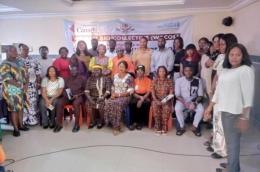
The politician spoke at a one-day high level multi-stakeholder’s roundtable on enhancing women’s political participation in Nigeria.
The event was organised by a Civil Society Organisation, Women Aid Collective, in partnership with UN Women, with support from the Government of Canada.
Sharing her experience as a young woman politician in Ebonyi State, Ibe, the Development Centre Coordinator of Afikpo Northeast in Afikpo Local Government Area of Ebonyi State, said the major roadblocks she encountered in her political career were imposed by her fellow women.
Others, she said, were always bent on frustrating her efforts using diverse strategies.
She stressed that men are not the major problem of women in making their marks in Nigerian politics, maintaining that women out of mutual jealousy scandalise their fellow women, fabricating all kinds of lies to discredit their fellow women excelling in politics or seeking political positions.
Ibe narrated: “Before I became an office holder, I was thinking that men are our problem.
“At every occasion I would always be saying that the men should be told to give us a chance; tell the men to give us 35 percent affirmative action.
“But now I have discovered that the problem is not totally from men.
Read here the full article published by The Eagle Online on 22 November 2024.
Image by The Eagle Online
Beyond the ballot box
The election results reflect broader societal patterns affecting advancement in politics and other spheres. Despite increasing representation in various fields, the path to executive positions remains complex. This reality resonates particularly with established professionals who have navigated similar dynamics throughout their careers.
The conversation extends beyond individual candidates to examine institutional structures that influence leadership selection. As more voices join public discourse, many note how traditional power dynamics continue to shape outcomes across sectors.
Creating sustainable change
Community engagement and strategic coalition-building emerge as critical factors for progress. Grassroots organizations are developing new approaches to leadership development and support systems. These efforts focus on long-term institutional change rather than individual electoral cycles.
An April 2023 Pew Research Center report shows increasing political participation among diverse demographics, suggesting potential for future breakthrough moments. Thus, sustainable progress requires addressing deeper systemic issues around access and opportunity.
Read here the full article published by Rolling Out on 20 November 2024.
Image by Rolling Out
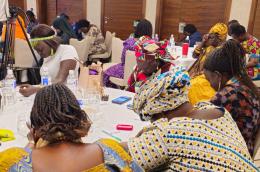
South Sudan UN Women Country Representative Rukaiya Mohammed has underscored the importance of dialogue in empowering women.
Mohammed expressed the sentiments during the three-day inter-generational dialogue on women’s leadership and political participation from East Africa.
The workshop held in Juba created a platform on breaking barriers for women in leadership.
“The transition period has been extended for two years, so we say women should not sleep. We should strategize and take advantage of the momentum,” Mohammed said.
“We said the young can walk fast, but the elderly know the road. It is vital for young women to harness the wisdom of the elders, while the elders should value the creativity and energy of the youth,” she added.
The dialogue included members of the East African Legislative Assembly (EALA) from Kenya, Rwanda, and South Sudan, local MPs, and representatives from civil society organizations (CSOs).
Read here the full article published by Radio Tamazuj on 16 November 2024.
Image by Radio Tamazuj
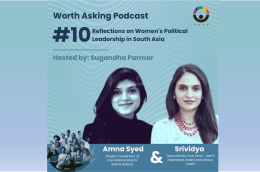
In this final episode of Season 1, we reflect upon what women political leaders in South Asia have told us about their career journeys with our guests. We delve into bringing role models closer to youth, especially young women aspiring to be in politics.
Listen here to the full podcast posted by the Centre for Gender And Politics South Asia on 11 November 2024.
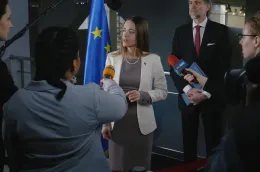
Despite some progress over the past decade, women's representation in political leadership remains limited globally. As of 1 January 2024, only 27 out of 159 countries are led by women – a modest increase from just 18 countries a decade ago (United Nations Women Headquarters Office 2024). Women represent 23% of cabinet members heading ministries worldwide in 2024; in Europe and Northern America, this share is 33%.
On the one hand, these numbers hint at the long road ahead to reach the United Nations’ Sustainable Development Goal of gender equality (SDG 5), which aims to ensure equal opportunities for leadership at all levels of decision-making in political, economic, and public life (United Nations 2015). On the other hand, they underscore the need to understand to what extent the underrepresentation of women politicians matters for policy choices, especially in times of crises.
Read here the full article published by the Centre for Economic Policy Research on 12 November 2024.
Image by Centre for Economic Policy Research
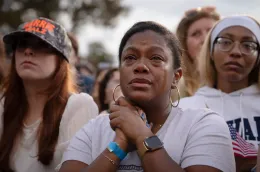
To many left-leaning Americans, it is resoundingly clear that women who backed Donald J. Trump in the presidential election voted against their own self-interest.
Liberal women, in particular, have spent recent days practically stunned, stewing over how other women could have rejected Kamala Harris, who would have been the first woman to lead the nation in its nearly 250-year history. Instead, they chose a candidate who spews misogyny seemingly with glee. For the second time.
One voter from Maine, interviewed after Mr. Trump declared victory, offered a takeaway shared by many. As she put it, “The sisterhood did not stand up.”
In many ways the election results seemed to contradict generations of progress made toward women’s equality and for feminism generally. Women have made strides in nearly every facet of American life in recent decades, generally making up a greater proportion of the U.S. work force than in the past, taking on high-paying jobs and outpacing men in higher education — though they remain underrepresented at the top levels of both business and government.
They now find themselves in a country where Mr. Trump won decisively with a campaign that pitted men against women, sitting down with podcasters who trade in sexism and choosing a running mate who had criticized single women as “childless cat ladies.” Mr. Trump took credit for appointing the Supreme Court justices who overturned the constitutional right to abortion but appeared to pay little price at the polls. Immediately after the election social media posts were circulating by men that read, “your body, my choice.”
Read here the full article published by The New York Times on 12 November 2024.
Image by The New York Times
This first update of the Women, Peace, and Security (WPS) Index provides important insights into patterns and progress on women’s well-being and empowerment around the world. It reflects a shared vision that countries are more peaceful and prosperous when women are accorded full and equal rights and opportunities. While just two years have passed since the inaugural WPS Index was published, major insights can be drawn from recent trends. The timing of this report offers opportunities for stakeholders to review and discuss challenges and to identify opportunities for transformative change in advance of the 20th anniversary of United Nations Security Council Resolution 1325 on Women, Peace and Security. The WPS Index incorporates three basic dimensions of women’s well-being—inclusion (economic, social, political); justice (formal laws and informal discrimination); and security (at the family, community, and societal levels)— which are captured and quantified through 11 indicators. The indicators are aggregated at the national level to create a global ranking of 167 countries. On a pilot basis in this report, we constructed subnational indexes for three of the world’s largest countries (China, India, and Nigeria), which reveal difference in performance within countries on many fronts. We are pleased to have collaborated with National Geographic and their expert team of researchers and designers who have created a series of striking graphics capturing and portraying key insights from the WPS Index. Their results are published in the November 2019 issue of the magazine.1 Some of the graphics are included in this report. Several innovations this year have enhanced the value of the index. First, improvements in data availability made possible the addition of 14 countries, expanding coverage to 167 countries— encompassing more than 98 percent of the world’s population. Second, greater data availability has enabled the use of data on the current (past 12 months) prevalence of intimate partner violence in place of data on women’s lifetime experience of intimate partner violence. This change permits tracking changes in prevalence over time. Third, we have used data revisions and updates since the inaugural edition of the index from the International Labour Organization, the United Nations, the World Bank, and other authoritative sources to continue to ensure the reliability of the data on which the index is based. While these are major improvements, the changes also mean that comparisons of scores and ranks between the 2017 and 2019 editions must be made carefully. This report examines changes in the underlying indicators and limits attention to changes in position on the index to the biggest country movers only. We hope that this year’s report is an important contribution to national and international efforts to accelerate progress on both the international commitment to women, peace, and security and the Sustainable Development Goals. The WPS Index will be updated again in 2021, serving to track progress toward women’s inclusion, justice, and security.
Click here to see the report.
Since its establishment in 2000, the The Community of Democracies (CoD) has affirmed and maintained a commitment to engaging women in all aspects of democratic gover - nance and development, including women’s political participation and inclusion in peacebuilding processes and initiatives. The importance of female participation in the political and diplomatic sphere as a crucial component of consolidated democracy and sustain - able development was outlined and recognized as a core value in the governing document of the CoD, the Warsaw Declaration, which em - phasizes that the “informed participation by all elements of society, men and women, in a country’s economic and political life, including by persons belonging to minority groups, is fundamental to a vibrant and durable democracy”. Gender equality is one of the three cross-cut - ting themes mainstreamed into all activities undertaken by the Com - munity as part of its Strategic Plan 2018-2023.
Click here to see the report.
The Women's Network of the Union of Latin American Parties (UPLA) is a political platform that seeks to promote and strengthen the participation and positioning of women in public decision-making roles in Latin America and the Caribbean.
UPLA prepared a report for the electronic discussion on the role of political parties in the promotion of women in politics.
Click here to see the report.
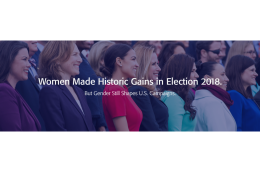
Women ran for and were elected to office in record numbers in the 2018 election. They made historic gains across levels of office and reached new milestones for women’s political representation. But not all women achieved record levels of success in 2018. Republican women’s representation dropped across offices and within their party.
The progress for all women in election 2018 should also be put into important context. First, despite breaking records for candidacy and officeholding, women – who are just over half of the population – were still underrepresented among all candidates and remain less than one-third of elected officials.
Finally, measuring progress for women in electoral politics means looking beyond the numbers. When considering the gender and intersectional dynamics at play in U.S. campaigns, it is clear that there is much progress left to make in creating equitable conditions for success for women and men in American elections.
Click here to see the report.
Violence against women in politics is increasingly recognized around the world as a significant barrier to women’s political participation. This article maps how the concept emerged globally, arguing that it has multiple, parallel origins: efforts by locally elected women in Bolivia in the late 1990s to theorize their experiences as political harassment and violence against women; networking by elected women across Asia, with support from global actors, to map and condemn manifestations of violence against women in politics in the mid2000s; and initiatives in Kenya to recognize and tackle electoral gender-based violence in the late 2000s. International actors began to link these debates in the late 2000s and early 2010s, collecting and analyzing testimonies from women to develop new frameworks and toolkits for identifying and addressing violence against women in politics. They also sought opportunities to embed these new understandings into existing normative and political frameworks. Arguing that concept formation plays a crucial role in global feminist politics, the article illustrates how feminist collaborations are essential for giving voice to women’s experiences and mobilizing for change.
Click here to see the report.
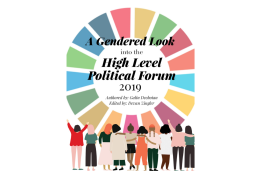
The High Level Political Forum (HLPF) is the core United Nations platform on Sustainable Development. It is the mechanism which follows up on UN Member States’ implementation of the 2030 Agenda and seeks to hold governments accountable by encouraging them to submit national reviews on their progress toward the 2030 Agenda. Each year, the HLPF focuses on a different theme and reviews a different set of Sustainable Development Goals (SDGs). This year’s theme was “Empowering people and ensuring inclusiveness and equality”.
The following set of goals were reviewed:
- Goal 4: Ensure inclusive and equitable quality education and promote lifelong learning opportunities for all
- Goal 8: Promote sustained, inclusive and sustainable economic growth, full and productive employment and decent work for all
- Goal 10: Reduce inequality within and among countries
- Goal 13: Take urgent action to combat climate change and its impacts
- Goal 16: Promote peaceful and inclusive societies for sustainable development, provide access to justice for all and build effective, accountable and inclusive institutions at all levels
- Goal 17: Strengthen the means of implementation and revitalize the global partnership for sustainable development.
As the HLPF adopts inter-governmentally negotiated political declarations, this report analyzes each of the 6 goals through a gendered lens and emphasizes the importance of taking a gendered approach in implementing each of the goals. Additionally, this publication focuses on how each goal impacts women and girls and how their involvement makes a global difference. Each goal is explored through a gendered analysis, backed up by examples of good practices from around the globe. These case studies demonstrate innovative and gender-sensitive practices that governments have implemented in their efforts toward the 2030 Agenda. The purpose of this report is to present how women and girls can have an effective impact on societies and governments when they are given a chance to take part in global discussions that may affect change. More importantly, this publication emphasizes how women and girls play a significant role in achieving the 2030 Agenda.
Click here to see the report.