Women's Leadership
¨Global comparable data on women in cabinet positions, in the latest Global Gender Gap Report 2024, shows limited gains towards equal participation.
¨Most countries are far from reaching gender parity in cabinet positions, but global trends towards more inclusive cabinets can be accelerated.
¨Women ministers are leading in areas like human rights and gender equality, but remain a minority in areas such as defence, justice and home affairs.
Global data gaps on women in political decision-making positions are being closed, providing much needed evidence to assess countries’ progress toward gender equality. Most recently, the measurement of women’s representation in cabinet positions was strengthened by UN Women by defining clear and transparent criteria for global comparisons, based on agreed concepts, mapping of legislative frameworks on cabinet compositions in all countries, and expert technical meetings. These criteria are practical to implement and reduce the space for interpretation of what needs to be measured, thus ensuring feasibility, reliability, comparability and quality of the global data.
Read here the full article published by the World Economic Forum on 24 June 2024.
Image by WEF
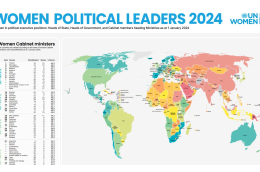
This poster presents global data on women in executive positions as Heads of State, Heads of Government, and Cabinet members heading Ministries. Data indicate that women are underrepresented at all levels of executive decision-making worldwide, and achieving gender parity in political life remains a distant goal.
Only 26 countries are led by a woman, a modest increase from just 18 countries a decade ago. Women represent 23.3 per cent of Cabinet members heading Ministries in 2024—a less than 0.5 percentage point increase from 2023—and continue to primarily lead portfolios related to women and gender equality, family and children affairs, social affairs, and indigenous and minority affairs. Policy domains such as economic affairs, defence, justice, and home affairs, continue to be dominated by men.
Click here to see the full poster published by UN Women on June 2024.
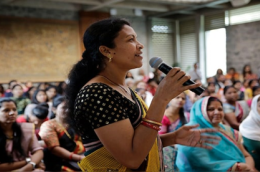
India recently concluded its 2024 general elections, which took place in seven phases—from April 19 to June 1—to elect all 543 members of the Lok Sabha (lower house). While the results have taken many by surprise, what has been even more astonishing is the fact that for a country that has rigorously been trying to establish a more progressive front on women’s rights and gender equality over the past few years, the new Indian parliament has failed to showcase a notable uptick in the representation of women after the latest elections.
Making just 13.63 per cent of the elected strength, the 18th Lok Sabha will comprise only 74 women compared to 469 men. This share is not only abysmally skewed but also lower than the 14.4 per cent share of female representation during the 2019 election, where 78 women were elected as MPs.
The irony here is that just last year, India—during its G20 presidency—brought about a paradigm shift in gender-based policymaking by challenging the status quo and with the innovative idea of women-led development in order to ensure women’s inclusion and representation at all levels of decision-making.
Even at the domestic level, India—after many deliberations—finally passed the historic Women’s Reservation Bill in 2023, which seeks to reserve one-third of the seats in the Lok Sabha and state legislative assemblies for women.
Read here the full article published by the First Post on 20 June 2024.
Image by First Post
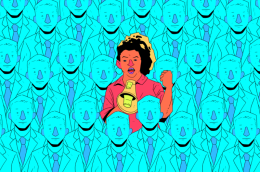
São Paulo witnessed a historic change in the 2020 municipal elections. Four Black women were elected as councillors — over 72 years, the capital of São Paulo state has elected only six Black women councillors in total.
However, the proportion of women among the 55 members of the City Council — the largest in Brazil — is still below that of the general population. In São Paulo, for every 10 councillors, two are women. When taking into account all of the metropolitan region, the average falls to one woman councillor for every 10 deputies in the town halls.
When looking at municipal councils, the situation seems even more difficult: only three of the 39 cities in Greater São Paulo have women mayors.
According to the platform TSE Women, of the High Electoral Court, women comprise more than half (52 percent) of the electorate in Brazil. However, the number of votes won by women candidates between 2016 and 2022 was 33 percent, with 15 percent of them being elected.
A few months before new elections in the 5,565 Brazilian municipalities, scheduled for next October, Agência Mural talked to councillors, community leaders, and experts about why it is so difficult for women, especially from peripheral, poorer areas, to enter institutional politics, and also about the journeys of those who were elected.
Read here the full article published by Global Voices on 18 June 2024.
Image by Global Voices
The Global Gender Gap Index annually benchmarks the current state and evolution of gender parity across four key dimensions (Economic Participation and Opportunity, Educational Attainment, Health and Survival, and Political Empowerment). It is the longest-standing index tracking the progress of numerous countries’ efforts towards closing these gaps over time since its inception in 2006.
Read here the full report published by the World Economic Forum on 11 June 2024.
Image by WEF
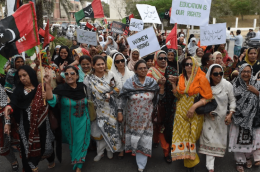
PAKISTAN ranks low on the Gender Gap Index in the World Economic Forum’s Global Gender Gap Report, 2023. On women’s political empowerment, it ranked 95th out of 146 countries, with only a handful of women occupying senior, managerial, policy- and decision-making posts. The main factors preventing women from achieving gender parity in politics are a patriarchal system, systemic gender discrimination, socioeconomic disparity, and hidebound cultural norms.
The Constitution is clear that “there shall be no discrimination on the basis of sex alone” and that “steps shall be taken to ensure full participation of women in all spheres of national life”. Besides, Pakistan is a signatory to the UN Convention on the Elimination of All Forms of Discrimination against Women, which obligates governments to “take all appropriate measures to eliminate discrimination against women in political and public life”, including in elections.
Pakistan’s women constitute almost half of the population, but their share in parliament is just 20 per cent. The gender gap also exists among voters.
Women’s participation and representation in the political process is a fundamental principle of democracy, and it is a prerequisite for gender-sensitive and gender-responsive governance. Ensuring the latter is only possible by increasing the number of women in policy- and decision-making positions and providing them with a conducive and women-friendly environment. According to UN Women, “in the last 25 years, women’s political representation has doubled globally. Even then, more than three-quarters of seats in parliament are still held by men”.
Read the full article here.
Image by Dawn

Gender equality is both an essential development goal in its own right and a driver of human development. International law recognizes that everyone has a right to participate in public life, but it remains an ongoing challenge to achieve women’s equal participation, especially in decision-making. The importance of advancing women’s leadership in politics has continued to gain traction. Although much remains to be done, advances are being made slowly but surely. Unfortunately, less attention and support has been given to promoting women’s leadership in public administration. In response, UNDP developed a joint research and policy development initiative titled Gender Equality in Public Administration (GEPA) to help fill this gap. This global report reflects extensive research based on available national data, and provides analysis of the obstacles in the way of women’s equal participation and decision-making in public administration. It highlights examples of approaches which can work, and offers recommendations for further action.
This study report on Women in Power and Decision-Making in the Eastern Partnership Countries, 2015 is part of the project Short term high quality studies to support activities under the Eastern Partnership – HiQSTEP, carried out by an international consortium under the leadership of Kantor Management Consultants.
This study has been carried out to support the activities of Platform I - ‘Democracy, Good Governance and Stability’ – of the Eastern Partnership at the request of the Government of Sweden, supported by Georgia and Moldova. Gender has been identified as priority area by the EaP Platform I Work Programme 2014-2017. The Directorate-General for Neighbourhood and Enlargement Negotiations (DG NEAR), the European Union External Action Service and the European Institute for Gender Equality are the driving forces in cooperation with EaP partner countries on this theme. The European Institute for Gender Equality has provided methodological support to the present Study to ensure comparability between the EU-28 and Eastern Partnership data.
In the Eastern Partnership Countries, women are remarkably absent from the structures of power. In politics, 17 women are currently appointed to Senior Minister posts out of 136 such posts, women elected as Parliament Members constitute 16 per cent and 3 political parties are led by women. Only 17 per cent of women managed to break the glass ceiling to reach the highest ranking civil servants positions. Small bright spots can be found in the judiciary, were women judges count for 29 per cent of the Supreme Courts posts, and in Local Assemblies, where their share reached 27 per cent.
Looking more closely at some countries, timid but possibly real gender-related advances can be identified, such as in Ukraine where two women were appointed to the most important financial positions of the Minister of Finance and the Head of the Central Bank. However, the Minister of
Finance is the only woman in the Ukrainian cabinet. In Moldova, a different approach led to the appointment of 6 women out of 22 as Senior Ministers1, the highest number in the EaP, and to the attribution of socio-cultural portfolios to 4 of them. In Georgia, a system of exams based on qualifications resulted in a higher number of women judges than men (51 to 49 per cent respectively). Women are even less present in positions of economic power. They represent 9 per cent of members of the boards of central banks, 15 per cent of members of the governing bodies of trade unions and 10 per cent of members of the governing bodies of employers’ organisations. Women in the boards of companies registered on the stock exchange are less than 15 per cent. Ukraine, however, stands out again as the only EaP country with two women Presidents and two women Vice-Presidents in two of its organisations representing workers.
These results are not surprising when one analyses the social and economic situation endured by women in the EaP Countries, where they often face severe horizontal and vertical segregations that constrain them in low-paid and informal jobs – predominantly in services sectors such as retail trade, education and health care. Protective regulations that prohibit the employment of women in dangerous or harmful conditions can further deprive women of jobs, which is the case in Azerbaijan, Belarus and Ukraine. Despite their higher levels of education than those of men across EaP Countries, gender pay gaps for women can be as high as 50 per cent, as is the case in Azerbaijan. Except in Belarus2, women’s unemployment is higher than men’s and they are more exposed to poverty.
The combination of these factors drives large numbers of women to entrepreneurship, such as in Belarus where women are 63 per cent of all individual entrepreneurs3. Access to credit or even micro-credit is difficult and the span of women’s activities remains limited. Women will often be excluded from the trade networks that facilitate the launch and development of businesses and companies for men. Many women, especially in rural areas, work in the agricultural sector of countries, such as Georgia, where land is mostly owned by men. Their work is not registered and they cannot benefit from allowances nor can they apply for compensations, thereby limiting their capacity to engage in society and politics.
When all other possibilities fail, women resort to emigrating: this is the case of Armenia, Georgia, Moldova and Ukraine. Not only has Moldova the lowest level of labour participation amongst the EaP Countries, but it also experiences a continuing decrease of the active female labour force, losing 7 per cent of its active female population in the 2004-2014 decade. The lack of social services is particularly critical, when one considers that child-care services were more readily available prior to the current transition period. This is compounded by the fact that men are rarely involved in children’s education.
Women are scarcely present at the highest echelons of universities, with an average of 12 per cent women rectors in the EaP Countries, or in media, although some more women are appointed in positions at the second level of power. Their capacity to influence the public discourse appears therefore limited. All Eastern Partnership Countries are affected by different forms of violence against women including human trafficking and harmful practices. Violence against women negatively affects women’s general well-being and prevents them from fully participating in society.
From a legal standpoint, women in the Eastern Partnership Countries benefit from virtually all the gender equality requisites. All EaP constitutions, adopted between 1994 and 1996, rigorously impose parity between women and men and all legislations provide for equal rights, albeit in varying degrees. In contrast, however, legislation on violence and harassment against women remains insufficient. All these factors have direct and indirect implications on women’s roles in leadership and decision-making.
Summary record of the Joint Biennial Meeting of the United Nations Inter-Agency Network on Women and Gender Equality (IANWGE) and the OECD-DAC Network on Gender Equality (GENDERNET)
“Implementing the 2030 Agenda for Sustainable Development: A game changer for gender equality, women's empowerment and women's human rights”
12-14 January 2016, Kampala, Uganda
KEY MESSAGES
The 2030 Agenda for Sustainable Development, with its comprehensive standalone goal on gender equality (SDG5) and gender-specific targets across the other goals, provides an ambitious framework to transform the lives of women and girls everywhere. However, it will only be a game-changer if it is fully implemented (...).
Women have historically faced greater barriers than men when it comes to fully participating in society. Across geographies and income levels, disparities between men and women persist in the form of pay gaps, uneven opportunities for advancement, and unbalanced representation in important decision-making. Despite their strong convictions about gender equality in leadership, this Rockefeller Foundation and Global Strategy Group report shows that Americans are acutely aware of the forces that hold women back. Nine in ten (92%) say that traditions of, and expectations for, male leadership in workplace cultures contributes at least somewhat to women’s lack of representation in top positions—including 69%, who say it contributes highly. Other preconceptions also play a role, including women being seen as prioritizing family over career (89%), and the perception that women are less effective leaders than men (78%). Click here to access the report.
[[{"fid":"10815","view_mode":"default","fields":{"format":"default","field_file_image_alt_text[und][0][value]":"","field_file_image_title_text[und][0][value]":""},"type":"media","link_text":null,"attributes":{"style":"display: block; margin-left: auto; margin-right: auto;","class":"media-element file-default"}}]]

This factsheet, produced by Oxfam, gives a brief overview of the status of women in the Middle East and North Africa with a focus on the themes of violence against women and girls in conflict and women’s political participation and leadership. It also discusses the implementation of United Nations Security Council Resolution 1325 (2000) and the extent of progress towards its goals, more than 15 years after the adoption of this landmark resolution on Women, Peace and Security. The factsheet is divided into two sections as it first highlights the different manifestations of gender-based threats and risks that women face, and then looks into the limited participation of women in decision making and peace processes. For more on this, click here.

The Arab region ranks the lowest in the world in terms of women‘s participation in parliaments. Recognizing the power of the challenges facing women in politics, this paper examines the political participation of women in the Arab countries and identifies the different challenges that impede Arab women's participation in decision making. It finds that these challenges include cultural factors, lack of coordination among women's organizations, shortcomings in the institutional and legal frameworks, practices of political parties and election process among many others. To read the full report, click here.