Women's Leadership
Historically, international relations have been one of the fields with the lowest female representation within the world of politics: except for a few notable exceptions, diplomacy has typically been a “man’s world” (Barrios Baron, 2020; Cengiz, 2023). A clear indicator in this direction is the fact that no woman has yet served as Secretary General in the United Nations.
At the same time, according to a report by GQUAL (2022), on the composition of 88 international tribunals and organisations, out of 578 positions, 234 are occupied by women, reaching only 40.48% of the total. The proportion remains practically the same at the regional level in Latin America and the Caribbean, representing 39% of female participation.
Click here to read the full article published by The Peninsula Qatar on 25 November 2023.

British TV features plenty of women who wield power. This is unsurprising. But what we see little of is scrutiny of how these women are presented and the associated narratives. Stories and characters are compelling and therefore influential; narratives drive the evolution of culture and collective attitudes, so balance and variety in the stories we see in the media, TV and film is key. However, an analysis of several British TV series reveals a tendency to view powerful women through a sceptical lens. In general, women who obtain power and influence in atypical ways are portrayed not as potent changemakers, but as threats. So the question we need to ask is whether we need more narratives that encourage optimism about the potential of renegades and unconventional individuals — particularly women — to succeed in politics.
Click here to read the full article published by Shout Out UK on 21 November 2023.
Image by Shout Out UK

Women’s underrepresentation at all levels of government is a persistent problem in the United States. RepresentWomen’s research shows that although we have made progress towards parity, this progress is slow and inconsistent, meaning we are unlikely to reach gender balance within our lifetimes. Increasing and sustaining women’s leadership in elected office requires us to remove the barriers women candidates and legislators face. This drives our research at RepresentWomen to identify the barriers and system-level solutions we can implement to create a more representative, gender-balanced democracy.
Click here to read the full article published by LA Progressive on 22 November 2023.
Image by LA Progressive
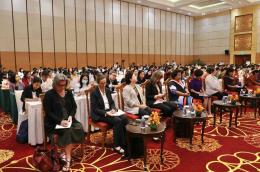
The National Assembly (NA) stated that both the legislature and the executive branches of government have a strong political will to encourage, promote and strengthen the role of women to achieve the Cambodia’s sustainable development goals (SDGs) and its vision for 2030 and 2050.
The body has passed comprehensive laws to integrate gender equality into public policy and laws, taking into account the challenges faced by women.
Click here to read the full article published by The Phnom Penh Post on 22 November 2023.
Image by The Phnom Penh Post
Men still dominate political decision-making in the United Kingdom. Women hold just one or two seats on prestigious select committees in the House of Commons, like Defence, Foreign Affairs, and Justice. No women sit on the Domestic and Economic Affairs cabinet committee. And 95% of all local councils have majority-men membership.
Yet voters do care about women’s leadership in elected office. My research shows that when women are absent from political decision-making, voters view governments as less legitimate.
Click here to read the full article published by the Electoral Reform Society on 21 November 2023.
Image by Electoral Reform Society
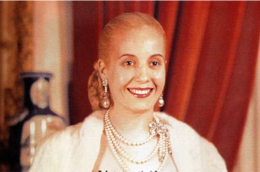
Eva Perón, read via her clothes. The Argentine politician is an icon of Latin American feminism. Much has been written about the woman, who was at one point an actress, throughout the years. Dozens of documentaries and movies have focused on her story. Nonetheless, many aspects of her life continue to be a mystery. Although her time on Earth was brief, having died at 33 years of age, she is one of the most important figures in the history of Argentina.
Click here to read the full article published by El País on 15 November 2023.
Image by El País