Women's Leadership
-
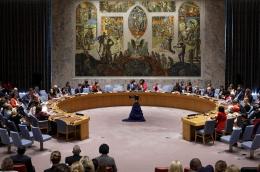
Despite notable normative advances, after 25 years, the effectiveness of the Women, Peace and Security Agenda is threatened by a fragmented global panorama and faces significant challenges and setbacks.
-
In the new context, the following stand out: (a) the increased frequency and complexity of armed conflicts; (b) the rise of ‘anti-gender’ movements and the erosion of women’s rights in many regions; (c) geopolitical divisions, which make it difficult to prioritise comprehensive solutions to conflicts; (d) the Agenda’s funding crisis; (e) the crisis of multilateralism; (f) the reduced representation of women as negotiators and mediators; and (g) the loss of policy coherence and its transformative potential due to the instrumentalisation of the Agenda, often used for geopolitical purposes.
-
For the Agenda to remain relevant, it is crucial that it evolves and adapts to the new global situation and updates its principles with an understanding of the local contexts in which it must be applied.
In 2000, the United Nations Security Council recognized that women’s leadership and gender equality are crucial for international peace and security, and the past 25 years have seen increased attention to this matter. However, the rise in global conflict in recent years risks erasing the modest progress made in previous decades.
Every year, the UN Secretary-General presents an annual report to the Security Council detailing the status of the women, peace and security agenda in the world. This year’s report contains more than one hundred facts and figures on issues ranging from women’s participation in peace processes, peace operations, or politics in conflict-affected countries, to the impact of conflict on women and girls, including atrocities that target them disproportionately, like reproductive violence, gender-based persecution, or conflict-related sexual violence.
This infographic, prepared by UN Women, highlights a few of these facts and figures, along with recommendations to change course.
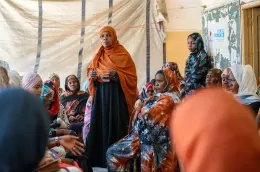
New York, 20 October – The world is experiencing the highest number of active conflicts since 1946, creating unprecedented risks and suffering for women and girls.
The 2025 UN Secretary-General’s report on Women, Peace and Security warns that 676 million women now live within 50 kilometers of deadly conflict, the highest level since the 1990s. Civilian casualties among women and children quadrupled compared to the previous two-year period, and conflict-related sexual violence increased by 87 per cent in two years.
Issued on the 25th anniversary of Security Council resolution 1325, which committed the international community to women’s full participation and protection in peace and security, the report warns that two decades of progress are unraveling.
“Women and girls are being killed in record numbers, shut out of peace tables, and left unprotected as wars multiply. Women do not need more promises, they need power, protection, and equal participation”, said Sima Bahous, UN Under-Secretary-General and UN Women Executive Director.
Despite overwhelming evidence that women’s participation makes peace more durable, women remain largely excluded from decision-making. While an increasing number of countries have developed national action plans to implement resolution 1325, this has not always resulted in tangible change for women. In 2024, 9 out of 10 peace processes had no women negotiators, with women making up just 7 per cent of negotiators and 14 per cent of mediators globally.
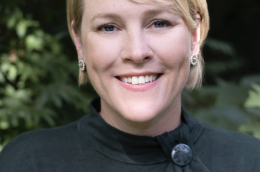
As part of Xpress‘ annual Women in Business issue, we reached out to elected officials and municipal leaders seeking their stories about influential role models, lived experiences and obstacles they’ve faced. Below is our exchange with Maggie Ullman, Asheville City Council member.
Xpress: Who were the role models that inspired you to seek elected office?
Ullman: My mom. She raised three daughters while teaching English part time at two community colleges, and she often said she’d been “mommy-tracked” instead of full-time tracked — and she was right. But instead of accepting it, she organized, joining the part-time teachers’ union and negotiating for fair treatment.
As she neared retirement, she wanted to stay involved. She kept asking when a local candidate would announce so she could volunteer. When no one stepped up, she did — and ran for state representative, flipping a seat that had been Republican for 40 years. Watching her lead with courage and fairness taught me that leadership is about stepping forward when the moment calls.
How has your lived experience informed the way you lead?
Being a working mom, I know the challenge of juggling schedules and responsibilities while still showing up for your community. That perspective shapes how I lead: I focus on tangible solutions that make life manageable and meaningful.
I fight for policies that support families: affordable housing near reliable transportation, safe and welcoming parks and green spaces, and low-cost afterschool and summer programs. When families thrive, the entire community thrives.
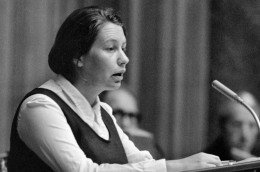
Former St. Gallen National Councillor Hanna Sahlfeld-Singer has died, according to an obituary in the "St. Galler Tagblatt". The former SP politician would have been 82 years old next Friday.
Sahlfeld-Singer was the first female SP National Councillor from St. Gallen from 1971 to 1975 and was one of the first eleven female National Councillors ever, as the SP and the SP Women of the Canton of St. Gallen wrote in the advertisement. "She will be fondly remembered as a pioneer for equality and as a fighter for human rights, against poverty and for social justice," it continued.
Shortly before she took office, women in Switzerland had just been granted the right to vote at federal level. When Sahlfeld-Singer entered the Federal Palace on December 14, 1971, a porter told her that there were no guided tours on that day - to which she replied that she was there to be sworn in, as she said in an SRF interview in 2021.
Abstract
Advocates of women’s rights in many Muslim countries have long demanded the formation of state-level institutional structures that promote and protect women’s rights, in turn contributing to democratization and development. The design and impact of such structures, collectively referred to as national women’s machineries (NWMs), has, however, varied across contexts. This paper advocates analysis of the actors and factors that impact the design, influence, and function of NWMs, with an emphasis on the role of state gender ideology. It argues that NWMs, as formal state institutions, are never conceptualized and formed in a vacuum, with various competing interests impacting their design and function especially in non-democratic and unrepresentative contexts. Through a case study of NWMs in the Islamic Republic of Iran, it shows that despite efforts for cabinet-level women’s rights policy-making since the early 1990s, throughout the past decades such gains have faced backlash and reversal as a result of conservative ideological shifts, at times rendering such institutions illegitimate in the eyes of the Iranian feminist movement.

Women have been politically active and have played key roles at times of critical turning points in Sudan’s history, but this has not been translated into official recognition in political processes or substantive representation in government.
The latest example of this is women’s active role in response to the crisis that has evolved in Sudan since 15 April 2023, when the country was plunged into violence amidst the power struggle between the two main factions of the ruling military regime, the Sudan Armed Forces (SAF) and Rapid Support Forces (RSF).
Click here to read the full article published by Relief Web on 14 June 2023.

During the Summit for Democracy Year of Action, the S4D cohort on Gender Equality as a Prerequisite for Democracy identified recommendations for strengthening democracy by promoting gender equality, Statement and Roadmap of recommendations. The co-leads of the gender cohort – Sweden, Romania, Georgetown Institute for Women, Peace and Security and International IDEA encourage governments and civil society to consider the recommendations and proposed actions.
The Gender Cohort strongly supports the themes for the Regional Summits for Democracy 2023. The regional themes have a critical link to gender equality and democracy nexus and the Gender Cohort has developed specific briefs on gender for each theme: Youth; Anti-Corruption; Free, Fair and Transparent Elections; Information and Communications Technologies (ICTs) and Media Freedom.
Statement and Roadmap of Recommendations
The recommendations and proposed actions were identified in consultation with the cohort consisting of over 100 representatives of governments and civil society from all regions of the world. Governments and civil society are encouraged to consider the recommendations as tools for strengthening democracy by promoting gender equality. The recommendations focus on three pillars: inclusion; legislative and policy frameworks; and conflict prevention, peace and security. Each thematic pillar is fundamental for gender equality in democracy processes.
Read the statement of recommendations >>
Read the roadmap of recommendations >>
Briefs of the Democracy Cohort on Gender Equality
Gender equality is fundamental to the electoral process because it enables women—as voters, candidates and elected officials—to influence public policy and advocate for their interests. However, women face significant obstacles to political participation, including the use of targeted gender-based violence and intimidation meant to discourage them from running for office or exercising their political rights. Challenges and risks are even greater for women from historically marginalized communities. Additionally, women are less likely to be recruited and selected as candidates, are less likely to have equal access to campaign funds and face greater challenges to proportional representation.
Summit for Democracy Cohort on Gender Equality as a Prerequisite for Democracy Anti-Corruption
Corruption undermines democracy and justice because it impedes the ability of the public to benefit fully from government institutions. Combating corruption requires a gender perspective in order to gain a full understanding of its scope and impact. Women have unique (but not uniform) approaches to anti-corruption and are also impacted differently by corruption which drives inequalities and undermines opportunities for healthy democracies.
Summit for Democracy Cohort on Gender Equality as a Prerequisite for Democracy Youth
Youth are the leaders of the future. Yet, people under the age of 35 are rarely found in formal political leadership positions, with fewer women than men in these roles.2 Research by the Inter-Parliamentary Union (IPU) found that out of 2.2 per cent of parliamentarians under the age of 30, less than 1 per cent are young women. The marginalization of youth—including young women— from politics leads to missed opportunities to strengthen democracy-building processes and institutions. Gender equality as a prerequisite for democracy requires tailored efforts to engage both young women and men. Barriers to the inclusion of youth in politics must be addressed, including gendered forms of discrimination and violence.
ICTs have the potential to close gender gaps in women’s political participation. They can serve as tools for women to influence policy agendas, increase women’s access to campaign resources, strengthen networks of solidarity, and increase women’s representation in democratic agendas and processes. With social media, blogs, podcasts and promotional videos, women have bypassed traditional media outlets, such as TV and radio, to elevate their profile directly and access political decision-making.
Summit for Democracy Cohort on Gender Equality as a Prerequisite for Democracy Media Freedom
Media freedom and the safety of women journalists are fundamental to the strength of democratic processes and institutions. Yet, women are not equally represented in the media. A 2020 study of the news media in the UK, US, Kenya, India, South Africa and Nigeria found that women comprised only 15–30 percent of the subjects of news reports.

This book addresses the central question of how right-wing women navigate the cross-pressures between gender identity and political ideology.
The hope has always been that more women in politics would lead to greater inclusion of women’s voices and interests in decision-making and policy. Yet this is not always the case; some prominent conservative women such as Margaret Thatcher have rejected the feminist label while others such as Angela Merkel have reluctantly accepted it. Republican women in the U.S. Congress have embraced social and economic policies contrary to what many consider to be women’s issues while EU Commission president Ursula von der Leyen is a staunch supporter of feminist ideas. Other conservative women, such as Marine LePen in France strategically use feminist ideas to justify their conservative stances on immigration. This brings up an interesting yet understudied question: under what circumstances do conservative women become feminist allies and when do they toe the party line? It is this tension between women’s political representation and conservatism that this edited volume explores.
Click here to access the book.

Abstract
Concern over partisan resentment and hostility has increased across Western democracies. Despite growing attention to affective polarization, existing research fails to ask whether who serves in office affects mass-level interparty hostility. Drawing on scholarship on women’s behavior as elected representatives and citizens’ beliefs about women politicians, we posit the women MPs affective bonus hypothesis: all else being equal, partisans display warmer affect toward out-parties with higher proportions of women MPs. We evaluate this claim with an original dataset on women’s presence in 125 political parties in 20 Western democracies from 1996 to 2017 combined with survey data on partisans’ affective ratings of political opponents. We show that women’s representation is associated with lower levels of partisan hostility and that both men and women partisans react positively to out-party women MPs. Increasing women’s parliamentary presence could thus mitigate cross-party hostility.
Click here to access the paper.

At a time of pandemics, international economic downturns, and increasing environmental threats due to climate change, countries around the world are facing numerous crises. What impact might we expect these crises to have on the already common perception that executive leadership is a masculine domain? For years, women executives’ ability to lead has been questioned (Jalalzai 2013). However, the outbreak of COVID-19 brought headlines like CNN’s “Women Leaders Are Doing a Disproportionately Great Job at Handling the Pandemic” (Fincher 2020). Do crises offer women presidents and prime ministers opportunities to be perceived as competent leaders? Or do they prime masculinized leadership expectations and reinforce common conceptions that women are unfit to lead? We maintain that people’s perceptions of crisis leadership will depend on whether the crisis creates role (in)congruity between traditional gender norms and the leadership expectations generated by the particular crisis.
Click here to read the article by Cambridge University Press the 12 January 2023.

Women’s political rights and their exercise of political citizenship globally have often expanded more rapidly in times of conflict, crisis, and revolution. The decline of empires after World Wars I and II and the creation of new nations served as a catalyst for the expansion of women’s suffrage. Civil wars and revolutions have had similar outcomes in expanding women’s political citizenship. This essay brings together several disparate literatures on World War I, World War II, wars of independence, revolution, and post-1990 civil wars and expands their scope to show how women’s political rights and citizenship in the nineteenth and twentieth centuries have often been linked to conflict. In doing so, I highlight a notable pathway by which rights expansions occurred: conflict led to changes in the political elite and ruling class, resulting in the necessity to rewrite constitutions and other rules of the polity. During these critical junctures, women’s rights activists gained opportunities to advance their demands. The context of changing international gender norms also influenced these moments. I consider two key moments in the worldwide expansion of political citizenship: the struggle for women’s suffrage and the struggle to expand women’s representation in local and national representative bodies.
Click here to read the article by Cambridge University Press on 12 January 2023.