Women's Leadership

Nominating and electing more female politicians can help to diffuse polarisation and reduce levels of hostility and distrust across party lines, a study shows.
Political parties that elect a greater number of women representatives are viewed more favourably by voters who support opposing parties.
Political polarisation, or animosity towards opposing political parties, takes many forms.
There is growing concern about the link between political polarisation and increases in hostility and distrust across party lines in countries around the world.
Researchers used data on women’s presence in 125 political parties over 20 Western democracies from 1996 to 2017, combined with survey data on how people rated opposing political parties,
Click here to read the full article published by Eureka Alert on 18 January 2023.

Abstract
Concern over partisan resentment and hostility has increased across Western democracies. Despite growing attention to affective polarization, existing research fails to ask whether who serves in office affects mass-level interparty hostility. Drawing on scholarship on women’s behavior as elected representatives and citizens’ beliefs about women politicians, we posit the women MPs affective bonus hypothesis: all else being equal, partisans display warmer affect toward out-parties with higher proportions of women MPs. We evaluate this claim with an original dataset on women’s presence in 125 political parties in 20 Western democracies from 1996 to 2017 combined with survey data on partisans’ affective ratings of political opponents. We show that women’s representation is associated with lower levels of partisan hostility and that both men and women partisans react positively to out-party women MPs. Increasing women’s parliamentary presence could thus mitigate cross-party hostility.
Click here to access the paper.

At a time of pandemics, international economic downturns, and increasing environmental threats due to climate change, countries around the world are facing numerous crises. What impact might we expect these crises to have on the already common perception that executive leadership is a masculine domain? For years, women executives’ ability to lead has been questioned (Jalalzai 2013). However, the outbreak of COVID-19 brought headlines like CNN’s “Women Leaders Are Doing a Disproportionately Great Job at Handling the Pandemic” (Fincher 2020). Do crises offer women presidents and prime ministers opportunities to be perceived as competent leaders? Or do they prime masculinized leadership expectations and reinforce common conceptions that women are unfit to lead? We maintain that people’s perceptions of crisis leadership will depend on whether the crisis creates role (in)congruity between traditional gender norms and the leadership expectations generated by the particular crisis.
Click here to read the article by Cambridge University Press the 12 January 2023.

Most Algerians are for separating men and women in the workplace, citing sexual harassment concerns.
Rabat - A new report by the Arab Barometer has revealed that an overwhelming 76% majority of Algerians believe that men are better political leaders than women.
This belief has garnered the support of people of different ages, education levels, regions, and areas (urban and rural), the report found.
According to the report, the survey's results are “consistent with sentiments in 2016 and 2019,” with the majority of Algerians not favoring women and men playing equal roles in society.
However, the number of Algerians agreeing that university education is more important for men than for women has slowly increased, going from 25% in 2016 and 21% in 2019 to 30% in 2022.
But the report noted a slightly decreasing agreement with the belief that men should have the final say in all family decisions, down from 77% in 2016 and 71% in 2019 to 65% in 2022.
Click here to read the full article published by Morocco World News on 7 January 2023.
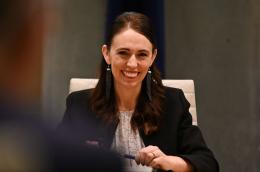
WELLINGTON, Jan 19 (Reuters) - Thursday's shock resignation of New Zealand Prime Minister Jacinda Ardern, who altered the face of global politics when she was elected the world's youngest female head of state, throws a spotlight on the punishing demands faced by women in power.
Holding back tears as she made her declaration, the 42-year-old politician said she had next to nothing left "in the tank" and it was time to step aside after a challenging 5-1/2 years in office.
"Politicians are human," she said. "We give all that we can, for as long as we can, and then it's time. And for me, it's time."
But the remarks that followed were more revealing, said Anne-Marie Brady, a professor of politics at New Zealand's University of Canterbury.
Directly addressing her family in her speech, Ardern said she was looking forward to being around when her young daughter Neve started school soon, and finally marrying her partner Clarke.
Click here to read the full article published by Reuters on 19 January 2023.

Jacinda Ardern is quitting as New Zealand prime minister ahead of this year's election saying she no longer has "enough in the tank" to lead.
The shock announcement comes as polling indicates her Labour Party party faces a difficult path to re-election on 14 October.
Ms Ardern choked up as she detailed how six "challenging" years in the job had taken a toll.
Labour MPs will vote to find her replacement on Sunday.
Ms Ardern, 42, said she had taken time to consider her future over the summer break, hoping to find the heart and energy to go on in the role.
"But unfortunately I haven't, and I would be doing a disservice to New Zealand to continue," she told reporters on Thursday.
Ms Ardern will step down by 7 February. If no would-be successor garners the support of two-thirds of the party room, the vote will go to Labour's lay membership.
Ms Ardern became the youngest female head of government in the world when she was elected prime minister in 2017, aged 37.
Click here to read the full article published by BBC on 19 January 2023.