Women's Leadership
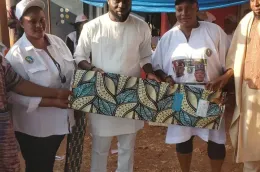
Efforts to deepen grassroots political participation and strengthen women’s involvement in governance received renewed attention in Kogi State following a ward engagement tour in Igah, Olamaboro Local Government Area.
The engagement, organised by the Fawass Group, drew a large turnout of women and community stakeholders who gathered to discuss issues affecting the ward and reaffirm their commitment to political participation at the grassroots level.
Kogi State Commissioner for Youth and Sports Development, Hon. Monday Aridaojo Anyebe, who attended the meeting in his home ward, described the event as an important platform for reconnecting with the grassroots and encouraging broader participation in governance.
According to him, the gathering went beyond routine political interaction, serving as an opportunity for dialogue with community members, particularly women, whose contributions he said remain central to the social and political stability of the state.
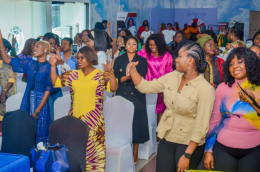
Women’s groups have called for greater participation in politics and decision-making in Nigeria as part of efforts to strengthen inclusive governance.
The call was made at the just-concluded International Women’s Day Conference organised by the Chartered Institute of Project Managers of Nigeria (CIPMN) in collaboration with the WCCI Emerging Market Hub in Abuja.
At the event, the MD/CEO of Dominion Mothers Group, Kemi Josephine Elebute-Halle, a former governorship candidate in the Ekiti State 2022, elections, commended Nigerian women for their resilience, intellect and dedication to national development.
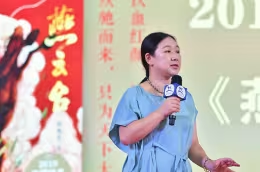
When jiang shengnan, a Chinese lawmaker turned political adviser, was born in 1973, a third daughter to parents in the coastal city of Wenzhou, many urged her mother to keep trying for a son. She refused and gave her daughter the name Shengnan, which means “better than men”. Ms Jiang insists she just wants women to be equal, but striving for that equality requires a mix of the resistance imbued in her name and a level of pragmatism in a country where feminism is fraught.
Following the events of August 30, 2023, and the change in governance that occurred after the overthrow of President Ali Bongo Ondimba, Gabon entered a two-year transition period. This transition was marked by several institutional and political milestones aimed at restoring lasting constitutional order.
Over this period, civil society mobilized to relay the expectations and priorities of the general public to the transitional authorities, aiming to ensure effective representation of citizens’ aspirations and their integration into new public policies. Consequently, following the National Dialogue held in April 2024, a new Constitution was adopted by referendum in November 2024, paving the way for the organization of national elections.
Civil society organizations' involvement in the electoral process led to the creation of the first groups of national observers and the active participation of citizens in efforts to restore and consolidate democratic institutions.
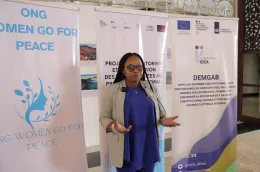
Through its project to support civil society organizations during the transitional elections in Gabon, funded by the French Ministry for Europe and Foreign Affairs and the European Union, International IDEA supported citizen engagement to promote free, transparent, and peaceful presidential and local elections. This support materialised in the creation of two monitoring units, including a monitoring unit for electoral violence led by the NGO Women Go for Peace and the Network of Human Rights Defenders in Central Africa (REDHAC).
With only one in seven countries led by a woman, global political power remains dominated by men. Women are presidents or heads of government in only 28 of the world’s 195 countries, and 101 states have never had a female leader.
The latest data from the IPU and UN Women show that political equality remains a distant prospect: women hold no more than 22.4% of ministerial posts (down from 23.3% in 2024) and 27.5% of parliamentary seats (a level that has stagnated).
Fourteen countries, including six in Western Europe (1), have achieved gender parity in their governments, demonstrating that equal representation is possible. Conversely, eight countries still have no female ministers (2).
Gender Stereotypes
Women head 90% of ministries responsible for gender equality and 73% of ministries responsible for family and children’s affairs, reinforcing long-standing gender stereotypes in political leadership. Men continue to head almost exclusively the ministries responsible for defence, home affairs, justice, economic affairs, governance, health, and education.
“At a time of increasing global instability, escalating conflicts, and a visible rollback of women’s rights, excluding women from political leadership weakens societies’ ability to meet the challenges they face,” said Sima Bahous, Executive Director of UN Women.
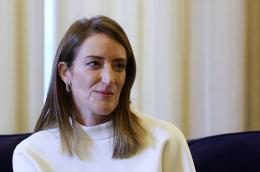
European ministers approved plans to allow female lawmakers in the European Parliament to delegate their vote temporarily before and after childbirth – a reform supporters say will make the institution more family-friendly.
Parliament President Roberta Metsola told Euractiv that the Council of the EU’s vote on Tuesday was “another crack in the glass ceiling” and an “important step” for women in politics.
“No woman should have to choose between serving her voters and having children,” Metsola said.
The Maltese lawmaker outlined the reform plans in June 2025, following a 2023 in-house campaign, pledging to update the rules for young mothers.
Currently, MEPs who are advanced in their pregnancy or on maternity leave must forgo voting unless they travel to Strasbourg, where plenary votes take place roughly once a month.
According to the European Parliament’s research service for members, only a handful of EU countries’ national parliaments, such as Greece and Spain, allow MEPs on maternity leave to vote while absent.

This data story looks at the economic empowerment of women over the past decade and a half across selected Middle East and North Africa (MENA) countries (Algeria, Bahrain, Egypt, Iraq, Jordan, Kuwait, Liban, Libya, Morocco, Oman, Palestine*, Qatar, Saudi Arabia, Syria, Tunisia, and the United Arab Emirates). It sets out a few stylised facts on how education, labour markets, laws, and public opinion shape women’s opportunities**. It also looks at how economic realities interact with cultural norms and legal structures across the region. Most importantly, it asks a central question: are women agents of change in their own economic and political trajectories, and how is that visible in the data that follows?
This issue goes beyond human rights or social and economic concerns and directly affects the region’s political and security landscape. As women gain greater opportunities to work, earn and participate in public life, they strengthen the resilience of families and communities, which supports broader social stability and – as research has consistently shown – contributes to higher levels of security and peace.
-
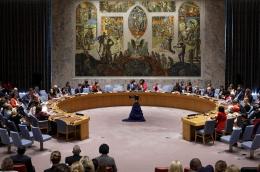
Despite notable normative advances, after 25 years, the effectiveness of the Women, Peace and Security Agenda is threatened by a fragmented global panorama and faces significant challenges and setbacks.
-
In the new context, the following stand out: (a) the increased frequency and complexity of armed conflicts; (b) the rise of ‘anti-gender’ movements and the erosion of women’s rights in many regions; (c) geopolitical divisions, which make it difficult to prioritise comprehensive solutions to conflicts; (d) the Agenda’s funding crisis; (e) the crisis of multilateralism; (f) the reduced representation of women as negotiators and mediators; and (g) the loss of policy coherence and its transformative potential due to the instrumentalisation of the Agenda, often used for geopolitical purposes.
-
For the Agenda to remain relevant, it is crucial that it evolves and adapts to the new global situation and updates its principles with an understanding of the local contexts in which it must be applied.
In 2000, the United Nations Security Council recognized that women’s leadership and gender equality are crucial for international peace and security, and the past 25 years have seen increased attention to this matter. However, the rise in global conflict in recent years risks erasing the modest progress made in previous decades.
Every year, the UN Secretary-General presents an annual report to the Security Council detailing the status of the women, peace and security agenda in the world. This year’s report contains more than one hundred facts and figures on issues ranging from women’s participation in peace processes, peace operations, or politics in conflict-affected countries, to the impact of conflict on women and girls, including atrocities that target them disproportionately, like reproductive violence, gender-based persecution, or conflict-related sexual violence.
This infographic, prepared by UN Women, highlights a few of these facts and figures, along with recommendations to change course.
Abstract
Advocates of women’s rights in many Muslim countries have long demanded the formation of state-level institutional structures that promote and protect women’s rights, in turn contributing to democratization and development. The design and impact of such structures, collectively referred to as national women’s machineries (NWMs), has, however, varied across contexts. This paper advocates analysis of the actors and factors that impact the design, influence, and function of NWMs, with an emphasis on the role of state gender ideology. It argues that NWMs, as formal state institutions, are never conceptualized and formed in a vacuum, with various competing interests impacting their design and function especially in non-democratic and unrepresentative contexts. Through a case study of NWMs in the Islamic Republic of Iran, it shows that despite efforts for cabinet-level women’s rights policy-making since the early 1990s, throughout the past decades such gains have faced backlash and reversal as a result of conservative ideological shifts, at times rendering such institutions illegitimate in the eyes of the Iranian feminist movement.
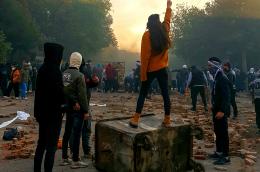
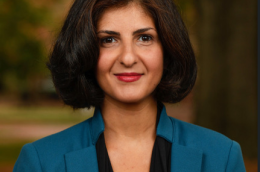
The act was a forceful symbol of her support for the movement and condemnation of the Iranian regime. “We cannot remain silent against the killing of women and girls like Mahsa (Jina Amini) or Armita (Geravand) who were killed merely because of their hijab,” she says.
Other prominent women, including celebrities, had removed their hijabs in public acts of defiance against Iran’s mandatory hijab laws during the protests. But Vasmaghi’s unveiling held particular significance. Until then, her public persona was that of a deeply pious scholar who consistently observed the hijab in a strict sense without showing any hair—even while lecturing in Europe on her expertise in Islamic fiqh (jurisprudence). What Vasmaghi clearly opposed was not veiling itself but its compulsory nature: Just months before her public unveiling, she had drafted an open letter to the Supreme Leader challenging the Islamic justification for forcing women to cover their hair. In it, she asked pointedly: “How can the Islamic Republic justify such strict enforcement of mandatory veiling when even the Quran does not explicitly require women to cover their hair?
Abstract
Much of the literature on women’s-rights activism in the Muslim world presents such activism as employing discourses either of egalitarianism (secular) or of complementarianism (religious). This article analyzes the recent framing of demands for women’s right to political office by elite Islamic women in Iran and Turkey in terms outside this dichotomy. Drawing on data gathered from personal interviews as well as on careful study of public statements and publications by elite women, or those backed by state institutions, this article demonstrates the inadequacy of understanding women’s activism in Muslim contexts as employing either an egalitarian or a complementarian approach by highlighting a more nuanced conceptualization of women’s-rights framing and organizing in accordance with shifting contexts and political ideologies. Specifically, it shows how Islamic women’s-rights activists who are closely affiliated with their governments at times strategically adopt a “gender justice” framing, as opposed to “gender equality,” to appeal to more conservative sectors of their society. This strategy can have important policy implications and lead to shifts in political discourse about women and politics. However, elite women’s backing from and affiliation with conservative ruling elites can lead some groups, particularly secular feminists, to perceive their use of gender justice discourse differently and to be dismissive of their efforts