Women and Politics in Post-Jina Iran
Source: Middle East Research and Information Project
The act was a forceful symbol of her support for the movement and condemnation of the Iranian regime. “We cannot remain silent against the killing of women and girls like Mahsa (Jina Amini) or Armita (Geravand) who were killed merely because of their hijab,” she says.
Other prominent women, including celebrities, had removed their hijabs in public acts of defiance against Iran’s mandatory hijab laws during the protests. But Vasmaghi’s unveiling held particular significance. Until then, her public persona was that of a deeply pious scholar who consistently observed the hijab in a strict sense without showing any hair—even while lecturing in Europe on her expertise in Islamic fiqh (jurisprudence). What Vasmaghi clearly opposed was not veiling itself but its compulsory nature: Just months before her public unveiling, she had drafted an open letter to the Supreme Leader challenging the Islamic justification for forcing women to cover their hair. In it, she asked pointedly: “How can the Islamic Republic justify such strict enforcement of mandatory veiling when even the Quran does not explicitly require women to cover their hair?
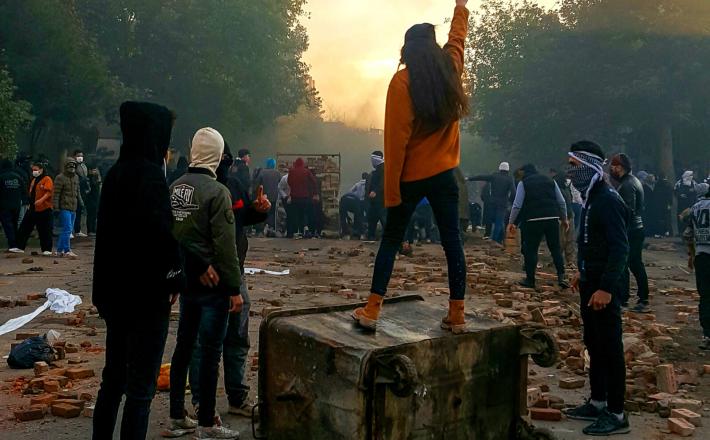
The act was a forceful symbol of her support for the movement and condemnation of the Iranian regime. “We cannot remain silent against the killing of women and girls like Mahsa (Jina Amini) or Armita (Geravand) who were killed merely because of their hijab,” she says.
Other prominent women, including celebrities, had removed their hijabs in public acts of defiance against Iran’s mandatory hijab laws during the protests. But Vasmaghi’s unveiling held particular significance. Until then, her public persona was that of a deeply pious scholar who consistently observed the hijab in a strict sense without showing any hair—even while lecturing in Europe on her expertise in Islamic fiqh (jurisprudence). What Vasmaghi clearly opposed was not veiling itself but its compulsory nature: Just months before her public unveiling, she had drafted an open letter to the Supreme Leader challenging the Islamic justification for forcing women to cover their hair. In it, she asked pointedly: “How can the Islamic Republic justify such strict enforcement of mandatory veiling when even the Quran does not explicitly require women to cover their hair?