Youth

Key messages
- The Global Youth Participation Index - GYPI - is the first-of-its-kind global tool tracking youth political participation across the world.
- It brings together civic engagement, electoral inclusion, and youth influence on democracy in one comprehensive index.
- The index amplifies youth voices and highlights diverse pathways to political participation.
- Co-developed with experts and young leaders, and powered by data from over 141 countries.
What GYPI is
The Global Youth Participation Index (GYPI) is the first-ever global tool to measure and compare youth political participation across countries and regions. It assesses how effectively young people are included in political life, from elections and civil society to policymaking and socio-economic conditions.
Why it matters
Despite making up more than half the global population, young people remain underrepresented and underserved in decision-making. The GYPI helps shine a light on gaps, track progress, and drive accountability, offering data that can shape more inclusive and responsive democracies.
What’s new or unique about it
- First youth-specific global political participation index
- Data from 141+ countries across four dimensions
- Developed in collaboration with youth consultants, organisations and experts
- Designed to empower advocates, policymakers, and researchers

In 2024, the Women and Youth Democratic Engagement (WYDE) | Women’s Leadership Initiative was launched as a global multi-partner effort to advance women’s full and effective political participation and representation in decision-making at all levels, particularly for those most often left behind. Funded by the European Union, WYDE Women’s Leadership leverages collective action, partnerships, and transformative social norms to create impact globally, focusing on: Advocacy and Networking , Global Knowledge Sharing , and Capacity-building. One year in, we’ve sparked a movement and are pushing further every day.
Click here to watch the video published by UN Women.

The Global Youth Participation Index - GYPI - aims to fill critical gaps in global data on youth political participation by fostering youth-led research that highlights positive engagement practices, challenges systemic barriers, and amplifies young voices in the democratic process.
The GYPI is the first global tool that tracks and compares youth participation in over 141 countries, measuring indicators like civic engagement, youth representation in parliaments, electoral inclusion, and more.
"To me, the most critical aspect of youth participation is the power to influence decision-making processes—not just being heard, but being taken seriously. Beyond tokenistic inclusion, it’s about giving young people access to resources, spaces, and information that allow them to co-create solutions. This is especially vital in contexts like the Sahel, where youth face compounded challenges but remain key drivers of innovation and resilience."
René Edouard Mendis, Senegal, GYPI Youth Panel
Dive into the GYPI Report
Want to understand how youth are shaping democracy today and what’s holding them back?
The GYPI Report offers a powerful, data-driven overview of youth political participation in over 141 countries. From voting rights to civic activism, the report explores how young people engage in politics and where gaps persist. Inside, you’ll find:
-
Global rankings and country-level scores across four key dimensions of youth participation: Socio-Economic, Civic Space, Political Affairs and Elections,
-
Regional insights and thematic trends,
-
Actionable recommendations for policymakers, civil society, and international organisations.
Whether you're a decision-maker, activist, researcher, or advocate, the report gives you the tools to better understand and strengthen youth participation in public life.
Explore the data and check the full report here.
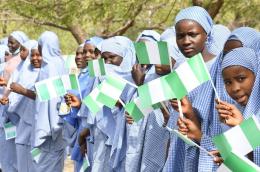
A new ranking by UN Women and the Inter-Parliamentary Union puts Nigeria 179th out of 185 countries for the percentage of women in the national legislature.
Women currently make up only 3.9% of seats in the House of Representatives. In the Senate, three of the 108 current members are women. In the executive branch, women head eight of 45 (17.8%) of ministries.
This absence of women in prominent positions in politics subtly reinforces societal biases and moulds public opinion, which subconsciously excludes women from political leadership.
We are a group of researchers who have expertise in gender and African politics and childhood political socialisation. We have been researching the political socialisation of children in Nigeria for the past three years.
Our research in Ogun State reveals that children are internalising what they see on the political stage. We asked children aged 5 to 16 at 12 schools in Ogun State to imagine and draw a leader such as a president, governor, or member of a national or state assembly at work. Only 5% of 981 children drew a woman as a political leader.
Ninety-two percent of girls drew a man, compared to 98% of boys.
Full article by The Conversation.
Image source: The Conversation

The Latinas Represent Campaign Master Class is our unique training program created by Latinas for Latinas.
Open to Latinas of all political affiliations, this weekend-long intensive program will give you the tools you need to understand the political process, develop your political capacity, and launch well-run, issue-based campaigns.
This program is for you if you’re interested in running for office or supporting someone who is!
CAMPAIGN MASTER CLASS
PROGRAM INFORMATION
At Latinas Represent, we believe that our cultura and heritage are powerful assets that make Latinas exceptional candidates and transformative public service leaders. Our Campaign Master Class is designed to equip you with the knowledge, confidence, and strategies to run a successful campaign — whether you're considering a future in public office or are ready to launch now. With insights from current and former elected officials, political strategists, and fellow leaders, you’ll gain practical skills in fundraising, field organizing, communications, staffing, and more. One of the most critical steps to a successful campaign is preparation. We recommend giving yourself a 12-18 month runway to lay the groundwork for your candidacy.
If running for office is on your horizon, apply today to get the tools and support you need to build a winning campaign. We will cover the basics of campaigning including fundraising, field organizing, communications, staffing, and much more!
CAMPAIGN MASTER CLASS DATES
We are excited to help prepare the next generation of Latinas public service leaders!
2025
Master Class Dates: June 2025
Schedule
-
Friday, June 27 from 6:00 p.m. to 8:30 p.m. ET
-
Saturday, June 28 from 12:00 p.m. to 6:00 p.m. ET
-
Sunday, June 29 from 12:00 p.m. to 6:00 p.m. ET
Space is limited, so we encourage you to apply early.
The priority deadline for our June cohort is June 11 with the final deadline on June 18.
Master Class Dates: October 2025
Schedule
-
Friday, October 24 from 6:00 p.m. to 8:30 p.m. ET
-
Saturday, October 25 from 12:00 p.m. to 6:00 p.m. ET
-
Sunday, October 26 from 12:00 p.m. to 6:00 p.m. ET
Applications Open in September
Apply directly on their website by clicking here.

This election, a lot of focus was directed at young voters. With Millennials and Gen Z now making up a larger share of the electorate than Baby Boomers, this was deserved.
But for all the attempts to reach these cohorts, whether through TikTok, influencers or podcasts, how did they actually vote?
Preliminary analysis of electorates with high shares of young people suggests the youth vote was complex and nuanced. The voting bloc continued its unpredictability, with support fragmented across parties, candidates and age groups.
Analysing voting patterns
On May 9, I analysed the Australian Electoral Commission’s (AEC) electoral division results alongside youth enrolment statistics, to explore how the youngest electorates voted.
Rather than treating voters aged 18–44 as a single, homogeneous bloc, I separated them into Gen Z (aged 18–29) and Millennial (aged 30–44) categories. Evidence suggests that generation is more useful for analysis than age alone.
Electorates with higher shares of young people tended to favour the left, particularly Labor. Even in Liberal-held seats that didn’t change hands, there were clear swings against the Coalition.
Full article published by The Conversation UK on 15 May 2025.
Image credits: The Conversation