Despite a slight increase in female representation in Parliament, gender advocates warn that Jamaica still falls short in addressing women’s issues at the national level.
While there have been important advances in women’s leadership in politics, as of November 1 2017, women make up only 7.2% of Heads of State and 6.2% Heads of Government. Data on women representatives in local government, including as mayors, heads of villages and towns, is not well collected and analyzed. The adoption of an SDG indicator on women’s representation in local government is a great step forward in tracking progress on gender balance, allowing for the systematic collection and analysis of data on women in local government. Women’s access to and continued role in leadership positions is challenged by a range of barriers, including discriminatory laws and practices, as well as social norms that prescribe traditional roles and attitudes towards women’s participation in leadership and decision-making roles. Proactive gender-equality policies within political parties and local government structures, including quotas and special temporary measures, gender-sensitive approaches to electoral processes, support networks, mentoring, training, and engagement of male champions, can all help promote women’s role in political leadership.
Despite a slight increase in female representation in Parliament, gender advocates warn that Jamaica still falls short in addressing women’s issues at the national level.
BAKU, Azerbaijan, September 17. Azerbaijani Parliament Speaker Sahiba Gafarova, who is visiting the city of Kuala Lumpur in Malaysia for the 46th General Assembly of the Inter-Parliamentary Assembly (AIPA) of the Association of SoutheastAsian
Political scientist Ivabelle Arroyo and director of the Center for Gender Research (UNAM) Amneris Chaparro agree that the key issues in political and social debates, both within and outside feminism, focus more on women’s bodies (motherhood, sexuality, gender identity,
Opening the annual conference of the Gender Equality Commission, the Deputy Secretary of the Council of Europe Bjørn Berge emphasised that “only 27 countries around the world have a woman serving as Head of State or Government and 103
The Sudan War series is a joint collaboration between the Center for Economic, Legal, and Social Studies and Documentation – Khartoum (CEDEJ-K), Sudan
In Bangladesh, the Forum for Women’s Political Rights has called for comprehensive electoral reforms to ensure fair and inclusive representation of women in the political arena.
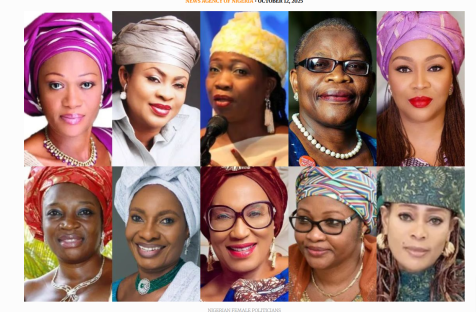
That women in Nigeria who have been the backbone of community building, peace processes, and national development have not been well represented in the decision making and governance of the country is no longer a tale as the evidence abound for all to see.
President Netumbo Nandi-Ndaitwah reaffirmed Namibia’s firm commitment to promoting gender equality across all sectors.
She emphasised that women’s emancipation is both a constitutional duty and a moral obligation.
Amalia Alvarez-Benjumea is a Ramón y Cajal Research Fellow at the Institute of Public Goods and Policies at the Spanish National Research Council.