BRIDGE Cutting Edge Packs Gender and Governance
Put simply, governance refers to decision-making by a range of interested people (or 'stakeholders') including those in formal positions of power and 'ordinary' citizens.

Put simply, governance refers to decision-making by a range of interested people (or 'stakeholders') including those in formal positions of power and 'ordinary' citizens.

Prepared by the iKNOW Politics Team
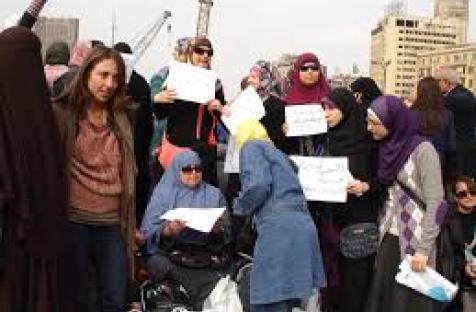
A year ago, Egyptian politician and women's rights activist Mervat Tallawy defied the Muslim Brotherhood to spearhead the adoption of a U.N. blueprint to combat violence against women.
After intensive lobbying by a coalition of women's rights groups, gender equality is climbing the agenda in Tanzania at a key time.
On February 20, Libyans will elect 58 of the 60 members of the Constituent Assembly. Due to the Amazigh boycott of the elections, two seats – reserved for the ethnic minority – will remai
Gloria Scott shares her experiences on how women have been included in the Constitution building process in Liberia.
Many countries have, in recent decades, written or revised their constitutions, such as Afghanistan, Argentina, Bolivia, Bosnia and Herzegovina, Ecuador, Egypt, Iraq, Mozambique, South Africa, Kenya, Thailand, Timor Leste, Tunisia and Zimbabwe, just to name a few.
Many countries have, in recent decades, written or revised their constitutions, such as Afghanistan, Argentina, Bolivia, Bosnia and Herzegovina, Ecuador, Egypt, Iraq, Mozambique, South Africa, Kenya, Thailand, Timor Leste, Tunisia and Zimbabwe, just to name a few.
Victoria Fontan is a Professor of Peace and Conflict Studies at the UN University for Peace in Costa Rica and author of “Decolonizing Peace” (2012) and “Voices from Post-Saddam Iraq” (2008). She is now undertaking her third PhD in the Department of War Studies, King’s College London.
In partnership with the Center for Civil Society and Democracy in Syria, Inclusive Security conducted a survey of 110 women living and working inside Syria.