Local Government

Local governments are in a unique position to contribute to the global struggle for gender equality by improving the status of women around the world. Local Governments are the level of governance closest to the citizens and as service providers and employers have an important role in creating the conditions that encourage women’s political participation. In this special feature, we are collecting knowledge resources, case studies, stories and interviews from women active in local politics.  

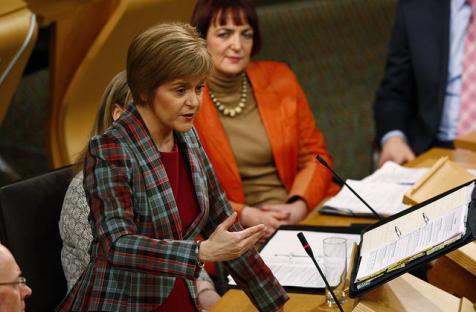
First Minister Nicola Sturgeon/©Andrew Cowan/Scottish Parliament
February 11, 2015
Nicola Sturgeon: 'I want to help women'

Nicola Sturgeon has been in the job only three months but already she is eyeing her legacy. “Being the first woman First Minister is a big responsibility and I feel the weight of that acutely.

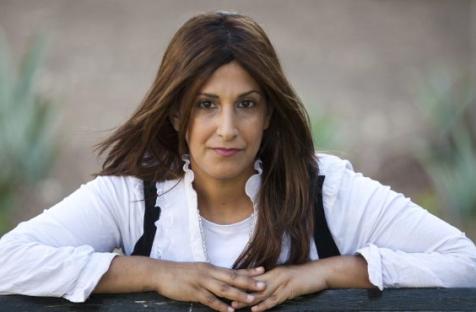
Ruth Colian-Photo by Tomer Appelbaum
January 20, 2015
Israel's first ever ultra-Orthodox women’s party makes bold debut

The first-ever Israeli political party dedicated to ultra-Orthodox women, was unveiled Monday.

Image: scottish.parliament.uk
January 4, 2015
Gender equality: time for quotas in Scottish politics?

We have a woman who is First Minister if that’s not an example of us reaching gender equality, what is?

December 29, 2014
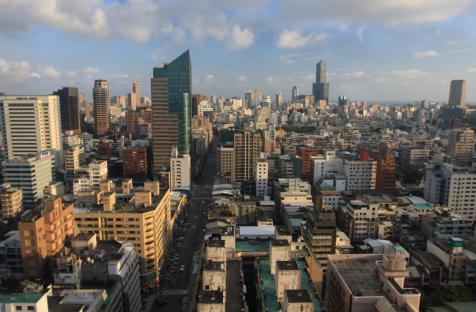
Women take 7 of Taiwan's 22 council speaker seats

A new day for women dawned in Taiwan Thursday, with females winning seven of the 22 city and county council speaker positions throughout the country.

On November the 19th 2014, Nicola Sturgeon became the first female Prime Minister of Scotland

Submitted by iKNOW Politics on

 by Lucile Huguet Scotland didn’t get enough Yes to become independent from England. However, the country is at a real turning point of its history. Scotland got its first female politician elected as head of the country. As we know, the No vote was predominant at the last referendum where people were asked if they wanted Scotland to remain part of the UK or not.

e-Discussions

Women in Local Governments

Submitted by iKNOW Politics on
Back

Women in Local Governments

Women’s political and socio-economic status improves when women become more involved in decision making and policy development at all levels of governance.  Through their active involvement in community work and women’s movements, local women politicians are fully aware of issues faced by women in their communities and are uniquely positioned to address them. The role of women in decision making has been addressed by various international agreements and conventions, CEDAW and the Beijing Platform for Action (1995), to name a few.

Women’s political and socio-economic status improves when women become more involved in decision making and policy development at all levels of governance.  Through their active involvement in community work and women’s movements, local women politicians are fully aware of issues faced by women in their communities and are uniquely positioned to address them. The role of women in decision making has been addressed by various international agreements and conventions, CEDAW and the Beijing Platform for Action (1995), to name a few.

e-Discussions

Women in Local Politics (2012)

Submitted by iKNOW Politics on
Back

Women in Local Politics (2012)

The growing discourse on deepening democracy around the world is increasingly being anchored around democratic decentralisation and meaningful local governance which is also being linked to greater social accountability and public participation. Governance is not just about government but is now seen as a much wider process that involves how the idea of “public good” is both framed and contested which involves both private sector actors as well as ordinary citizens and civil society besides the government.

The growing discourse on deepening democracy around the world is increasingly being anchored around democratic decentralisation and meaningful local governance which is also being linked to greater social accountability and public participation. Governance is not just about government but is now seen as a much wider process that involves how the idea of “public good” is both framed and contested which involves both private sector actors as well as ordinary citizens and civil society besides the government.