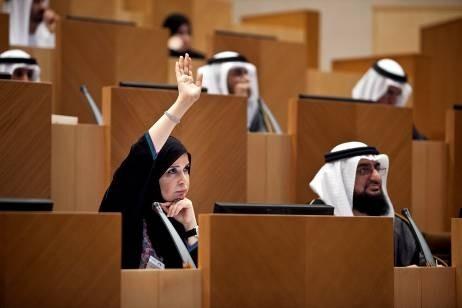
DESPITE Tanzania’s progress toward gender equality in politics, women continue to be significantly underrepresented in leadership roles.
Democracy and the equal participation of men and women in the political arena are closely intertwined. No parliament or any decision-making body can claim to be representative without the participation of both men and women. As stated in the Universal Declaration on Democracy adopted by the Inter-Parliamentary Union’s Member Parliaments in 1997, "The achievement of democracy presupposes a genuine partnership between men and women in the conduct of the affairs of society in which they work in equality and complementarity, drawing mutual enrichment from their differences."
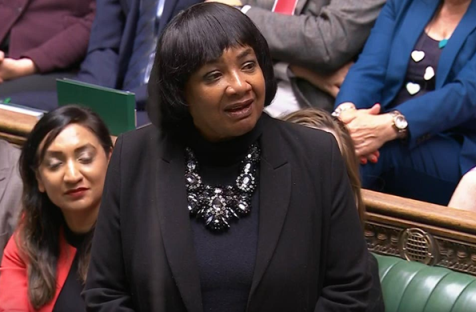
Recent years have seen a steady increase in the number of women in parliament, though the world average of less than 22 percent remains far from the goal of parity between women and men. The election of women to the highest positions of state and government in several countries has also contributed to the changing face of politics.
While the road to election is a difficult one, the challenges for women do not stop there. Once women enter parliament or other bodies, they are faced with many new challenges. Parliament is traditionally a male-oriented domain where the rules and practices have been written by men. It is, therefore, an ongoing challenge to transform parliament into a gender-sensitive environment, to ensure that actions are gender-sensitive and to guarantee that gender is mainstreamed throughout the legislature.
DESPITE Tanzania’s progress toward gender equality in politics, women continue to be significantly underrepresented in leadership roles.
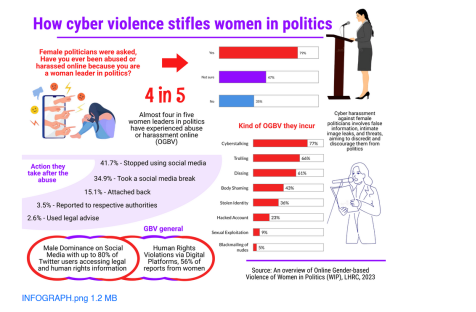
The deliberate spread of harmful and false content aimed at women is a current threat to their safety, job performance, mental health, as well as to the institutions they represent, weakening not only women’s active life in the public but also the democratic system.&nbs
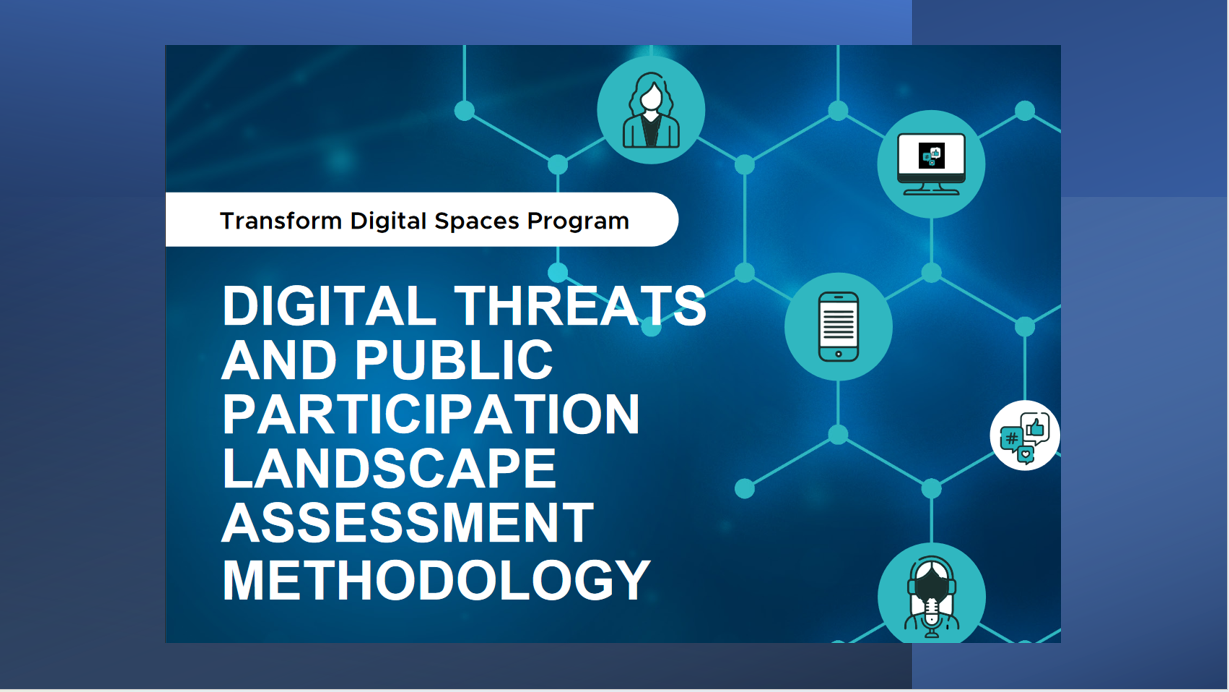
The Transform Digital Threats and Public Participation Landscape Assessment Methodology reflects the collaboration and contribution of many people and organizations engaged in preventing, responding to, and mitigating Technology-Facilitated Gender-Based Violence.
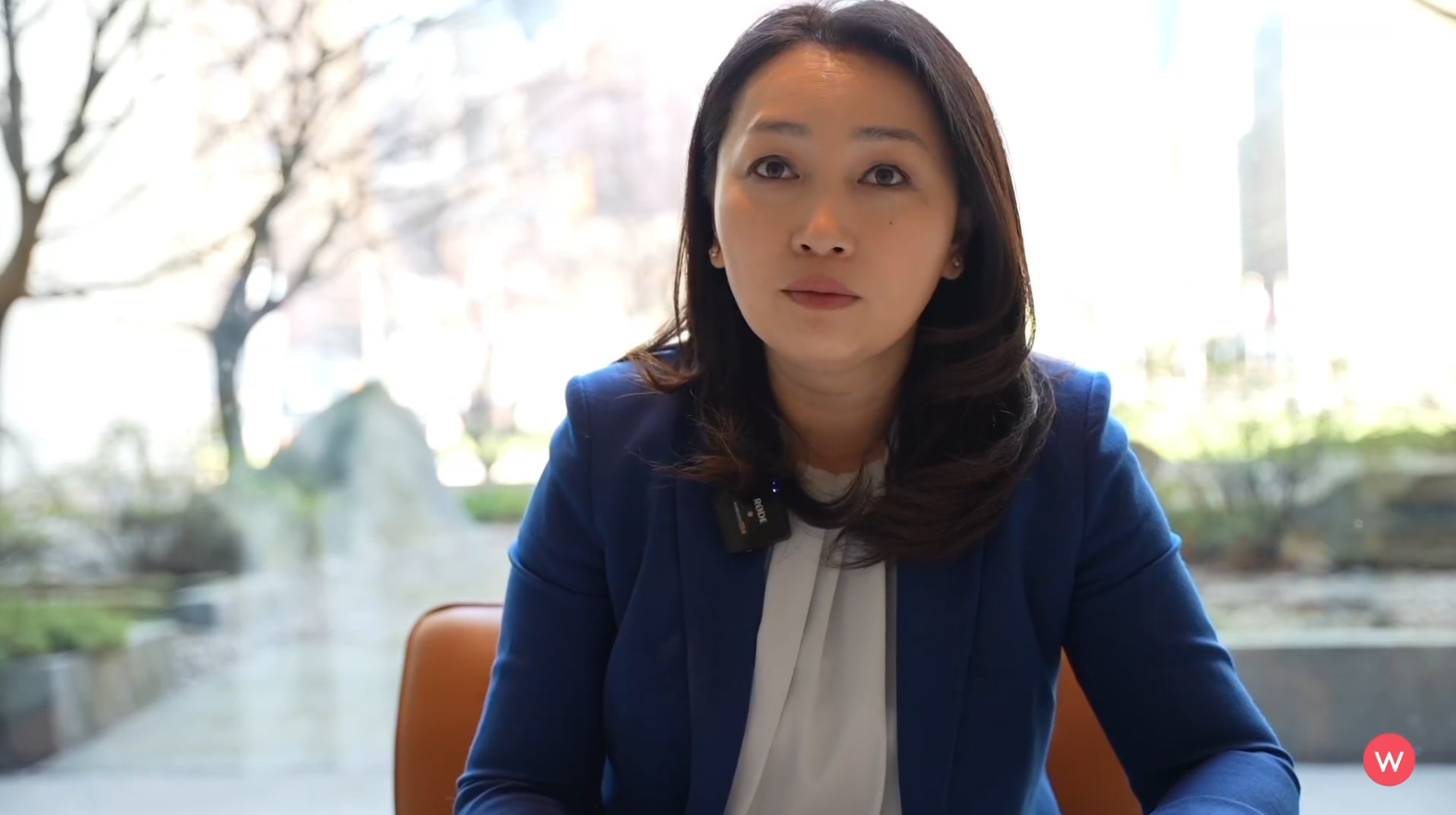
A record number of women have been elected to Japan's house of represent
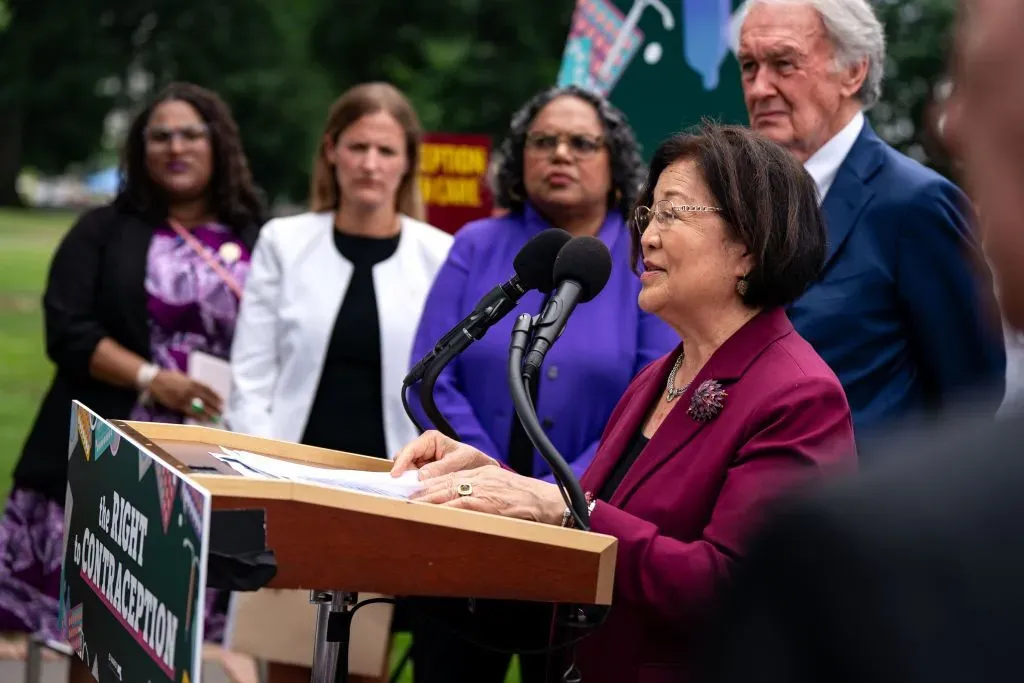
In order to achieve true parity, the U.S. needs affirmative actions—gender quotas established by law. This will ensure that women are selected, appointed and supported in politics.
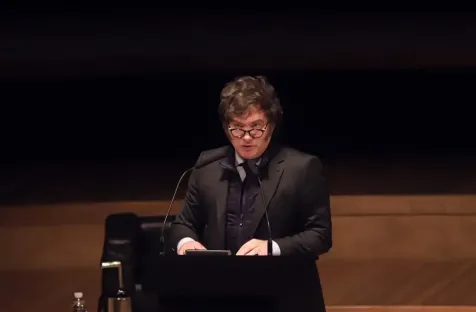
Argentina was the only G20 member country that refused to sign a gender equality and women empowerment statement put forward by Brazil on Monday. The document includes a list of commitments aimed at “ending gender-based violence and misogyny.”
A member of the Economic Community of West African States’ (ECOWAS) Parliament has called for the full implementation of the 30% women representation at the re