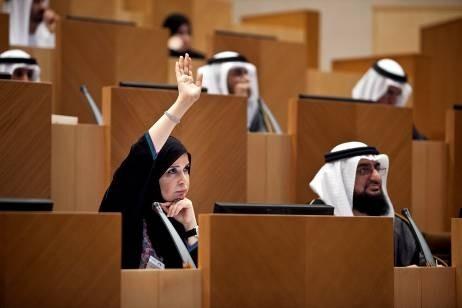
Parliaments and Representatives

Democracy and the equal participation of men and women in the political arena are closely intertwined. No parliament or any decision-making body can claim to be representative without the participation of both men and women. As stated in the Universal Declaration on Democracy adopted by the Inter-Parliamentary Union’s Member Parliaments in 1997, "The achievement of democracy presupposes a genuine partnership between men and women in the conduct of the affairs of society in which they work in equality and complementarity, drawing mutual enrichment from their differences."

Recent years have seen a steady increase in the number of women in parliament, though the world average of less than 22 percent remains far from the goal of parity between women and men. The election of women to the highest positions of state and government in several countries has also contributed to the changing face of politics.

While the road to election is a difficult one, the challenges for women do not stop there. Once women enter parliament or other bodies, they are faced with many new challenges. Parliament is traditionally a male-oriented domain where the rules and practices have been written by men. It is, therefore, an ongoing challenge to transform parliament into a gender-sensitive environment, to ensure that actions are gender-sensitive and to guarantee that gender is mainstreamed throughout the legislature.

December 6, 2013
Sexist MPs aren't macho. They're pathetic dweebs

The MPs making obscene gestures at Sarah Champion and other women in the Commons are the backbench nonentities.

December 5, 2013
They Said Men Would Be Suckling My Breasts for Five Years - Kenyan MP Speaks About 2013 Elections

Kenyan member of parliament Alice Wahome spoke about the violent abuse, harassment and humiliation she has experienced as a female politician at the launch of a report about women's participation in the March 2013 elections.

December 4, 2013
New laws ignored, so women trailed in Kenya 2013 election

New laws designed to increase the number of elected women in Kenyan politics had no effect on the 2013 elections because those concerned failed to implement them, the Federation of Women Lawyers (FIDA) said.

December 3, 2013
Gillibrand: Women-run Hill to focus on economy

Sen. Kirstin Gillibrand explained Wednesday how politics would be different with more women in office.

December 3, 2013
The women of PKR, Malaysia

Among the constitutional amendments passed in PKR Special National Congress on Nov 24 was to give more voice to women within the party.

December 3, 2013
Quotas will ensure more women in Parliament

In the corridors of the European parliament last week, a consensus emerged on at least one way to get more women into politics. The answer – quotas – is one that many, both men and women, dislike.

December 2, 2013
E. Equatoria women warn of electoral consequences for absent MPs

A group of women MPs from South Sudan’s parliament were warned by a delegation of women from Eastern Equatoria that legislators that did not make the effort to visit their constituencies would face the consequences at the next election.At the public meeting in Torit the national lawmakers wer

December 1, 2013
Number of women legislators expected to double, Indonesia

Women’s activists in Bali expect that female representation in the Provincial and Regional Councils could go up to 15 percent next year from its current 7.5 percent, which is the lowest in the country.

November 30, 2013
German SPD chief vows women to get half of party cabinet jobs

The leader of Germany's Social Democrats on Sunday pledged a 50-50 male-female split of the party's cabinet posts in a planned new 'grand coalition' with Chancellor Angela Merkel's conservatives, according to a newspaper interview.