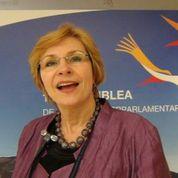
Malta could have up to four female representatives in the European Parliament, if all four MEPs contesting the 9 March general election are successful in their bid to be elected in parliament.
Democracy and the equal participation of men and women in the political arena are closely intertwined. No parliament or any decision-making body can claim to be representative without the participation of both men and women. As stated in the Universal Declaration on Democracy adopted by the Inter-Parliamentary Union’s Member Parliaments in 1997, "The achievement of democracy presupposes a genuine partnership between men and women in the conduct of the affairs of society in which they work in equality and complementarity, drawing mutual enrichment from their differences."
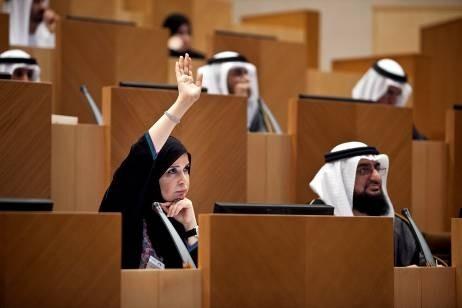
Recent years have seen a steady increase in the number of women in parliament, though the world average of less than 22 percent remains far from the goal of parity between women and men. The election of women to the highest positions of state and government in several countries has also contributed to the changing face of politics.
While the road to election is a difficult one, the challenges for women do not stop there. Once women enter parliament or other bodies, they are faced with many new challenges. Parliament is traditionally a male-oriented domain where the rules and practices have been written by men. It is, therefore, an ongoing challenge to transform parliament into a gender-sensitive environment, to ensure that actions are gender-sensitive and to guarantee that gender is mainstreamed throughout the legislature.
Malta could have up to four female representatives in the European Parliament, if all four MEPs contesting the 9 March general election are successful in their bid to be elected in parliament.
Gender equality in politics is not about the system allowing women in. It is not about politics giving something to women. It is about women actively taking their rightful place as equals with men in political decision-making. It is about women being agents of change.
Film: Burundi has one of the highest allocations of seats in parliament for women, numbering 36% of all MPs. There is also a 30% quota policy for women's political participation at lower levels of the administration.
The annual parliamentary event on the occasion of the 57th session of Commission on the Status of Women (CSW) that was held in New York on 5 March 2013.
In The Gambia, the many and varied reports have over and over highlighted the low participation of women in politics. This is of great concern despite the fact that, here in The Gambia, women have over the years contributed, and continue to do so, in key decision-making processes.
As many as 14 women politicians from Indonesia, Malaysia, Cambodia, the Philippines and Timor Leste called for bigger and better female political representation and participation in Southeast Asia.
Despite the fact that Fu Ying, vice minister of foreign affairs, recently became China's first female spokesperson for the 12th National People's Congress (NPC), Chinese women’s political participation still lags behind.
NDI’s ongoing qualitative research revealed that while Libyans were broadly supportive of women playing roles in public life, there was significant disagreement over what type of engagement is best-suited to women.
Ijara — As Kenyans go to the polls today, could Sophia Abdi Noor become the first ever Somali woman to be voted in to the Kenyan parliament?
(Read article at: allAfrica)