IN 1999, Scotland had 37 per cent female MSPs, which rose to 40 per cent in 2003 but there was drop to 33 per cent in 2007 and then a tiny rise to 35 per cent in 2011.
Parliaments and Representatives
Democracy and the equal participation of men and women in the political arena are closely intertwined. No parliament or any decision-making body can claim to be representative without the participation of both men and women. As stated in the Universal Declaration on Democracy adopted by the Inter-Parliamentary Union’s Member Parliaments in 1997, "The achievement of democracy presupposes a genuine partnership between men and women in the conduct of the affairs of society in which they work in equality and complementarity, drawing mutual enrichment from their differences."
Recent years have seen a steady increase in the number of women in parliament, though the world average of less than 22 percent remains far from the goal of parity between women and men. The election of women to the highest positions of state and government in several countries has also contributed to the changing face of politics.
While the road to election is a difficult one, the challenges for women do not stop there. Once women enter parliament or other bodies, they are faced with many new challenges. Parliament is traditionally a male-oriented domain where the rules and practices have been written by men. It is, therefore, an ongoing challenge to transform parliament into a gender-sensitive environment, to ensure that actions are gender-sensitive and to guarantee that gender is mainstreamed throughout the legislature.
Michelle Bachelet remarks at lunch Seminar: ‘Women and Political Decision-Making’ hosted by the National Women’s Council of Ireland and the 50/50 Group. Dublin, Ireland. 21 February 2013.
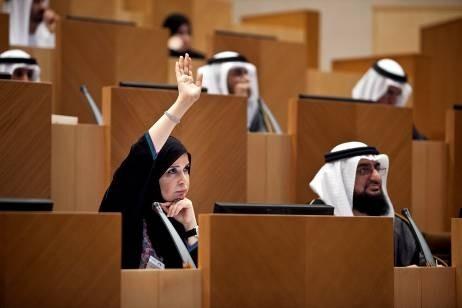
Thirty Saudi women have taken seats in Saudi Arabia's Shura Council, for the first time in the conservative kingdom's history, as they were sworn in before King Abdullah at his palace in the capital, Riyadh.
Canada is seeing a growing number of women taking on the highest positions of power in the country. Five of Canada’s 10 provinces and one of its three territories are now led by female premiers.
Empowering Women for Stronger Political Parties: A Guidebook to Promote Women's Political Participation
This publication, published by UNDP and NDI, identifies targeted interventions for promoting the stronger presence and influence of women in political parties as well as advancing gender equality issues in party policies and platforms.
Nearly half of Ukrainians think there are too few women in elected office, according to a survey released today by the National Democratic Institute (NDI).
Human rights activists and civil society organisations continue to seek stronger political representation for Egyptian women in parliament, ahead of elections for the lower house of the legislative authority this year.
Boosting female political representation at July’s national election was the topic of a round-table discussion attended by dozens of political-party representatives, though none from the ruling party, in Phnom Penh yesterday.
Members of Bangladesh Mahila Parishad (BMP), a women's rights organisation, yesterday demanded that the government ensure one-third of the parliamentary seats for women through direct elections.
Pagination
- Previous page
- Page 316
- Next page