“Democracy is not perfect, but it is the best system so far,” said Aung San Suu Kyi, the Burmese activist, member of parliament and Nobel Peace Prize Laureate at a Sept. 19 dinner co-hosted by NDI and the International Republican Institute (IRI).
Parliaments and Representatives
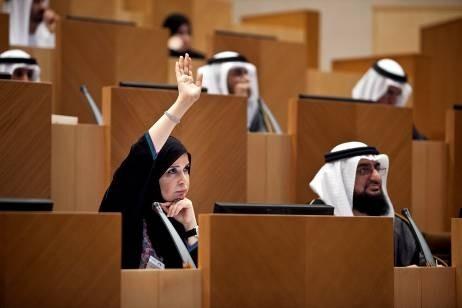
Democracy and the equal participation of men and women in the political arena are closely intertwined. No parliament or any decision-making body can claim to be representative without the participation of both men and women. As stated in the Universal Declaration on Democracy adopted by the Inter-Parliamentary Union’s Member Parliaments in 1997, "The achievement of democracy presupposes a genuine partnership between men and women in the conduct of the affairs of society in which they work in equality and complementarity, drawing mutual enrichment from their differences."
Recent years have seen a steady increase in the number of women in parliament, though the world average of less than 22 percent remains far from the goal of parity between women and men. The election of women to the highest positions of state and government in several countries has also contributed to the changing face of politics.
While the road to election is a difficult one, the challenges for women do not stop there. Once women enter parliament or other bodies, they are faced with many new challenges. Parliament is traditionally a male-oriented domain where the rules and practices have been written by men. It is, therefore, an ongoing challenge to transform parliament into a gender-sensitive environment, to ensure that actions are gender-sensitive and to guarantee that gender is mainstreamed throughout the legislature.
While this horrifying scene may resemble what happened in that football stadium 13 years ago, in fact, much has changed. Within hours of Najiba's horrible death being broadcast worldwide, women in Afghanistan poured into the streets, seeking justice.
The government is urging Members of Parliament to support a Bill that backs party nominations to fill special seats in Parliament and the Senate, to meet the gender representation rule.
PRIME Minister Gordon Darcy Lilo prefers women entering Parliament through the normal electoral process and not by special consideration.
The Hungarian parliament has changed course on a bill that introduces domestic violence to the Hungarian penal code.
India is far below these countries with 11 per cent women in the Lower House.
“Despite frequent attempts to introduce a similar policy of reserved seats for the Lower House (Lok Sabha) of the national Parliament , these initiatives have repeatedly failed.
A seminar, organized by IDEA, on women’s political empowerment held in Ghana in August brought together women members of parliament from 31 countries in Africa, the Middle East, South Asia, Europe, Latin America and the Caribbean to discuss what strategies are successful for translating women’s p
Gender Equality in Elected Office in Asia-Pacific: Six Actions to Expand Women’s Empowerment
The UN Development Program (UNDP) says women's presence in parliaments in Pacific Island states is the lowest in the world, lagging even behind Arab countries.
Pagination
- Previous page
- Page 326
- Next page