Parliaments and Representatives

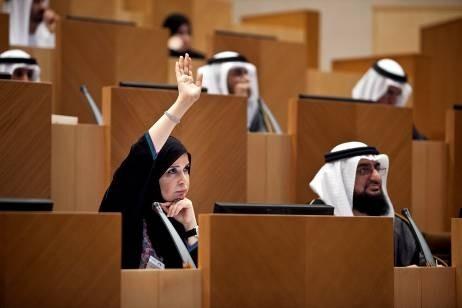
Democracy and the equal participation of men and women in the political arena are closely intertwined. No parliament or any decision-making body can claim to be representative without the participation of both men and women. As stated in the Universal Declaration on Democracy adopted by the Inter-Parliamentary Union’s Member Parliaments in 1997, "The achievement of democracy presupposes a genuine partnership between men and women in the conduct of the affairs of society in which they work in equality and complementarity, drawing mutual enrichment from their differences."

Recent years have seen a steady increase in the number of women in parliament, though the world average of less than 22 percent remains far from the goal of parity between women and men. The election of women to the highest positions of state and government in several countries has also contributed to the changing face of politics.

While the road to election is a difficult one, the challenges for women do not stop there. Once women enter parliament or other bodies, they are faced with many new challenges. Parliament is traditionally a male-oriented domain where the rules and practices have been written by men. It is, therefore, an ongoing challenge to transform parliament into a gender-sensitive environment, to ensure that actions are gender-sensitive and to guarantee that gender is mainstreamed throughout the legislature.

Event

AGORA - iKNOW Politics Virtual Discussion: Women's Caucuses

Back

AGORA - iKNOW Politics Virtual Discussion: Women's Caucuses

AGORA, the Portal for Parliamentary Development and iKNOW Politics, the International Knowledge Network of Women in Politics, are co-hosting a Virtual Discussion on Women's Caucuses that will run f

e-Discussions

Women's Parliamentary Caucuses

Submitted by iKNOW Politics on
Back

Women's Parliamentary Caucuses

Women’s caucuses have been created with the aim of increasing women’s impact on political decisions. It is generally believed that the building of cross-party caucuses can help provide the peer support necessary to promote a gender equality legislative and policy agenda. 

While the number of parliaments with a women’s caucus is growing fast, there are also researchers and politicians who doubt the effectiveness of women’s caucuses to influence political decision-making.

This Virtual Discussion will focus on the following sets of questions:

Women’s caucuses have been created with the aim of increasing women’s impact on political decisions. It is generally believed that the building of cross-party caucuses can help provide the peer support necessary to promote a gender equality legislative and policy agenda. 

While the number of parliaments with a women’s caucus is growing fast, there are also researchers and politicians who doubt the effectiveness of women’s caucuses to influence political decision-making.

This Virtual Discussion will focus on the following sets of questions:

Event

First Hemispheric Forum: Women's Leadership for A Citizens' Democracy

Back

First Hemispheric Forum: Women's Leadership for A Citizens' Democracy

From April 4th to 6th 2011, CIM and UN Women organized the First Hemispheric Forum on Women's Leadership for a Citizens' Democracy, with the aim of placing women's political rights at the centre of

Review of Inter Parliamentary Union‘s gender program “Gender Equality in Politics”

Back
March 2, 2011

Review of Inter Parliamentary Union‘s gender program “Gender Equality in Politics”

A Joint Gender Review of the Inter-Parliamentary Union (IPU) was commissioned by Sida together with the Canadian International Development Agency (CIDA) and Irish Aid. The Review was carried out by Indevelop's Gender Experts between 1 April 2010 and 7 July 2010.

A Joint Gender Review of the Inter-Parliamentary Union (IPU) was commissioned by Sida together with the Canadian International Development Agency (CIDA) and Irish Aid. The Review was carried out by Indevelop's Gender Experts between 1 April 2010 and 7 July 2010.

POWER, VOICE and RIGHTS - A Turning Point for Gender Equality in Asia and the Pacific

Back
February 28, 2011

POWER, VOICE and RIGHTS - A Turning Point for Gender Equality in Asia and the Pacific

UNDP's Asia-Pacific Human Development Reports have been stimulating a lively dialogue within the region on a range of important issues.

UNDP's Asia-Pacific Human Development Reports have been stimulating a lively dialogue within the region on a range of important issues.

Corruption, Accountability and Gender: Understanding the Connections

Back
December 9, 2010

Corruption, Accountability and Gender: Understanding the Connections

Corruption has been high on the governance reform agenda for decades. Corruption constrains development, exacerbates and causes conflict, and is one of the biggest obstacles to achieving the Millennium Development Goals (MDGs).

Corruption has been high on the governance reform agenda for decades. Corruption constrains development, exacerbates and causes conflict, and is one of the biggest obstacles to achieving the Millennium Development Goals (MDGs).

Event

In view of the current situation in Tunisia, the seminar on "Women in Arab parliaments: Representation and incorporation of a gender perspective", scheduled from 24 to 26 January 2011, has been cancelled.

Back

In view of the current situation in Tunisia, the seminar on "Women in Arab parliaments: Representation and incorporation of a gender perspective", scheduled from 24 to 26 January 2011, has been cancelled.

In view of the current situation in Tunisia, the seminar on "Women in Arab parliaments: Representation and incorporation of a gender perspective", scheduled from 24 to 26 January 2011, has been can

Event