Parliaments and Representatives

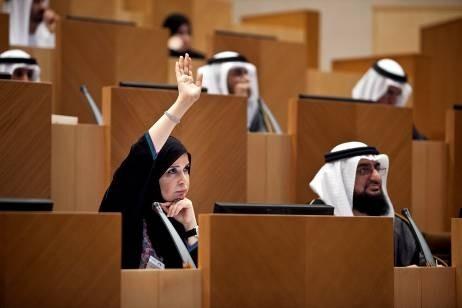
Democracy and the equal participation of men and women in the political arena are closely intertwined. No parliament or any decision-making body can claim to be representative without the participation of both men and women. As stated in the Universal Declaration on Democracy adopted by the Inter-Parliamentary Union’s Member Parliaments in 1997, "The achievement of democracy presupposes a genuine partnership between men and women in the conduct of the affairs of society in which they work in equality and complementarity, drawing mutual enrichment from their differences."

Recent years have seen a steady increase in the number of women in parliament, though the world average of less than 22 percent remains far from the goal of parity between women and men. The election of women to the highest positions of state and government in several countries has also contributed to the changing face of politics.

While the road to election is a difficult one, the challenges for women do not stop there. Once women enter parliament or other bodies, they are faced with many new challenges. Parliament is traditionally a male-oriented domain where the rules and practices have been written by men. It is, therefore, an ongoing challenge to transform parliament into a gender-sensitive environment, to ensure that actions are gender-sensitive and to guarantee that gender is mainstreamed throughout the legislature.

Point of order, Mr Speaker: African Women Claiming Their Space in Parliament

Back
February 28, 2008

Point of order, Mr Speaker: African Women Claiming Their Space in Parliament

At the close of the millennium, there is a wave of invigorating air sweeping across the African continent. The refreshing breeze can be felt in the form of women smashing the gendered 'glass ceiling' in a bid to overcome the cultural and structural barriers that impede their political careers.

At the close of the millennium, there is a wave of invigorating air sweeping across the African continent. The refreshing breeze can be felt in the form of women smashing the gendered 'glass ceiling' in a bid to overcome the cultural and structural barriers that impede their political careers.

Event

The Role of Parliaments in Financing for Gender Equality

Back

The Role of Parliaments in Financing for Gender Equality

During the 52nd Session of the United Nations Commission on the Status of Women (CSW), which will consider as its priority theme Financing for gender equality and the empowerment of women, the Inte

National Machineries for Women in Development: experiences, lessons and strategies

Back
November 1, 2007

National Machineries for Women in Development: experiences, lessons and strategies

This report   includes salient point s  and recommendations from the BRIDGE 1996 report on National Machineries for Women (NWMs), updated with more recent thinking, policy and practice. Also included  are summaries of some best practice examples.

This report   includes salient point s  and recommendations from the BRIDGE 1996 report on National Machineries for Women (NWMs), updated with more recent thinking, policy and practice. Also included  are summaries of some best practice examples.

Putting Gender Back on the Policy Agenda: Gender Equality and Political Participation in the Russian Federation

Back
October 11, 2007

Putting Gender Back on the Policy Agenda: Gender Equality and Political Participation in the Russian Federation

This article discusses the implications of unequal political representation and participation of women and men in the Russian Federation. It also describes the importance of including gender issues in the Russian policy agenda for achieving true democracy and building gender-equitable society.

This article discusses the implications of unequal political representation and participation of women and men in the Russian Federation. It also describes the importance of including gender issues in the Russian policy agenda for achieving true democracy and building gender-equitable society.

Tips for Meeting with Your Elected Representative

Back
October 4, 2007

Tips for Meeting with Your Elected Representative

This guide provides tips on contacting and raising social issues with local elected representatives.

This guide provides tips on contacting and raising social issues with local elected representatives.

Event

Conference: "Women making a difference in parliament"

Back

Conference: "Women making a difference in parliament"

This conference is the second of a series of regional events organized by the IPU aimed at providing a forum for women parliamentarians and women political decision makers in Bahrain, Kuwait, Oman,

Women, Politics and Democratic Prospects in Latin America

Back
October 3, 2007

Women, Politics and Democratic Prospects in Latin America

This paper describes the impact of social, cultural and political changes in Latin America on women’s political participation. It also discusses the barriers women have to overcome to achieve and exercise real power.

This paper describes the impact of social, cultural and political changes in Latin America on women’s political participation. It also discusses the barriers women have to overcome to achieve and exercise real power.

A Woman's Place is in the House - the House of Parliament

Back
September 28, 2007

A Woman's Place is in the House - the House of Parliament

This report reviews the factors that enable and constrain the advancement of women's political representation in the Pacific region countries.

This report reviews the factors that enable and constrain the advancement of women's political representation in the Pacific region countries.

Women, Political Parties and Electoral Systems in Latin America

Back
August 20, 2007

Women, Political Parties and Electoral Systems in Latin America

This case study from International IDEA analyses how political parties and electoral systems shape women’s opportunities to gain access to power in Latin America.It also compares the impact of quotas and electoral rules on women's political participation across the region.

This case study from International IDEA analyses how political parties and electoral systems shape women’s opportunities to gain access to power in Latin America.It also compares the impact of quotas and electoral rules on women's political participation across the region.