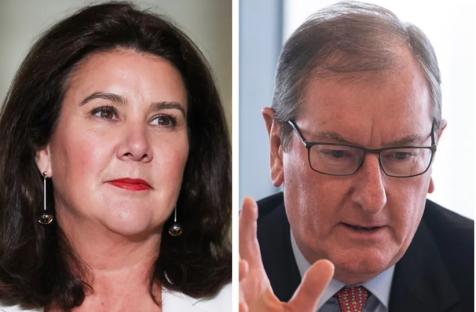
A secret review into the Liberals’ disastrous election loss in May has ruled out formal quotas for the number of women MPs in federal parliament and instead recommends a British-style recruitment drive to improve the party’s gender balance.
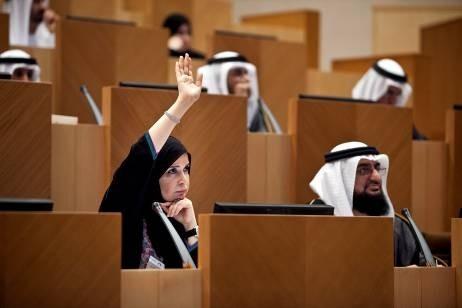
Democracy and the equal participation of men and women in the political arena are closely intertwined. No parliament or any decision-making body can claim to be representative without the participation of both men and women. As stated in the Universal Declaration on Democracy adopted by the Inter-Parliamentary Union’s Member Parliaments in 1997, "The achievement of democracy presupposes a genuine partnership between men and women in the conduct of the affairs of society in which they work in equality and complementarity, drawing mutual enrichment from their differences."
Recent years have seen a steady increase in the number of women in parliament, though the world average of less than 22 percent remains far from the goal of parity between women and men. The election of women to the highest positions of state and government in several countries has also contributed to the changing face of politics.
While the road to election is a difficult one, the challenges for women do not stop there. Once women enter parliament or other bodies, they are faced with many new challenges. Parliament is traditionally a male-oriented domain where the rules and practices have been written by men. It is, therefore, an ongoing challenge to transform parliament into a gender-sensitive environment, to ensure that actions are gender-sensitive and to guarantee that gender is mainstreamed throughout the legislature.
A secret review into the Liberals’ disastrous election loss in May has ruled out formal quotas for the number of women MPs in federal parliament and instead recommends a British-style recruitment drive to improve the party’s gender balance.
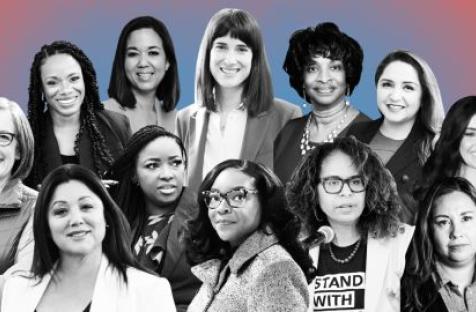
A record number of Black women ran for office this year for U.S. House, Senate and governor. And while some made history with their wins, Black women are still underrepresented in public office.
Ugo Aliogo examines the prospects of women in 2023 general election, judging from the low representation of women in the political space and the impact on development
KATHMANDU, Nov 25: Five women candidates have been elected to the House of Representatives (HoR) in the elections held on November 20.
This paper proposes replacing the United Nations Development Programme’s (UNDP) Gender Inequality Index with two new gender indexes: the Global Gender Parity Index (GGPI) and the Women’s Empowerment Index (WEI).
CNN — A record number of women will be elected to Congress this year, CNN projects – but barely.
On the eve of the International Day for the Elimination of Violence against Women, held every year on 25 November, the spokesperson for the Council of Europe Congress on Gender Equality, Ms Eirini Dourou (SOC, Greece), made the following statement:
The former culture minister replaces Aníbal Torres, who resigned after losing the confidence of the Andean parliament.
Love it or loathe it, politics is a completely unavoidable part of life, especially living here in the UK, where politicians and their various flaws and virtues seem to fuel daily headlines.