November 25, 2022
Violence against women parliamentarians: Causes, effects, solutions
Women account for just over 26% of parliamentarians worldwide according to the IPU’s latest figures.
Democracy and the equal participation of men and women in the political arena are closely intertwined. No parliament or any decision-making body can claim to be representative without the participation of both men and women. As stated in the Universal Declaration on Democracy adopted by the Inter-Parliamentary Union’s Member Parliaments in 1997, "The achievement of democracy presupposes a genuine partnership between men and women in the conduct of the affairs of society in which they work in equality and complementarity, drawing mutual enrichment from their differences."
Recent years have seen a steady increase in the number of women in parliament, though the world average of less than 22 percent remains far from the goal of parity between women and men. The election of women to the highest positions of state and government in several countries has also contributed to the changing face of politics.
While the road to election is a difficult one, the challenges for women do not stop there. Once women enter parliament or other bodies, they are faced with many new challenges. Parliament is traditionally a male-oriented domain where the rules and practices have been written by men. It is, therefore, an ongoing challenge to transform parliament into a gender-sensitive environment, to ensure that actions are gender-sensitive and to guarantee that gender is mainstreamed throughout the legislature.
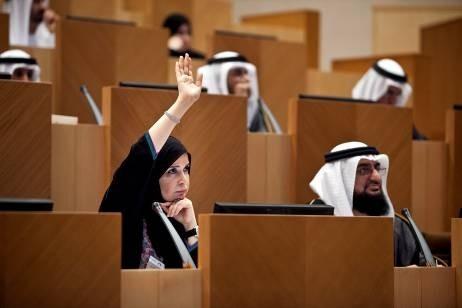
Women account for just over 26% of parliamentarians worldwide according to the IPU’s latest figures.

“Around the world, we see stigmatization, harassment and outright attacks used to silence and discredit women who are outspoken as leaders, community workers, human rights defenders and politicians,” said Peggy Hicks, Director of the Thematic Engagement, Special Proce
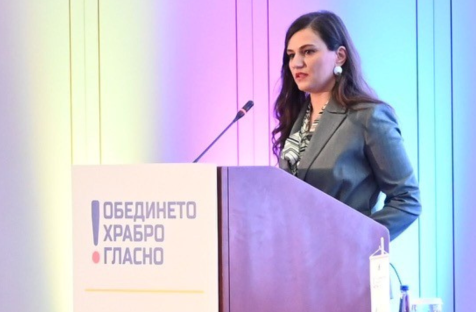
Monika Zajkova was elected as the new party leader of LDP, ALDE Party member party in North Macedonia, at the party’s 8th National Congress held under the slogan "United, brave, loud!" on Sunday 20 November in Skopje.

UCC research, carried out on behalf of Cork City Council’s Women’s Caucus, has recommended that gender quota legislation be introduced before the next local government elections to help increase the number of female councillors around the country.

The Inter-Parliamentary Union, Parliamentarians for Nuclear Non-proliferation and Disarmament (PNND), the Youth Fusion and the World Future Council (WFC) are co-organiz

increase gender parity in politics, global efforts have struggled to ensure equal female representation. This is likely tied to implicit gender biases against women in authority.

Today, the European Parliament has formally adopted the new EU law on gender balance on corporate boards. By 2026, companies will need to have 40% of the underrepresented sex among non-executive directors or 33% among all directors.

Women make up almost 49.6 per cent of the world's population.
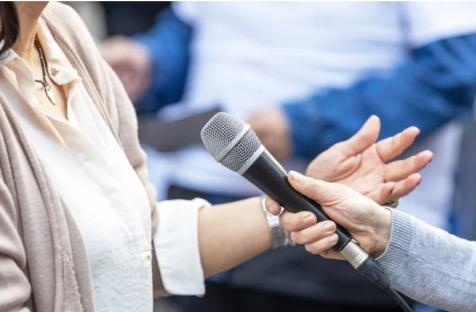
Women running for election are more likely to be the victims of personalised, misogynistic abuse - online and at the doorstep - than their male counterparts.