Post-conflict and Transitional Participation

According to the Ploughshares, in 2005, armed conflicts raged in 27 countries. In five of them, casualties exceeded 100,000 people, and the indirect costs in human capital, infrastructure and effect on future development are beyond estimation. The transition period begins when wars end through negotiated settlements or other means. With international and regional assistance, parties seek ways to deter the cycle of conflict by establishing a stable government to protect and provide for its citizens.

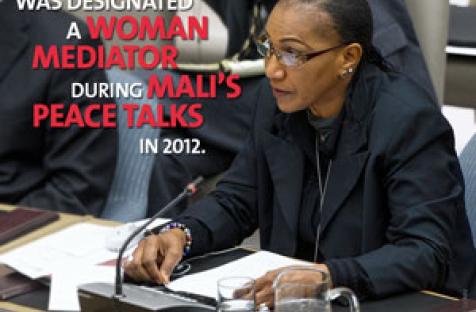
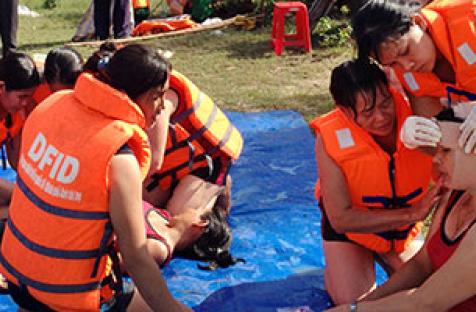
Formally and informally, women around the world are contributing to post-conflict reconstruction in the areas of security, justice and reconciliation, governance and socio-economic development. In 2000, the United Nations (UN) Security Council passed resolution 1325, a landmark decision mandating the participation of women in peace processes. Since the adoption of the resolution, awareness of the importance of including women in peace and reconstruction processes has grown enormously. Yet, implementation of the resolution’s mandate remains sporadic and ad hoc, and the gaps in practice are vast. Nonetheless, women’s participation in post-conflict reconstruction processes continues to increase.

In Sri Lanka, pressure by women’s organizations led to the establishment — within the structure of the formal negotiations — of a ten-member Subcommittee on Gender Issues in 2002. In Northern Ireland, women representatives were trusted as mediators during conflict negotiations, with such trust stemming from the women’s platform of respect for human rights, inclusion and equality. In Haiti, the women’s ministry and women’s organizations participated in a consultative process, resulting in the UN mission incorporating women’s priorities into its mandate and establishing the Disarmament, Demobilization and Reintegration Programme. In Rwanda, women formed the first cross-party parliamentary caucus composed of both Hutus and Tutsis, addressing issues of concern to women from all political parties. In Sierra Leone, a women’s task force was established to foster women’s participation in the design of the Truth and Reconciliation Commission and the special unit investigating war crimes. According to the World Bank, in Afghanistan, efforts by the international community and local women’s organizations have led to girls accounting for 40 percent of all children attending school in 2003, compared to only 9 percent before the war.

While significant and encouraging, such examples and best practices do not equate with the systematic inclusion of women in peace processes. It remains critical to amplify the role and contribution of women during political transitions to capitalize on this window of opportunity.

Survey Report: Syria Peace Talks Fail to Engage Women

Back
February 14, 2014

Survey Report: Syria Peace Talks Fail to Engage Women

In partnership with the Center for Civil Society and Democracy in Syria, Inclusive Security conducted a survey of 110 women living and working inside Syria.

In partnership with the Center for Civil Society and Democracy in Syria, Inclusive Security conducted a survey of 110 women living and working inside Syria.

February 11, 2014
Don’t negotiate women in Pakistan

While we women welcome the initiative of talks taken by the government and stand in full solidarity with them, we would like to clearly state that women will not be a negotiating chip this time.

Report from SIGAR: Challenges to Securing Afghan Women’s Gains in a Post-2014 Environment

Back
February 7, 2014

Report from SIGAR: Challenges to Securing Afghan Women’s Gains in a Post-2014 Environment

The situation for women during the Taliban regime contrasted sharply with that observed in earlier periods, particularly the era of the Soviet occupation (1979-89).

The situation for women during the Taliban regime contrasted sharply with that observed in earlier periods, particularly the era of the Soviet occupation (1979-89).

January 28, 2014
Tunisia's Ennahda and Ettakattol women MPs celebrate

Tunisia's new constitution could usher in momentous change for women, following the adoption of a clause which guarantees gender equality in legislative assemblies and for steps to be taken to protect women against violence, a first in the Arab world.

January 27, 2014
Helen Clark, Top UN Official, Warns Against Syria Intervention At Women Of The Year Lecture

One of the UN's most senior leaders has warned against Western intervention in Syria, drawing on her experience as prime minister of New Zealand when she decided not to take the country to war with Iraq.

January 23, 2014
No Seat for Syrian Women at the Peace Talks

The talks in Syria began today, with the Syrian government and opposition exchanging accusations and invectives. Missing was the voice of nonviolent civilians, especially women, even through they have been trying for months to have a seat at the table.

Videos

Women of Syria: An appeal for peace

Submitted by iKNOW Politics on
Back
January 23, 2014

Women of Syria: An appeal for peace

As violence and warfare continue in Syria, Syrian women are paying a heavy price. It's time their voices are heard. (UNWOMEN)

As violence and warfare continue in Syria, Syrian women are paying a heavy price. It's time their voices are heard. (UNWOMEN)

January 22, 2014
Geneva II offers best chance for a political solution to Syria Crisis

Oxfam calls for increased participation of women and civil society organizations in peace process

January 21, 2014
Absence of women at Syria talks could jeopardize future peace

There will be some 35 countries making statements in Montreux today. But there will be no voice for the people who have the greatest stake in these talks: the women of Syria and civil society.