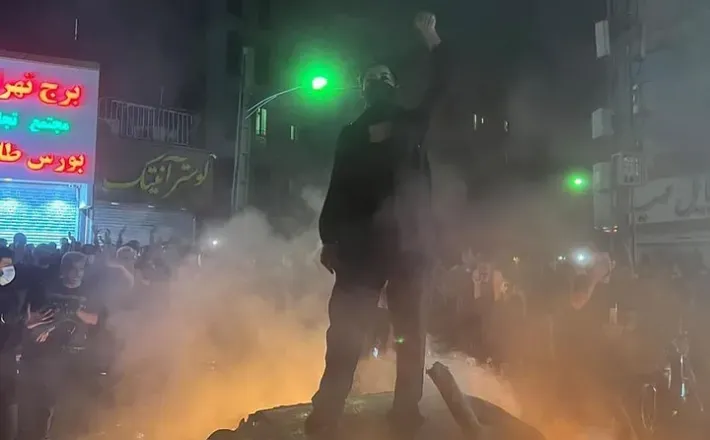
Mahsa Amini, a 22-year-old Kurdish girl, traveled to Tehran on a family holiday. She never returned. She died in the custody of Iran’s morality police, a wing of police that enforces mandatory hijab on Iranian women. Since her death on September 16th, there has been ongoing protest across the country. Mahsa was yet another heartbreaking example that in the Islamic Republic of Iran being a woman is a crime.
Mahsa is not the first woman to lose her life simply because they are born a woman in Iran. Countless women have lost their lives Some were victims of honor killing like Mona Heidari, others, died escaping rape like Schiler Rasouli, and others, took their own lives simply because they wanted to watch a football match in the stadium and were not allowed or are jailed to be executed only because they wanted to live their lives as who they are. The list is long.
But now Iran is at a turning point in its modern history. Since the disputed presidential election in 2009 (popularly known as the green movement), Iranian society has experienced significant shocks on several fronts: the effects of systemic corruption started to show and as a result, the traditional ecosystem of the regime’s cronies started to change. Some lost their stake in the game and turned into opposition while others moved the wealth they had accumulated to Europe and/or North America. Images of their children on social media indicate that they lead lives that counteract those advocated by their parents for the rest of society. They drink, dance, wear no hejab, mingle with the opposite sex freely, and their lifestyle contradicts the Islamic Republic’s values.

Hear from women leading change in the political space share their experiences and insights.

Explore a wide-range of audio-visual resources on key topics of gender equality.

Hear from a diverse list of panelists and guests as they reflect on critical issues pertaining Women in Politics.