Opening a newspaper these days, one cannot miss the year-end reviews on a wide range of issues. Statistics and surveys published across various media outlets in 2025 help us grasp the country’s overall condition. What emerges from these accounts is a troubling picture of continued violations of fundamental rights and citizen security in the post–July uprising period.
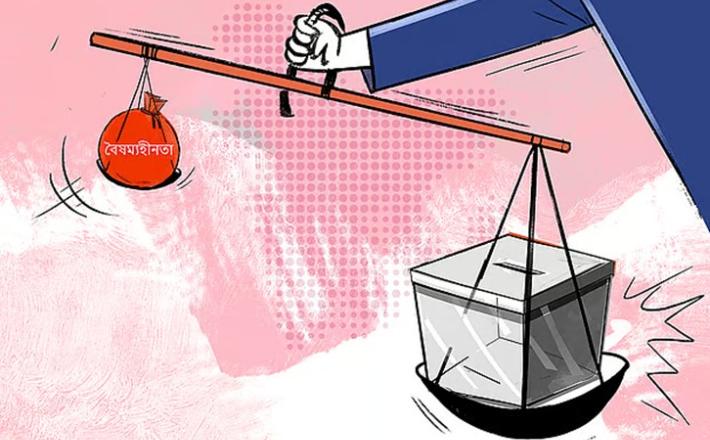
This raises serious concerns and casts doubt on how much of the spirit of the uprising has been lost. After all, ordinary people took to the streets in July demanding a “discrimination-free” society, a “new order,” and “justice.” At the end of the day, people seek peace they seek visible improvements in their quality of life. I believe it is necessary to objectively observe and analyse how much of these expectations have actually been fulfilled.
Various studies show that in transitional contexts, people articulate their aspirations in multidimensional ways. While states or international organisations may define “peace” in terms of treaties or ceasefires, ordinary people understand peace as the ability to live their lives—not as an abstract concept.

Hear from women leading change in the political space share their experiences and insights.

Explore a wide-range of audio-visual resources on key topics of gender equality.

Hear from a diverse list of panelists and guests as they reflect on critical issues pertaining Women in Politics.