In Bengal’s migrant belt, women challenge identity politics with survival demand
Source: The Federal
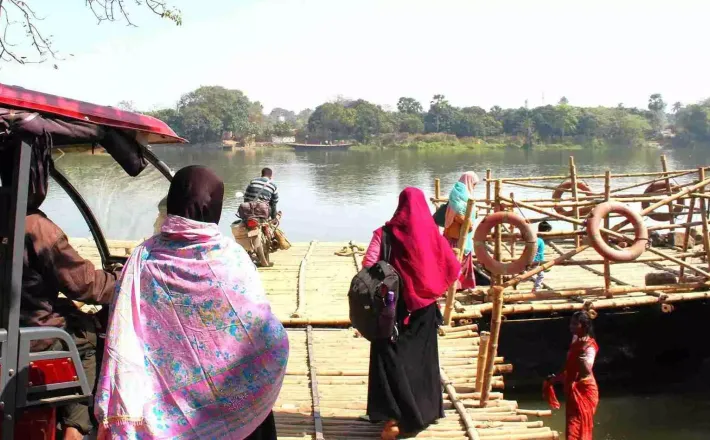
Women board a crude vessel to cross the Ganga in Murshidabad. With every year of handling money, papers and government offices as their husbands and sons remain away, women are becoming more independent and less willing to merely obey their instructions. The Federal photo
“Every election, they ask whether we are Hindus or Muslims. Nobody asks why my husband is washing dishes in Kerala.” This angry remark by Rehana Bibi, a resident of Samserganj whose husband works in Kerala’s Kochi, sums up the mood in the migrant-majority belts of West Bengal’s Murshidabad district.
Women voters in Samserganj and Lalgola are emerging as a potentially decisive force in Murshidabad, which will vote on April 23, with many saying that their concerns over jobs, migration and deletions from electoral rolls now matter more than the identity politics dominating the campaign.

Hear from women leading change in the political space share their experiences and insights.

Explore a wide-range of audio-visual resources on key topics of gender equality.

Hear from a diverse list of panelists and guests as they reflect on critical issues pertaining Women in Politics.