Fair representation in decision-making: policy papers to strengthen the involvement of women and persons with disabilities
Source: UNDP
After three consecutive electoral cycles in which the double-quota system (the mechanism guaranteeing a minimum of 40% gender representation on candidate lists) brought a record number of women into Parliament and local councils, the political representation of other vulnerable groups remains deficient.
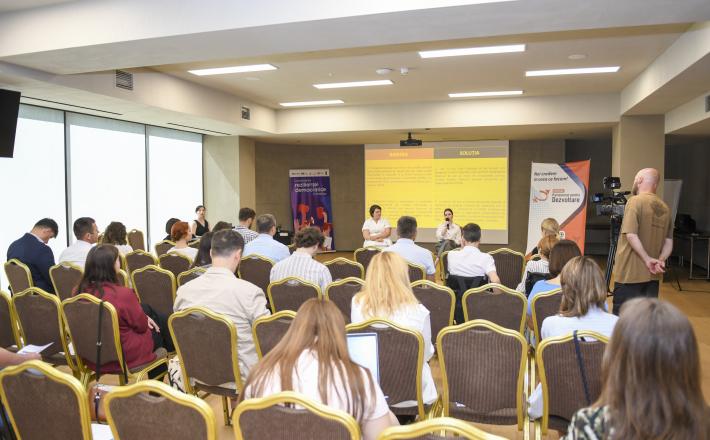
The competent authorities, together with civil society and development partners, met on 22 June 2026 to assess the current system and to underline the need for reforms ahead of the elections expected in 2027-2029 (general local, presidential and parliamentary elections). The public dialogue was organised by the Partnership for Development Center (CPD) in partnership with UNDP, with the support of Norway, Sweden and Denmark.
“The experience of recent electoral cycles shows that well-designed legislative measures can bring about real change in political representation. However, a genuinely inclusive democracy requires that every citizen have not only the formal right to participate, but also the real opportunity to be represented. From this perspective, it is important to continue the efforts to remove the barriers that limit the participation of women, persons with disabilities and other underrepresented groups in public and political life”, says Pavel Postică, Deputy President of the Central Electoral Commission (CEC).
Analysis of electoral processes in the Republic of Moldova shows that women’s political representation increases significantly when firm legislative rules are in place, such as the double-quota system applied in parliamentary and local elections. Nevertheless, the current “four out of ten” placement rule still allows women to be concentrated in the non-eligible sections of candidate lists. The CPD analysis finds that introducing a “zipper” system (alternating placement on lists, namely one woman and one man in turn) would have raised the share of women in Parliament to 48.5% and would have eliminated the technical errors found on lists with few registered candidates at local level.

Hear from women leading change in the political space share their experiences and insights.

Explore a wide-range of audio-visual resources on key topics of gender equality.
Hear from a diverse list of panelists and guests as they reflect on critical issues pertaining Women in Politics.