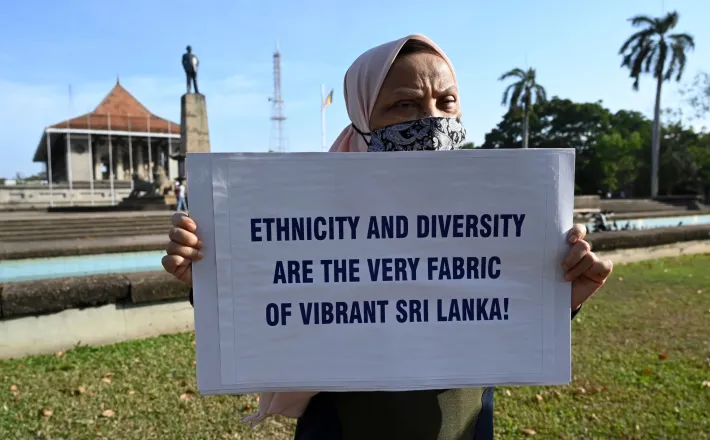
Women from minority ethnic and religious groups in Sri Lanka continue to be systematically discriminated against and marginalized in mainstream politics, new research shows.
Quotas for women’s representation have not enabled enough minority women to enter politics; just 3 minority women sit in Parliament among 22 women – less than 2 per cent of all MPs, despite majority women’s representation having improved. Only 11 minority women have ever been elected.
‘Minority women in politics are not just underrepresented — they are systematically excluded. Though determined to represent their communities, they are shut out by cultural, religious, language and patriarchal barriers from their own communities and all political parties’, said lead author Dr Farah Mihlar of the Centre for Development and Emergency Practice, Oxford Brookes University.
The report finds that the quotas have not circumvented the specific obstacles faced by minority women, such as tokenistic nominations, exclusion from leadership and limited access to financial resources and networks. A crucial finding is that minority women unanimously identified their own community as presenting the greatest obstruction to their political careers.

Hear from women leading change in the political space share their experiences and insights.

Explore a wide-range of audio-visual resources on key topics of gender equality.

Hear from a diverse list of panelists and guests as they reflect on critical issues pertaining Women in Politics.