Women in Politics in the 2025 Electoral Year: Media, Narratives, and Violence in the Digital Space
Source: UN Women
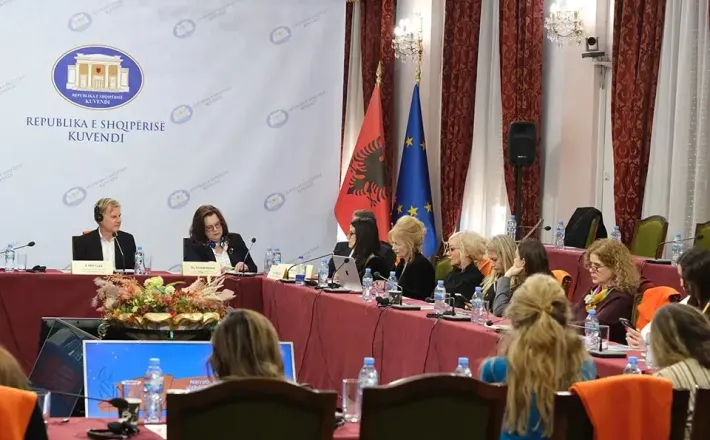
Tirana, 15 December 2025 – Media monitoring of Albania’s 2025 parliamentary elections found persistent gender imbalances and violence against women in politics, particularly in media coverage and online discourse.
The monitoring, conducted by Equality in Decision Making and BIRN Albania with the support of UN Women and the Government of Sweden, analysed online media, television and social media platforms during the campaign and post-election period. The report shows that women candidates, Members of Parliament and ministers were more frequently targeted with sexist language, personal attacks and discriminatory narratives, especially in digital spaces.
“Gender equality in politics is not only a women’s issue; it is a matter of democracy, representation, and citizens’ trust in institutions. A democracy in which half of society remains on the margins of decision-making cannot be considered a full democracy,” said the Deputy Speaker of Parliament, Ms. Klodiana Spahiu. She added that the monitoring report should not be seen as a critique, but rather as a tool for reflection and action aimed at improving the current situation.
Women accounted for 38.9 per cent of all candidates and secured 35 per cent of parliamentary mandates, yet they won only 25 per cent of mandates through preferential voting. Their media visibility also remained significantly limited. Across 41 national and local television stations monitored by the Audiovisual Media Authority during the campaign, male candidates accounted for 89.8 per cent of airtime, compared to just 10.2 per cent for female candidates. This stark imbalance was consistent across all broadcasters and program types, leaving women candidates with far less visibility to explain their campaign platforms.”
“Albania continues to benefit from positive women representation both in parliament and central government. Yet, their ability to substantively share leadership and decision making around key national priorities is profoundly compounded by negative gender stereotypes, little to no access to the media, as well as online violence. When a woman runs for office, she faces the irony of being a lot less visible, and a lot more exposed”, said Michele Ribotta, UN Women Representative in Albania.
“The report presents a fact-based analysis that contributes to a deeper understanding of how the electoral process, within the media and digital environment, shapes women’s political participation in Albania. While positive regulatory developments have been recorded, women politicians continue to face both long-standing and emerging challenges that undermine their opportunities for meaningful and equal engagement”, said Erik Illes – Head of Development Cooperation at the Swedish International Development Cooperation Agency (Sida).
The pre and post campaign period was characterized by recurring gender bias and online violent attacks against women candidates, including sexist language, personal insults and discrediting narratives, often focusing on physical appearance, private life or preconceived moral judgments, rather than on their political positions. Such practices contribute to a hostile environment that discourages women’s engagement and participation, narrowing the scope of the democratic debate.
Following the elections, women were assigned 47.1 per cent of ministerial spots in the new Government, confirming Albania’s strong record of equal gender participation in central cabinet positions.

Hear from women leading change in the political space share their experiences and insights.

Explore a wide-range of audio-visual resources on key topics of gender equality.
Hear from a diverse list of panelists and guests as they reflect on critical issues pertaining Women in Politics.