Yuliana García Mesa: “Young girls and women are also expected to stay silent, to avoid conflict. Entering politics means breaking those norms.”
Source: UN Women
Yuliana García Mesa’s path to politics began with community work. “Since I was 14, I’ve been involved in social processes,” she recalls. “I started in my parish youth group, collecting food for the elderly and organizing activities for young people. Later, I joined the Municipal Youth Platform and became a youth councillor. That experience showed me the importance of young voices in decision-making spaces, especially women’s voices. She went on: “We often think our voice doesn’t count. We complain about what happens in our territories, but we don’t take responsibility. So I decided to run for municipal council and received the second-highest number of votes. Today, there are only two women among 11 councillors. That makes our presence even more important.”
But entering politics as a young woman was tough: “The hardest part has been making space in arenas dominated by men. Historically, women have been silenced, afraid to speak for fear of mockery or stigma. When I speak or present arguments, they invalidate me, question me, and ask how I can teach them when they’ve been in office for years. My training helps me stand firm, but it affects my personal life.” The hostility extends beyond council sessions. “In my community, people started making negative comments, spreading rumors to discredit me. Politically, I’m not part of the majority, so standing up to those who have held power for years is hard. They believe they have the only legitimate power and use it to influence people, creating rumors and stigma against me. This has affected me emotionally”.
During her first year as a councilwoman, this situation led her to decline a professional opportunity in Neiva in order to fulfill her public duties. Although she has endeavored to organize her academic schedule around the standard session days, these schedules are not always observed; adjustments depend largely on internal decisions that do not consistently take her personal circumstances into account.
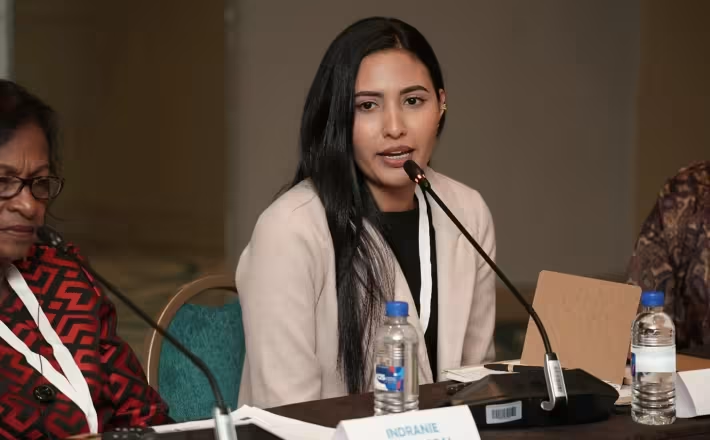

Hear from women leading change in the political space share their experiences and insights.

Explore a wide-range of audio-visual resources on key topics of gender equality.

Hear from a diverse list of panelists and guests as they reflect on critical issues pertaining Women in Politics.