Enero 8, 2016
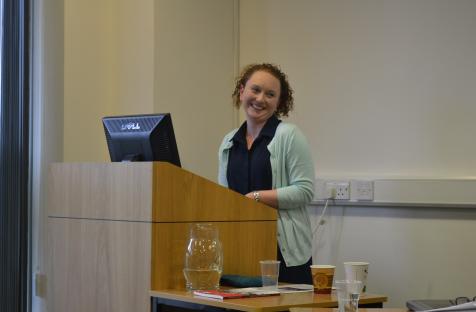
La geógrafa política Claire Mc Ging analiza las implicaciones de las cuotas de género en Irlanda
La geógrafa política, Sra.
Democracy and the equal participation of men and women in the political arena are closely intertwined. No parliament or any decision-making body can claim to be representative without the participation of both men and women. As stated in the Universal Declaration on Democracy adopted by the Inter-Parliamentary Union’s Member Parliaments in 1997, "The achievement of democracy presupposes a genuine partnership between men and women in the conduct of the affairs of society in which they work in equality and complementarity, drawing mutual enrichment from their differences."
Recent years have seen a steady increase in the number of women in parliament, though the world average of less than 22 percent remains far from the goal of parity between women and men. The election of women to the highest positions of state and government in several countries has also contributed to the changing face of politics.
While the road to election is a difficult one, the challenges for women do not stop there. Once women enter parliament or other bodies, they are faced with many new challenges. Parliament is traditionally a male-oriented domain where the rules and practices have been written by men. It is, therefore, an ongoing challenge to transform parliament into a gender-sensitive environment, to ensure that actions are gender-sensitive and to guarantee that gender is mainstreamed throughout the legislature.
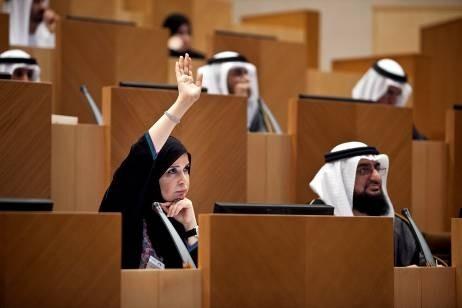
La geógrafa política, Sra.
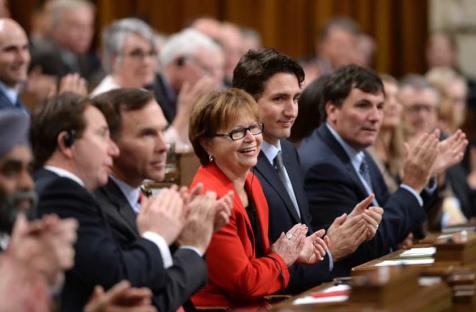
Después de las celebraciones generalizadas del gobierno de paridad de Canadá, dirigido por el primer ministro Justin Trudeau con 15 hombres y 15 mujeres, primeras críticas de género están surgiendo
La política británica de la UKIP y miembro del Parlamento Europeo, Sra.
El Parlamento Latinoamericano y Caribeño (Parlatino), ha aprobado el 1 de diciembre de 2015 el “Marco Legal sobre Democracia Paritaria”, desarrollado con el apoyo de ONU Mujeres.
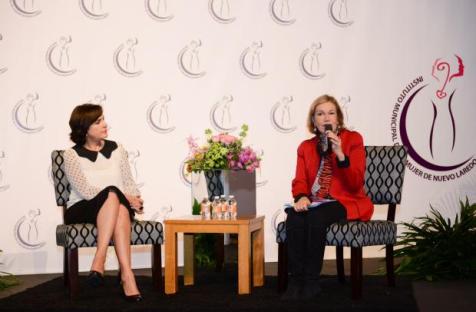
Este lunes, día 16 de noviembre, se ha iniciado en México un nuevo ciclo de conferencias sobre Mujeres y Política “Una asignatura pendiente”.

Hace dieciséis años los -Construcción de Recursos puente en Democracia, Gobernabilidad y se inició el proyecto elecciones-.
The London School of Economics has launched a new study that concludes that gender quotas to put women in positions of political relevance are necessary. Women are needed in positions of power in order to ensure gender equality.
[[{"fid":"9767","view_mode":"default","fields":{"format":"default","field_file_image_alt_text[und][0][value]":"","field_file_image_title_text[und][0][value]
[[{"fid":"9753","view_mode":"default","fields":{"format":"default","field_file_i