Advocacy & Lobbying
The Kabul Tribune (KT) — Speakers at the fourth day of the UN Commission on the Status of Women (CSW70) warned that Taliban policies in Afghanistan amount to a system of “gender apartheid,” while also highlighting persistent global gaps in women’s political participation.
According to a report by US Dispatch, discussions focused on what participants described as the systematic removal of women from public life in Afghanistan and broader structural barriers limiting women’s roles in politics worldwide.
Richard Bennett, the UN special rapporteur on Afghanistan, said the Taliban has dismantled key justice institutions since returning to power in 2021, leaving no women judges, lawyers or prosecutors in the country.
He said women are barred from representing themselves in legal proceedings and must be accompanied by a male guardian to appear before tribunals.
Serbia, Bulgaria, and Romania were consolidated after the First World War, all experiencing communist regimes following the Second World War, and, after 1989, embarking on a transition to democracy. These neighbouring states have been profoundly influenced by Orthodox traditions and share historical, cultural, and religious similarities, including traditional perceptions of gender roles.
The differences in the evolution of women’s rights to vote and to be elected to decision-making bodies are all the more striking given these similarities. They highlight the crucial importance of institutional frameworks designed to effectively guarantee gender equality, ensuring it does not remain merely an abstract legislative principle.
The evolutionary stages undergone in the sphere of women’s electoral rights here provide an appropriate framework for studying the relationship between the principle of equality enshrined in law, socio-political transformations, and the effective functioning of institutions.
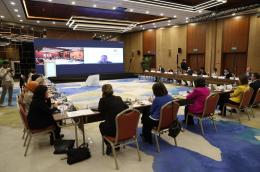
The Grand National Assembly of Türkiye (TGNA) Committee on Equal Opportunities for Women and Men (KEFEK) came together in Nevşehir, in cooperation with the British Embassy Ankara and UN Women Türkiye, to strengthen the joint fight against technology-facilitated violence against women.
The “Knowledge-Sharing Meeting on Strengthening Women’s Participation in Politics and Decision-Making”, held in Nevşehir on 28–29 March 2026, focused on the prevention of technology-facilitated violence against women and girls and on strengthening accountability in this area.Members of Parliament, together with international guests joining online from UN Women Headquarters and the government of United Kingdom, and experts, discussed the new barriers to women’s political participation in the digital age and the steps needed to overcome them.
Nevşehir MP Emre Çalışkani KEFEK Chair Çiğdem Erdoğan and Nevşehir Governor Ali Fidan gave opening remarks, highlighting the role of women in the economic, cultural and social life of Türkiye’s geography, and underscored the symbolic value of holding the meeting in Nevşehir.

Fatuma Muhumed is glowing as she arrives for an interview with DW just hours before her inauguration as a local councilor in the Dutch municipality of Apeldoorn — her first political office, on top of her job as a lawyer.
Her election was far from certain: She was ranked 15th on the candidate list of the left-leaning GroenLinks-PvdA, yet she secured one of the party's six seats. Muhumed climbed the ranks thanks to preferential voting, or "smart voting," as the campaign Stem op een Vrouw (Vote for a Woman) calls it.
How does it work?
In the Netherlands, voters don't just choose a party but select a specific candidate on a party list. Candidates are ranked by the parties, typically with their leaders at the top.
"We see more men, and then we see women lower on the lists," says Zahra Runderkamp, political scientist and lead researcher at Stem op een Vrouw.
Voters tend to favor candidates on top of these lists, but to boost women's representation, Stem op een Vrouw encourages voters to support women ranked lower down, especially those just below the projected seat threshold.
This strategy has helped Muhumed and 503 other women across the Netherlands get elected in the latest elections.

As it stands, women only account for 13% of Malaysia’s parliamentarians, despite making up 50% of Malaysia’s overall population.
On the road towards the next general election, civil society organisations, led by the NGO Empower, are pushing for legislation on gender parity in political representation, which would call for a binding legal framework to ensure that at least 30% of election candidates are women.
But why is this legal intervention even necessary in the first place? BFM talks to Azira Zainal from the Association of Women Lawyers, Ayesha Sofia Faiz from Empower, and Kasthuri Patto from the DAP.

A growing wave of high-tech misogyny has left the British public fearing for the safety of women and girls, a bombshell report reveals today. In a damning indictment, three in four (73%) of the public say Sir Keir Starmer’s Government should be doing more to tackle violence against women and girls. Campaigners warn that predators have harnessed the power of Artificial Intelligence (AI) to supercharge abuse on an “unprecedented scale”.
AI-powered chatbots have encouraged boys and men to abuse women and girls and the technology is used to create sexually explicit and abusive images, according to the End Violence Against Women (EVAW) coalition. Its director, Janaya Walker, warned that AI is “making abuse easier and more widespread”. Eight out of 10 (79%) women and 65% of men say more regulation of AI is needed to protect women and girls.
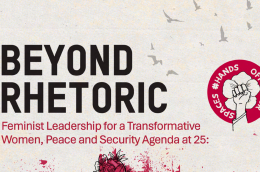
Publication date: 16 October 2025
Twenty-five years after the United Nations adopted Resolution 1325, the Women, Peace and Security (WPS) agenda is both a landmark in diplomacy and a study in unfulfilled promise. Its most profound achievement has been to force open a conversation about the gendered power structures that fuel conflict. But that opening is narrowing. Escalating wars, a backlash against gender justice and a collapse in funding now threaten to strip the agenda of its transformative edge. The WPS agenda remains an essential tool for women peacebuilders. Whether it survives as a force for justice depends on whether the global community backs its principles with the resources and political will to make them real. Without that, the resolution’s 25th anniversary will mark the start of its decline, not its maturity.
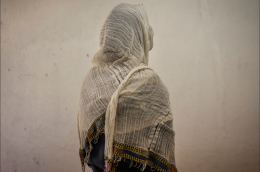
This report was written by researchers from the Organization for Justice and Accountability in the Horn of Africa (OJAH) and Physicians for Human Rights (PHR).
The report benefited from reviews by members of PHR staff, the PHR Advisory Council, and the PHR Board of Directors, as well as members of the OJAH Board of Directors.
The research team would like to recognize the strength and resilience of the survivors whose experiences and stories are reflected in this data, as well as the dedication of the health professionals who provided services and documented these violations—often at grave risk to their personal safety.
About Physicians for Human Rights (PHR)
Physicians for Human Rights (PHR) uses medicine and science to document and draw attention to human rights violations. PHR was founded on the belief that physicians and other health professionals possess unique skills that lend significant credibility to the investigation and documentation of human rights abuses.
In response to the scourge of sexual violence, PHR launched its Program on Sexual Violence in Conflict Zones in 2011. The program works to confront impunity for sexual violence in the Central African Republic, the Democratic Republic of the Congo, Ethiopia, Iraq, Kenya, Myanmar, and Ukraine.
PHR has conducted research to understand the scale and scope of conflict-related sexual violence in various conflicts and contexts, including in the Democratic Republic of the Congo, Kenya, Myanmar, and Sierra Leone.
About the Organization for Justice and Accountability in the Horn of Africa (OJAH)
The Organization for Justice and Accountability in the Horn of Africa (OJAH) is an independent and impartial organization dedicated to strengthening justice and accountability mechanisms in the Horn of Africa through evidence collection and preservation.
The organization’s mission is to deter war crimes, crimes against humanity, conflict-related sexual violence, and other severe human rights abuses across the Greater Horn of Africa. It pursues this mission by conducting documentation and investigations, advancing the environment for justice and accountability, preserving and analyzing materials, and supporting international justice and accountability actors and efforts.
Full report here.
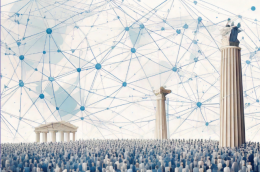
This report advocates for thorough protection of human rights in the digital age, emphasizing the strength of constitutional safeguards over ordinary legislation. As digital technologies increasingly influence civil and political rights, online as well as offline, robust constitutional frameworks are essential to address new challenges such as unwarranted surveillance, censorship and data monopolies. Ensuring adequate constitutional protection helps anchor fundamental rights in an evolving digital landscape.
Click here to read the full report.
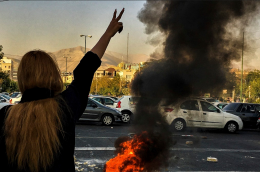
It’s been six months since the latest spark ignited mass protests in Iran — the death of 22-year-old Kurdish-Iranian Mahsa (Jina) Amini in morality police custody after she was arrested for allegedly failing to wear her hijab properly.
The outrage over her killing resulted in women-led protests. Their slogan “woman, life, freedom,” originally a Kurdish manifesto, has helped fuel the Iranian protesters’ demands for radical change.
Read more: Iranian women keep up the pressure for real change – but will broad public support continue?
The perseverance, bravery and determination of the Iranian protesters, particularly women and girls, have been heroic. Despite risks to their lives and freedoms due to a brutal government crackdown, many remain active in publicly articulating their grievances in a variety of ways.
In recent months, while some street presence has continued in Iran — for example, in response to the poisonings of schoolgirls in cities across the country — protesters are also organizing strikes, sit-ins, boycotts and publicizing their demands in the form of manifestos, charters and bills of rights.
In fact, a key distinguishing factor between the recent protests and the previous ones is that Iranians have been forming coalitions to advocate for important structural and institutional changes in support of equality, human rights, democracy and freedom.

Over the past two decades, the structures of social communication and public discourse have undergone profound transformations. The digital sphere has become a contested arena and a central space where identities are produced and symbolic and social meanings are shaped. It has also become a place where new subcultures emerge and existing hierarchies are often reinforced. Within this landscape, feminist and political movements have created counter-public spheres that enabled women and marginalized groups to break the monopoly of power over meaning, expose patriarchal violence, and build transnational networks of solidarity.
Such networks helped dismantle the ideological structures that sustained violence and victim-blaming for decades. The broader shifts in societal values unfolded alongside a surge of revolutionary consciousness across the Global South, which exposed the colonial and capitalist structures underpinning political and social life. This awakening was met, however, with intensified surveillance, repression, and the mobilization of power to resist change.
Digital surveillance cannot be understood simply as the use of technology by those in power. It reflects the transformation of the digital sphere itself into a disciplinary apparatus that reproduces colonial and neo-fascist modes of control. Once absorbed into a capitalist ownership structure monopolized by transnational corporations, the internet ceased to be a neutral space for knowledge or communication. It became an infrastructure of domination, where data and algorithms are deployed to sort, control, and exclude.
Algorithmic architectures reinforce hierarchies of language, gender, race, and class. Through mechanisms of digital moderation that reflect the logic of white, masculine, and capitalist privilege, feminist and anti-authoritarian content is systematically excluded. In this way, algorithms have become ideological tools that silence and erase voices deviating from the dominant norms enforced by structures of power.

Despite the progress made during decades of work by women’s rights organizations and democratic institutions, gender equality is still a long way off. There is a growing understanding that gender equality will only be achieved when men and women work together towards full gender equality and equal respect for the rights of all individuals and groups.
This paper presents nine policy and good practice recommendations to support diverse audiences in their work to include men in building a more gender-equal, peaceful, prosperous and democratic world.