Advocacy & Development
In Africa, several initiatives seek to increase women’s visibility in digital spaces. Africa Wiki Women is one of the projects actively involved in advancing African women’s participation in online knowledge creation and sharing.
Women across the continent still face many obstacles in accessing technology and participating in digital knowledge spaces. Previous reports from Global Voices show that online abuse and harassment of women are significant barriers limiting their participation in and contribution to collaboration platforms and information networks. These obstacles lead to a representation bias, where African women’s achievements often remain unseen and undocumented in digital spaces.
From these access barriers emerged Africa Wiki Women, a collaborative project between three women: Ruby Damenshie-Brown from Ghana, Bukola James from Nigeria, and Pellagia Njau from Tanzania, who came together to empower women through training, contribution campaigns, and mentorship programs. This organization encourages women to document the countless remarkable achievements African women make, and increase the content about women and their initiatives on collaborative knowledge platforms.

This post is part of Global Voices’ April 2026 Spotlight series, “Human perspectives on AI.” This series will offer insight into how AI is being used in global majority countries, how its use and implementation are affecting individual communities, what this AI experiment might mean for future generations, and more. You can support this coverage by donating here.
As a Nigerian who has spent years on X (formerly Twitter), I’ve seen a lot. I’ve witnessed trends come and go, policies shift, and communities build and dissolve. For a long time, I considered myself a “conscious” internet user. I curated my timeline carefully, avoided unnecessary engagement, muted triggering keywords, and accepted the uncomfortable truth that the internet, especially for women, was never designed with our safety in mind.
My work at Superbloom (a design non-profit and studio) — particularly on human-centered design projects and the tech policy design lab playbook on online gender-based violence — was my first real exposure to the scale and intensity of violence occurring online. I came to see how these forms of violence persist online: Victims remain scared and vulnerable, while perpetrators are rarely held accountable. A temporary ban is often the extent of the response, and they soon return with a new account and a new victim. Social media, once a place for connection, community-building, and entrepreneurship, has now become a battleground and hostile environment, with women often bearing the brunt of unprovoked abuse. Furthermore, according to UN estimates, only 40 percent of countries have legislation protecting women and girls from online abuse, leaving much of the global population exposed.

This post is part of Global Voices’ April 2026 Spotlight series, “Human perspectives on AI.” This series will offer insight into how AI is being used in global majority countries, how its use and implementation are affecting individual communities, what this AI experiment might mean for future generations, and more. You can support this coverage by donating here.
In November 2023, a group of parents from a school in Rio de Janeiro reported to the police that teenagers were creating and sharing nudes created using Artificial Intelligence (AI) featuring other classmates. Less than a year later, in September 2024, in the state of Bahia, another group of teens was also suspected of using AI to create pornographic images of other classmates, while in Mato Grosso state, students were expelled after sharing AI images featuring a teacher and other students in pornography communities on social media.
These are some recent cases reported on Brazilian media and mentioned in a technical note published by the independent research center Internetlab in early April, 2026. The document aims to discuss “ways of combating online violence against girls and women in Brazil” and recommend regulatory discussions within the country’s context.
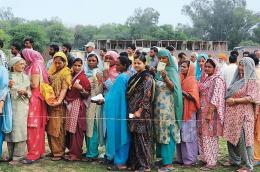
Even as the debate surrounding reservations to women in the Lok Sabha and state legislative assemblies is once again in the spotlight, some serious concerns are being raised: Will the reservation being promised by to-be promulgated legislation truly reach women from all sections equally or whether the benefits will be limited primarily to the affluent and socially empowered.
India has a strong patriarchal political culture. This is clearly evident in Panchayat elections. Reservation for women in Panchayat elections in India came through the 73rd Constitutional Amendment Act in 1993, which reserved at least 33 per cent (one-third) of seats for women at all levels.
Currently, this reservation has been increased to 50 per cent in more than 20 states, with Bihar leading the way in 2006. India is the only country where more than 1.4 million elected women are actively participating in local self-government institutions (panchayats and municipal bodies). This has, albeit slowly, significantly transformed the status of women.
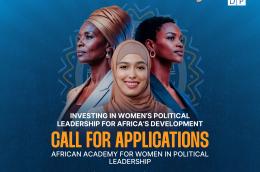
The United Nations Development Programme (UNDP) in collaboration with the African School of Governance (ASG), the African Union Commission (AUC) and the African Women Leaders Network (AWLN), today opened applications for the inaugural cohort of the African Academy for Women in Political Leadership, a continental programme designed to build the next generation of women who govern Africa.
Thirty women will be selected for a fully funded, four-week blended programme combining virtual learning with a residential convening in Kigali. Nominations are now open to government institutions, political parties, AU member state bodies, and civil society organisations across all five African regions.
Why the Academy
Africa’s political representation of women remains critically low. Where women do hold office, they often navigate systems that were not designed with their leadership in mind. The African Academy for Women in Political Leadership was built to change that — by equipping women leaders with the skills, networks, and strategic resources required to lead, govern, and shape reform agendas at the highest levels.
The Academy is anchored in African leadership and ownership, and is positioned as a continental public good. It builds on the curriculum framework developed and validated through an inclusive co-design process held in Kigali in October 2025.
What Participants Will Experience
The four-week blended programme combines high-impact virtual learning, an immersive residential convening, mentorship from senior African leaders, and applied leadership practice. The curriculum covers:
- Political leadership and governance
- Strategic communications
- Coalition-building and legislative processes
- Campaign and political financing
- Ethical leadership and inclusive governance
All programme costs, including tuition, travel, and accommodation for the residential convening, are fully covered for selected participants.
Who Should Apply
Applications are open to women who are currently holding, or credibly pursuing, elected or appointed political office anywhere in Africa. Eligible profiles include:
- Electoral Cycle Leaders: Women from countries scheduled for presidential or parliamentary elections within the next 12–36 months, including declared candidates, parliamentary candidates, senior campaign strategists, and MPs seeking re-election or higher office.
- Sitting Political Leaders: Cabinet Ministers, Members of Parliament or Senate, Speakers and Deputy Speakers, Mayors and Governors, and senior political party leaders such as Secretaries General and Women’s League Leaders.
- Young Women Leaders: Women aged 21–35 with strong political leadership potential, including aspiring candidates at the local and national level and emerging leaders within political parties or public institutions.
The Academy strongly encourages nominations of women with disabilities and women from fragile or transitional political contexts.
Baseline Eligibility
- Female citizen of an African Union Member State
- Aged 21 or older at the time of nomination
- Demonstrated active engagement in political leadership or political ambition
- Formal endorsement from a government institution, recognised political party, NGO or relevant stakeholder
- Commitment to full participation in the programme and to post-Academy alumni engagement and peer mentoring
Selection: Merit-Based and Continentally Balanced
The 30 participants will be selected through a competitive, merit-based review by a joint panel comprising UNDP, the AUC, AWLN, and ASG. Selection is designed to ensure fairness, regional balance, political inclusivity, and strategic impact across the continent.
The inaugural cohort will reflect:
- Representation from all five African regions, with a maximum of two participants per country
- At least 60% of participants from countries facing elections within 12–36 months
- At least 40% young women leaders aged 21–35
- Linguistic diversity across Anglophone, Francophone, Lusophone, and Arabophone Africa
- Balance between executive, legislative, and party leadership roles, and between ruling and opposition parties
How to Apply
Government ministries, political parties, AU member state institutions, and civil society organisations are invited to submit nominations. Self-nominations supported by an institutional endorsement are also welcome.
Each nomination package must include:
- An official nomination or endorsement letter, signed by an authorised senior official, political party leader, NGO or recognised stakeholder
- The nominee’s curriculum vitae (maximum two pages)
- A personal statement from the nominee (maximum 1,000 words)
Africa’s next generation of women political leaders starts here. Apply online: Submit your application
Deadline for applications: 15 May 2026
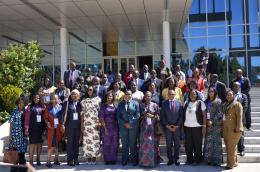
Lusaka, Zambia | 21 April 2026 — The United Nations Development Programme (UNDP), in partnership with the Gender Division, the Non‑Governmental Gender Organizations’ Coordinating Council (NGOCC), the Spotlight Initiative, the Electoral Commission of Zambia (ECZ), the Zambia Centre for Interparty Dialogue (ZCID), and UN Women convened a three‑day High‑Level Conference on Accelerated Women’s Political Participation and Leadership in Zambia, ahead of the 2026 General Elections.
Anchored within UNDP’s Africa Facility for Women in Political Leadership (AFWPL), the conference provides a national platform for evidence‑based dialogue, political commitment, and coordinated action to address the structural barriers hindering women’s participation in politics. These include patriarchal norms, gender‑based violence, limited access to campaign financing, exclusion from political party decision‑making structures, and inadequate media visibility.
With just four years remaining to the 2030 Agenda for Sustainable Development, Zambia faces a critical challenge in achieving women’s full, equal, and effective participation in political leadership. Despite progressive policies and legal frameworks, women remain significantly underrepresented in decision‑making positions across the country.
In a speech read on his behalf by the Minister of Justice, Hon. Princess Kasune, the Republican President, Mr. Hakainde Hichilema, emphasized that inclusive governance is impossible without women’s leadership. The President noted that “when women participate fully, governance becomes more responsive and reflective of the realities of our people. When women lead, nations do not merely grow; they advance with purpose, balance, and vision.”
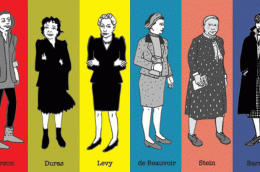
This year, for the first time ever, two of the largest neuroscience societies are led by a female scientist: the Society for Neuroscience (SfN), with nearly 42,000 members, and the Federation of European Neuroscience Societies (FENS), which represents more than 22,000 neuroscientists in 42 member societies across Europe. While the SfN has a history of female presidents, 9 out of 45, FENS welcomed its first female president only recently. Why do women move so slowly through the ranks of the system and why is it important that they do so? More urgently, what can be done to change this and by whom? Here we address current challenges and recommend concrete actions.
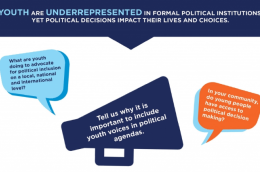
· Young people are not at the center of political decision making even though almost half the world’s population is under 30 years old. [UNDP, 2013, http://bit.ly/1dd2a2L]
· Globally, less than 6% of the parliamentarians are under 35 years old [UNDP, Fast Facts: Civic Engagement and Participation of Youth in Politics and Public Institutions, 2014, p.1, http://www.undp.org/content/undp/en/home/librarypage/results/fast_facts/Fast-Facts-youth-civic-engagement-and-participation/]
· Globally, less than 2 per cent of parliamentarians are under 30 years old. [SDG indicator 16.7.1; Inter-Parliamentary Union, 2016: Youth participation in national parliaments, 2016, http://goo.gl/A83XGf]
· The average age in parliament in 53 years old. [UNDP, 2013, http://bit.ly/1dd2a2L]
· Only 1.65% of parliamentarians around the world are in their 20’s and for a third of countries, eligibility for national parliament starts at 25 years old. [UNDP, 2013, http://bit.ly/1dd2a2L]
· Voter turnout among 18-25 year olds continues to be lower than other age groups [UNDP, Fast Facts: Civic Engagement and Participation of Youth in Politics and Public Institutions, 2014, p.1, http://www.undp.org/content/undp/en/home/librarypage/results/fast_facts/Fast-Facts-youth-civic-engagement-and-participation/]
[[{"fid":"10718","view_mode":"default","fields":{"format":"default","field_file_image_alt_text[und][0][value]":"","field_file_image_title_text[und][0][value]":""},"type":"media","link_text":null,"attributes":{"style":"display: block; margin-left: auto; margin-right: auto;","class":"media-element file-default"}}]]
· 2 out of 3 countries DO NOT consult young people as a part of the process of preparing poverty reduction strategies or national development plans. [The Global Youth Call “Prioritizing Youth in the Post-2015 Development Agenda,” http://www.un.org/youthenvoy/wp-content/uploads/2014/09/The_Global_Youth_Call.pdf]
Source:
http://www.un.org/youthenvoy/wp-content/uploads/2015/06/YouthStatsPublicandCivicParticipation1.pdf
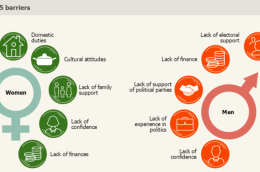
The Compendium of Good Practices on Advancing Women’s Political Participation in the OSCE Region, compiled on the occasion of the 20th anniversary of the Beijing Declaration and Platform for Action, presents good practices for enhancing women’s participation in parliaments, political parties, elections and local politics in the OSCE region.
Learn more about the challenges facing women in politics in our infographic, which is based on statistical data in the compendium. Click here to access the high resolution version of the visual.
[[{"fid":"10688","view_mode":"default","fields":{"format":"default","field_file_image_alt_text[und][0][value]":"","field_file_image_title_text[und][0][value]":""},"type":"media","link_text":null,"attributes":{"style":"display: block; margin-left: auto; margin-right: auto;","class":"media-element file-default"}}]]

As a result of the cooperation between the Centre for Arab Women Training and Research (CAWTAR), UN Women and UNDP, and with the financial support of the Ministry of Foreign Affairs of Finland, and the Arab Gulf Program for Development (AGFUND), CAWTAR successfully launched the “Legal and Human Rights of Women and Men: between Equality and Gaps” in Tunis on 28 March 2016. The e-platform aims to assist policy makers, women machineries and concerned civil society organization to better asses, analyze and understand the legal status of women across the region by compiling laws related to the status of gender and human rights in 20 Arab countries. The e-platform enables users to search by different topics and related rights, such as education, health, violence, political participation and contribution, access to justice and right to litigation in economy in each country. The online tool also allows for regional, cross-country comparisons across topics and indicators and provides information about best practices to facilitate experience exchange among Arab countries, and accordingly encourage legal reforms. Click here to know more.

The first ever indigenous peoples world conference concludes with a focus on climate.The Outcome Document also focuses on the rights of indigenous women and addressed the problem of violence against women, which he said “must be at the top of the agenda.”

This publication, published in 2013 by the International Institute for Electoral Assistance and Democracy, identifies the obstacles preventing marginalized people from taking active part in customary and democratic decision-making. It highlights strategies for managing transition from political exclusion to inclusion and identifies lessons that could be adopted by marginalized groups. Drawing on experience from 38 case studies, the publication describes how different marginalized groups have worked to overcome barriers to their participation in political decision-making.