Advocacy & Lobbying
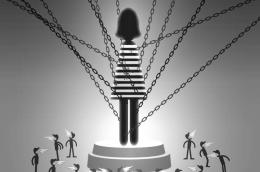
It has been more than 40 years since I was imprisoned in Iran for speaking out against human rights abuses and state executions, and for defending women’s rights. I spent eight years behind bars in Iran’s notorious Evin prison. I was tortured. I remember it as if it happened yesterday.
Every few years, uprisings erupt across Iran — and each wave of resistance is deeper and more widespread than the one before. In 2022, it was women who led the Woman, Life, Freedom movement after the murder of 22-year-old Mahsa Amini by the country’s “morality police,” and it revolutionized my country. Today, women wear what they want, go out in public with their boyfriends — even live with them — without fear of being arrested. Women earned these rights with their lives. In late December last year, the spark was once again lit — this time in an old bazaar in Tehran.
The demands are the same ones we raised in the 1980s: an end to poverty, corruption and unemployment, the right to organize, and freedom from repression. Despite the gains for women’s freedoms made since 2022, workers are still denied basic labor rights. Students are arrested and even executed for peaceful protest. Women are still fighting for fundamental rights. People are still risking their lives to stand up to torture and state violence.
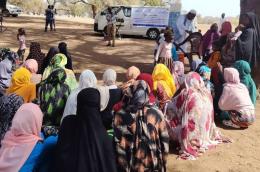
UN rights chief bears witness to trauma and resilience in Sudan
Volker Türk briefed journalists in the Kenyan capital following a five-day mission to Sudan, where “a chronicle of cruelty is unfolding before our very eyes”.
He called on “all those who have any influence, including regional actors and notably those who supply the arms and benefit economically from this war” to act urgently to bring it to an end.
Mr. Türk last visited Sudan in November 2022. Back then, he was deeply inspired by civil society—particularly the young people and women who spearheaded the 2018 revolution.
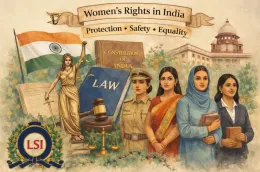
India has established a comprehensive legal framework to protect women’s rights and ensure their safety, dignity, and equality. These laws address various forms of discrimination, violence, and exploitation that women face in society. Understanding these rights empowers women to seek justice and protection when needed.
Constitutional Protections
The Indian Constitution provides fundamental safeguards for women. Article 14 guarantees equality before the law, while Article 15 specifically prohibits discrimination based on sex. Article 21, which protects the right to life and personal liberty, has been interpreted by courts to include the right to live with dignity, free from violence and exploitation. Article 23 prohibits trafficking in human beings and forced labor, offering crucial protection against exploitation.
Deadline: 05-Feb-2026
Women’s Fund Armenia (WFA) provides grants up to 500,000 AMD to feminist-led initiatives that advance women’s rights, challenge harmful social norms, and promote inclusivity. The fund supports events and projects that are intersectional, inclusive, and impactful, emphasizing meaningful engagement with diverse and marginalized communities.
Overview
The Women’s Fund Armenia (WFA) supports feminist-led events and initiatives that advance women’s rights, challenge societal norms, and promote inclusivity through intersectional feminist values. The initiative encourages creative and innovative approaches to advocacy and awareness, ensuring that feminist action is both feasible and impactful.
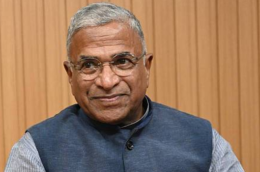
The Deputy Chairman of the Rajya Sabha, Harivansh, today highlighted India’s experience of women’s participation in governance across the three-tier democratic framework, comprising Parliament at the Union level, State Legislatures, and Local Self-Government institutions.
Addressing a session of the 28th Conference of Speakers and Presiding Officers of the Commonwealth (CSPOC) in New Delhi, Mr Harivansh noted that nearly 1.5 million women currently serve as elected representatives in local self-governing bodies, describing it as the largest experiment in women’s political representation anywhere in the world. He further highlighted that women-led local bodies demonstrate higher levels of transparency, closer monitoring, and stronger accountability.

Mitigating violence against women in politics in Africa – insights from Ghana, Kenya and Zimbabwe
A new book maps how electoral violence affects women in local politics in Ghana, Kenya and Zimbabwe, showing how they are systematically targeted in ways that limit their participation and help maintain male-dominated political systems.
Drawing on 134 interviews with politically active women, this new book – Making politics safer –documents a wide range of violence and abuse, including physical and sexual attacks, psychological pressure, economic manipulation and symbolic humiliation. It also highlights intimidation, online harassment, disinformation and violence within political parties as common tools used to sideline women.
Younger and unmarried women, those from marginalised ethnic groups, and those in opposition parties are found to face the highest risks. Even in countries where gender quotas exist, such as Kenya and Zimbabwe, a higher number of women in elected positions has not resulted in safer conditions.
This report is based on the discussions held during the International Forum on Women’s Political Empowerment, held on 7 September 2017 in Budapest, Hungary. It is a short summary of views expressed by experts, guest speakers and participants, as highlighted in their remarks and group discussions that followed.
The OSCE Office for Democratic Institutions and Human Rights (ODIHR), the Hungarian Women’s Lobby, and the Embassy of Finland in Budapest organized the forum, in collaboration with the Friedrich Ebert Stiftung, Corvinus University of Budapest and the Embassy of Estonia in Vienna. The forum was also supported by the Royal Norwegian Embassy in Budapest and the Council of Europe.
The International Forum on Women’s Political Empowerment aimed to raise awareness and facilitate dialogue on women’s participation in political and public life in Hungary and beyond. The forum gathered around 200 participants (165 women and 35 men), including politicians, civil servants, gender equality advocates, representatives of civil society, academia and youth organizations, as well as students. Thirty Hungarian and international experts (23 women and 7 men) shared their knowledge on the topic, including guest speakers from Austria, Estonia, Finland, Germany, Ireland, Norway, and Portugal.
The forum served as a platform to exchange good practices for advancing women’s political participation. It explored persisting and emerging challenges as well as opportunities and good practices for political parties, civil society and youth to strengthen gender equality, women’s rights and women’s access to decision-making.
Click here to access the report.
Using data to bridge the gender gap
Globally, women make up 49.7% of the population but hold only 22% of public offices. The Women in Public Service Project Data Portal seeks to answer why this is so, and how to increase the percentage of women in public office to 50% by 2050.
Click here to visit the data portal http://data.50x50movement.org/.
This policy guidance provides a range of good practice options for advancing gender equality in the content of constitutions. It contributes to, and complements, the capacity-building support that United Nations Development Programme (UNDP) staff in country and regional offices provide to a range of national partners and stakeholders for different aspects of constitution-making (which includes but is not limited to support for the drafting of new constitutions and the revision of existing constitutions). Other UNDP initiatives provide guidance and support for the process of constitution-making. This policy guidance is designed to build the capacity of UNDP staff to advocate for the advancement of gender equality and women’s human rights in the content of constitutions. It is intended to provide technical support for a range of partners and national stakeholders involved in constitution-making, including; legislatures, constituent assemblies, constitutional review committees or commissions, governments, civil society organizations and legislative drafters. Through the inclusion of numerous examples from existing constitutions, it aims to foster UNDP entry points for pursuing South–South exchanges through which countries can benefit from, and utilize, the good practice constitutional provisions of similarly situated countries. It also aims to raise awareness of the importance of advancing gender equality in the content of constitutions. With this in mind, examples have been chosen based on the de jure constitutional formulation rather than the record of gender equality in the particular country.
As per the statues of international IDEA, the Secretary-General reports to the Council of Member States on the overall implementation of the Institute’s activities. In April 2014, as part of the Mid-Term Strategy Review, Member States recommended that the organization continue to strengthen its communication about results. This fifth International IDEA Annual Results Report therefore presents improved qualitative reporting of results, giving more information beyond the simple implementation of activities.
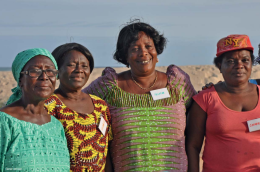
Research on women’s political participation at the community level was undertaken by Womankind in four very different countries – Ghana, Zimbabwe, Nepal and Afghanistan. The work in each context intends to increase women’s political participation and voice. The time available for the research was limited but much was achieved through the participation of Womankind staff and the deep involvement of Womankind’s partners working in each country; this enabled easy access to the women who work with, know and trust the partners. Women’s own situation varied across each country and between the countries; some had previous experience of engagement in public spaces while others were largely confined to their homes; some had formal education, while many were illiterate; some had access to trading and other livelihood work, others were financially dependent within their households. Their starting points for engagement with political influencing at the local level were disparate. Similarly, the political contexts into which they were moving in terms of local governance structures and processes were also diverse. In some, the Government had set up quotas and specific allocations for women, the poorest and the marginalised, such as Dalits, in others there were no such legal or statutory provisions and leverage on those with power over key resources, such as Local Government officials and Councillors, was very limited. In spite of these wide variations, it became apparent that achieving political change is challenging, often dependent on the political will of local officials, and policies made at national level are not necessarily implemented, or easy to get enacted locally.
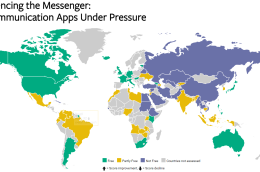
Freedom House has published its new report ‘Freedom on the Net 2016. Silencing the Messenger: Communication Apps Under Pressure’.
Internet freedom has declined for the sixth consecutive year, with more governments than ever before targeting social media and communication apps as a means of halting the rapid dissemination of information, particularly during anti-government protests.
Public-facing social media platforms like Facebook and Twitter have been subject to growing censorship for several years, but in a new trend, governments increasingly target voice communication and messaging apps such as WhatsApp and Telegram. These services are able to spread information and connect users quickly and securely, making it more difficult for authorities to control the information landscape or conduct surveillance.
These are the key findings:
- Internet freedom around the world declined in 2016 for the sixth consecutive year.
- Two-thirds of all internet users – 67 percent – live in countries where criticism of the government, military, or ruling family are subject to censorship.
- Social media users face unprecedented penalties, as authorities in 38 countries made arrests based on social media posts over the past year. Globally, 27 percent of all internet users live in countries where people have been arrested for publishing, sharing, or merely “liking” content on Facebook.
- Governments are increasingly going after messaging apps like WhatsApp and Telegram, which can spread information quickly and securely.
This year, the report highlights some internet freedom issues as they affect women specifically. The India report, highlights research which explores the negative effect of online harassment on women's participation online, as well the unique threats faced by female online activists in Mexico who challenge the social and institutional norms which tolerate violence against women. There is also an emphasis on the specific economic and professional disadvantages faced by Nigerian women who lack access to the internet.