Elections
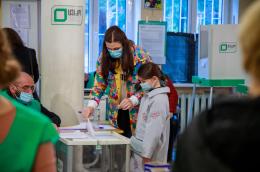
Ahead of the parliamentary elections in Georgia, UNDP and Sweden are supporting political parties to empower women politicians and explore effective strategies for attracting, engaging, and promoting women candidates.
These targeted efforts envision consultations and training on introducing internal gender policies, while also fostering professional development opportunities for party members.
Additionally, UNDP and Sweden assist in strengthening women's wings within political parties and support the establishment of these entities where they are lacking. As of 2023, parties such as “For Georgia”, “Georgian Dream”, “Lelo”, and the “United National Movement”, have initiated the integration of Women's Political Organizations into their structures, with more planning to follow suit in 2024.
Click here to read the full article published by UNDP on 21 February 2024.

In the 2019 general election, Indonesians voted more women into the national parliament than ever before. After the first election of the post-authoritarian period in 1999, women’s representation was a paltry 8.8%, so the rise to 20.9% in 2019 seemed worth celebrating. Indeed, women activists had worked long and hard to reach this point. Disappointed with the results of the first two elections, they had successfully pushed for a candidate quota, requiring parties to nominate at least 30% women.
This will again be tested in next week’s election. But given the barriers women candidates in Indonesia face, is the quota enough to raise representation?
Click here to read the full article published by She The People on 09 February 2024.
Image source: She The People

In the 2019 general election, Indonesians voted more women into the national parliament than ever before.
After the first election of the post-authoritarian period in 1999, women’s representation was a paltry 8.8%, so the rise to 20.9% in 2019 seemed worth celebrating. Indeed, women activists had worked long and hard to reach this point.
Disappointed with the results of the first two elections, they had successfully pushed for a candidate quota, requiring parties to nominate at least 30% women.
This will again be tested in next week’s election. But given the barriers women candidates in Indonesia face, is the quota enough to raise representation?
Click here to read the full article published by The Conversation on 8 February 2024.
Image source: The Conversation
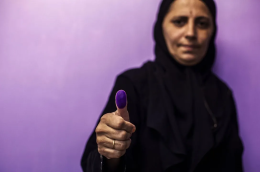
In the bustling political landscape of Pakistan, a resounding call for gender equality echoes through the halls of power. Senior leaders from diverse political factions are emphasizing the indispensable role of women in politics and elections, recognizing it as a cornerstone of democracy.
A Clarion Call for Change
Nafisa Shah, a prominent figure from the Pakistan Peoples Party (PPP), champions the cause with fervor. She underscores the significance of women's participation in the political process, asserting that it is vital for addressing their unique issues effectively.
Shandana Gulzar, an independent candidate, lauds the increasing engagement of women in elections. She views this active involvement as a stepping stone towards achieving gender equality and enhancing Pakistan's international image.
Rehana Imtiaz Dar, another political contender, expresses her commitment to national welfare. With confidence borne out of extensive social work, she voices her belief in her ability to win the elections.
Click here to read the full article published by BNN Breaking on 9 February 2024.
Image source: BNN Breaking

The Pakistan elections are only a day away, on February 8, and candidates of all genders, religions, and political parties are working hard to make their mark in the polls.
Among the thousands of candidates vying for a seat in this election, a few hundred stand out as women who have chosen to challenge traditional gender stereotypes. In fact, women's participation in the country is poor — data reveals that of the 17,000 candidates contesting the February 8 polls, only 839 are women, which is an abysmal 4.7 per cent.
We delve deeper into three women candidates and what they want from these polls.
Click here to read the full article published by Business Standard on 7 February 2024.
Image source: Business Standard
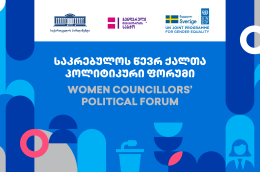
Over 150 women local councillors from across Georgia gathered for their annual conference to discuss the increasing role of women in politics and decision-making, especially in the lead-up to elections.
Supported by UNDP and Sweden in partnership with the Gender Equality Council of the Parliament of Georgia, the Women Councillors’ Political Forum brought together representatives from the Government, Parliament, civil society organizations, diplomatic missions, and international agencies.
H.E. Anna Lyberg, Ambassador of Sweden to Georgia; H.E. Meline Arakelian, Ambassador of the Netherlands to Georgia; and Douglas Webb, UNDP Resident Representative a.i. in Georgia, addressed the participants with welcoming remarks.
Click here to read the full article published by UNDP on 9 February 2024.
Image source: UNDP