Elections

Election monitors and activists express concern that digital harassment of female politicians will increase when the local council elections campaign gets into full swing in the coming weeks. According to the preliminary results of a survey conducted by the Campaign for Free and Fair Elections (CaFFE), more than 70 percent of female local councillors and grassroots political activists have faced digital harassment.
CaFFE Executive Director Manas Makeen said the majority of those who were subjected to digital harassment (around 80 percent) had not lodged complaints with the law enforcement authorities or with the political party leadership because they felt it was an exercise in futility.
“Even if these women politicians go to the police or their party leadership, there is no solution. They have to find solutions themselves. The introduction of the quota for women candidates at the local council level has upset some politicians and they have resorted to the digital sphere to undermine their female opponents,” he said.
Click here to read the full article published by The Island on 30 January 2023.
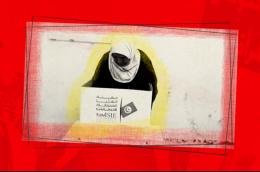
“During the election campaign, a new phase of pressure and harassment began, because accepting my candidacy alongside a group of men had angered them, or at least some of them, and also perhaps frightened them, because the idea of a woman winning in front of them, especially in the political sphere, is considered a blatant transgression. That's why they unleashed false rumors against me, like how I was using my workplace to collect tazkiya recommendations, and they filed a case against me. They were malicious accusations that never happened, so much so that I had to apply for leave throughout the campaign period, and I was very careful not to benefit from or take advantage of my work. They also tried to incite my family and husband against me so that I would not continue to run as a candidate, and leave the competition to only the men. The most dangerous part was the threatening letters that were sent to me through some relatives. They basically stated: ‘Withdraw your candidacy quietly. It’ll be better for you, or you will see something dangerous’. Also, my female co-workers who supported me were harassed as well.”
Click here to read the full article published by Raseef22 on 11 January 2023.
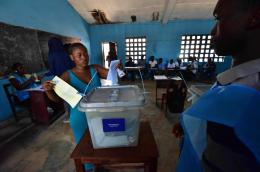
A new law in Sierra Leone will ensure that at least 30% of parliamentarians are women and impose similar quotas in other institutions, including government, local councils, the diplomatic corps and the civil service. The Gender Equality and Women's Empowerment Act was signed into law by President Julius Maada Bio on 19 January, a few months before the country's next general election scheduled for July 2023.
The law highlights the importance of mainstreaming a gender perspective and women’s participation in decision-making roles across all areas. As well as in public institutions, the law also stipulates that at least 30% of jobs in the private sector should be held by women (for companies with 25 or more employees) and extends maternity leave from 12 to 14 weeks.
With the proportion of MPs who are women at 12.33% today, Sierra Leone is currently in joint 157th place in the IPU’s monthly ranking of women in parliament, well below the global average of 26.4%.
Click here to read the full article published by IPU on 26 January 2023.
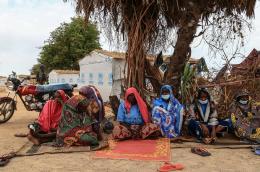
MAROUA, CAMEROON — Activists in Cameroon are urging more women candidates to enter races for Senate seats before a January 28 deadline. Only 26 members of Cameroon's 100-member senate are women, a number advocates want to see doubled. But patriarchal beliefs and a lack of political support are preventing more women from contesting the March election.
Female activists have been visiting political party leaders in northern Cameroon to push for greater representation for women in Cameroon’s upper house of parliament, the Senate.
Cameroon’s president, Paul Biya, announced last week that senate elections will be held March 12 with a registration deadline of January 28.
The announcement prompted activists to push for more women candidates.
Click here to read the full article published by VOA News on 17 January 2023.
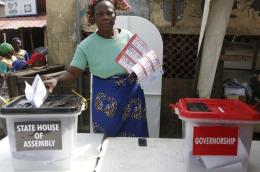
For Tolulope Akande-Sadipe, running for a second term as a member of parliament in Nigeria means putting her life on the line, says the 56-year-old politician who is running in the February 25 legislative elections in the southwest of Africa's most populous country.
On the same day, Nigerians will also elect their next president, Muhmmadu Buhari stepping down after two terms as stipulated by the constitution, and their senators. On March 11, they will choose their governors and local assembly members.
In the last election in 2019, Ms. Akande-Sadipe's campaign bus was destroyed and her press officers assaulted. For this election, she said she narrowly escaped an assault while campaigning against five men in her party's primary.
In Nigeria, "electoral violence is very real, and it targets me more because I am a woman," the MP from Oyo State told AFP. According to her, her opponents "think they can intimidate her" because she is a woman.
Click here to read the full article published by Africa News on 14 February 2023.
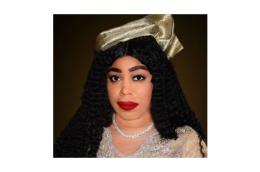
Princess Chichi Ojei, Presidential Candidate of Allied People’s Movement (APM), has expressed confidence of winning the February presidential election.
Ojei said this on Friday in Abuja, in a New Year statement tagged 2023: A glorious future beckons for Nigerians.
The Presidential hopeful said being the only female candidate in the race, she stood a better chance of winning.
” With the increased demographics of Nigerian women and youths, I stand better chance of winning the people’s mandates against other candidates.
“As we approach one of the most historic general elections in the annals of Nigerian politics, it is no secret that the demographics of Nigerian women and youths have increased tremendously.
“I am appealing to all Nigerians who are eligible voters, to obtain their Permanent Voters Cards, especially women and youths, to vote the Allied People’s Movement.
Click here to read the full article published by PM News Nigeria on 6 January 2023.