Elections
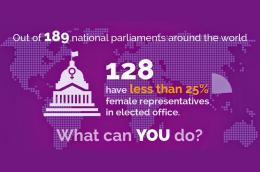
Ugo Aliogo examines the prospects of women in 2023 general election, judging from the low representation of women in the political space and the impact on development
Women have remained largely underrepresented in the realms of political power throughout Nigerian history. Since the beginning of electoral democracy in 1999, public campaigns, proposed legislative reforms, and internal measures within political parties have attempted to address the gaping gender imbalance. Yet assessments of the performance of female candidates in Nigeria’s most recent general elections revealed a disturbing trend: women’s representation in elected and appointed office has not only failed to increase, but appears to be in decline.
Click here to read the full article published by This Day on 24 November 2022.
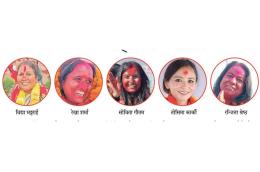
KATHMANDU, Nov 25: Five women candidates have been elected to the House of Representatives (HoR) in the elections held on November 20. According to the data of the Election Commission (EC), women candidates were elected from five constituencies across the country till Thursday evening. According to the EC, Sobita Gautam of Rastriya Swatantra Party was elected from Kathmandu-2 and Toshima Karki from Lalitpur-3, Bidya Bhattarai of CPN-UML from Kaski-2, Rekha Sharma of CPN (Maoist Center) from Dang-2 and Ranjita Shrestha of Nagarik Unmukti Party from Kailali-1.
Although the Constitution of Nepal stipulates that women’s participation in the HoR and the provincial assemblies should be at least 33 percent, the major political parties ignored women while distributing tickets for the elections. Because of this, only nine percent of the candidates nominated for the HoR and provincial assembly elections were women. The EC has claimed that it has repeatedly drawn the attention of political parties regarding women's representation in elections. "The Commission has repeatedly drawn the attention of political parties regarding the representation of women in the elections," said Shaligram Sharma Paudel, spokesperson for the Election Commission. "The Commission had directed the political parties to nominate women candidates in one-third of the seats,the political parties have given more representation of women candidates to reach one third seats after the directive of the EC,” added spokesperson Paudel.
Click here to read the full article published by My Republica on 25 November 2022.
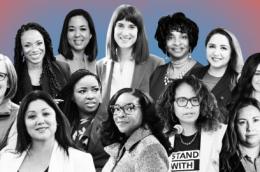
CNN — A record number of women will be elected to Congress this year, CNN projects – but barely.
The 149 women who will serve in the US House and Senate in the 118th Congress will expand the ranks of female representation by just two members above the record set by this Congress.
Alaska carried women across that threshold on Wednesday night when the state determined through its ranked-choice voting system that Rep. Mary Peltola, a Democrat, will represent the state’s at-large House seat for a full term after winning the special election earlier this year, while Sen. Lisa Murkowski will win reelection.
Click here to read the full article published by CNN on 23 November 2022.
Diagnosing women’s under-representation in electoral politics often involves a “blame game,” seeking to identify the primary factor responsible for depressing the share of women among candidates as well as elected officials. The Danish electoral system – in which parties present ordered lists of candidates but voters have the option to cast preference votes that can rearrange the list order – provides an opportunity to assess the relative role of elite versus voter bias in shaping women’s electoral fortunes. Using data from local elections in 2009, we find greater evidence for elite bias against women. We also observe, however, that voters do not widely exploit their preference votes. In an original post-election survey, we discover that “candidate gender” is less important for male and female voters than a host of other characteristics when deciding for which candidate to cast a preference vote.
Click here to access the article.

PETALING JAYA: Although women outnumber men in the electoral roll, they only make up 13.5% of candidates in the 15th General Election (GE15).
According to the Election Commission (EC), there are 21,173,638 registered voters for the GE15, with 50.3% or 10,622,151 women and 49.7% or 10,511,487 men.
In GE14, women made up 50.58% of the 14,940,624 voters.
However, the 14th Parliament, prior to its dissolution last month, only had 14.86% or 33 women MPs out of 222.
Haga clic aquí para leer el artículo completo por The Star, el 14 de noviembre de 2022.
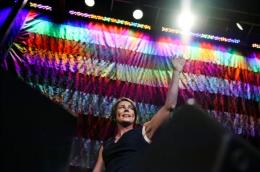
The string of wins includes the election of the country’s first lesbian governors in Massachusetts and Oregon.
The 2022 midterm elections ignited what LGBTQ advocates called yet another “rainbow wave,” with over 430 lesbian, gay, bisexual, transgender and queer candidates emerging victorious. Lesbians scored some of the biggest wins, including two historic firsts in gubernatorial races.
In Massachusetts, Democrat Maura Healey swept to victory on Election Day, becoming the first lesbian elected governor of a U.S. state and both the first woman and first gay person elected to lead Massachusetts. With 92% of expected votes in as of Monday afternoon, Healey had 63.6% of the vote, while her Republican challenger, Geoff Diehl, had 34.7%.
Click here to read the full article published by NBCN on 14 November 2022.